-
 BYOD's Future is in Bringing Together Mobiles and Virtual Desktops19 June 2014
 -
Smartphones Are Driving BYOD Growth in Asia-Pacific: IDC4 June 2014
-
Data centre security a top-priority for big and small firms in 2014: McAfee23 December 2013
-
BlackBerry previews cloud-based solution for managing iOS, Android and BB devices9 October 2013
-
Many firms bar employees from bringing own mobile to work - survey5 April 2013

- Home
- Telecom
- Telecom News
- Vodafone launches security solution for corporate clients
Vodafone launches security solution for corporate clients
By Press Trust of India | Updated: 28 November 2012 17:02 IST
Advertisement
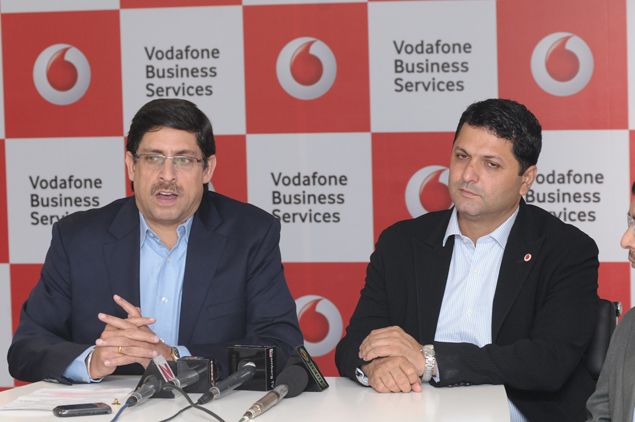
Vodafone India on Wednesday launched a solution, Secure Device Manager, for its corporate clients which will allow enterprises secure company data on mobile handsets and tablet PCs of their employees.
Vodafone India is the first Indian telecom operator to launch such a service. Its UK parent offers the solution in the UK and Germany and has 18,000 active users.
"With the Bring Your Own Device (BYOD) concept picking up pace, increasing number of people prefer smartphones and tablets to access the company's data. Securing these devices, and the data has now become critical," Vodafone India Director (Business Services) Naveen Chopra told reporters on a video conference.
BYOD is a policy now being followed globally by corporates, where employees are allowed to bring personally owned mobile devices to work place and using it to access company resources like email, file servers and databases as well as their personal applications and data.
Vodafone Secure Device Manager provides IT managers a management console which allows them to remotely manage security policies, device settings, certificates, applications, operating system etc, he added.
Clients would be charged at Rs. 175 per device per month and they can scale depending on the requirement.
It allows users to remotely lock or wipe all information from their smart devices in case the device is lost.
Asked how the company would compete with IT services firms which typically provide such solutions, Chopra said Vodafone's reach and capability would help the company service their clients better.
Business Services, which constitutes about 10 percent of Vodafone's revenues in the country, over voice and data services over wireless and fixedline networks. It has over 3.6 million corporate customers in India.
According to industry estimates, companies spend 2-5 percent of their IT budgets on security of devices.
While earlier IT security was limited to desktops and laptops, increasing popularity of mobile workforce and usage of smartphones and tablet PCs is forcing IT administrators to seriously consider securing corporate information and applications used on such mobile devices.
Also, the increasing trend of BYOD is also fuelling demand for securing these devices to protect sensitive corporate data.
Comments
For the latest tech news and reviews, follow Gadgets 360 on X, Facebook, WhatsApp, Threads and Google News. For the latest videos on gadgets and tech, subscribe to our YouTube channel. If you want to know everything about top influencers, follow our in-house Who'sThat360 on Instagram and YouTube.
Related Stories






Advertisement
Follow Us




-
 Vivo V30e 5G भारत में 5500mAh बैटरी, 44W फास्ट चार्जिंग के साथ होगा लॉन्च
 -
Moto E14 में होगी 5000mAh बैटरी, TDRA सर्टिफिकेशन में दिखा फोन
-
OnePlus Ace 3 Pro के स्पेसिफिकेशंस, डिजाइन का हुआ खुलासा, क्या होगा खास
-
BrahMos : भारत आज फिलीपीन को देगा ब्रह्मोस मिसाइलों का पहला सेट, जानें इसकी खूबियां
-
Honor X9b 5G पर बंपर छूट, Rs 18,999 में खरीदें! Amazon पर ऐसे मिलेगी डील
Advertisement
Popular on Gadgets
- Galaxy S24 Series
- MWC 2024
- Apple Vision Pro
- Oneplus 12
- iPhone 14
- Apple iPhone 15
- OnePlus Nord CE 3 Lite 5G
- iPhone 13
- Xiaomi 14 Pro
- Oppo Find N3
- Tecno Spark Go (2023)
- Realme V30
- Best Phones Under 25000
- Samsung Galaxy S24 Series
- Cryptocurrency
- iQoo 12
- Samsung Galaxy S24 Ultra
- Giottus
- Samsung Galaxy Z Flip 5
- Apple 'Scary Fast'
- Housefull 5
- GoPro Hero 12 Black Review
- Invincible Season 2
- JioGlass
- HD Ready TV
- Laptop Under 50000
- Smartwatch Under 10000
- Latest Mobile Phones
- Compare Phones
Latest Gadgets
- Vivo V30e
- Itel Super Guru 4G
- Huawei Pura 70 Pro+
- Huawei Pura 70 Ultra
- Tecno Camon 30 Premier 5G
- Motorola Edge 50 Fusion
- Oppo A1i
- Oppo A1s
- Asus ZenBook Duo 2024 (UX8406)
- Dell Inspiron 14 Plus
- Realme Pad 2 Wi-Fi
- Redmi Pad Pro
- Cult Shock X
- Fire-Boltt Oracle
- Samsung Samsung Neo QLED 8K Smart TV QN800D
- Samsung Neo QLED 4K Smart TV (QN90D)
- Sony PlayStation 5 Slim Digital Edition
- Sony PlayStation 5 Slim
- Hitachi 2 Ton 5 Star Inverter Split AC (RAS.G522PCBISF)
- Haier 1.5 Ton 5 Star Triple Inverter Split AC (HSU18K-PYSS5BN-INV)

- About Us
- Sitemaps
- Feedback
- Archives
- Contact Us
- RSS
- Advertise
- Career
- Privacy Policy
- Ethics
- Editorial Policy
- Terms & Conditions
- Complaint Redressal
Download Our Apps
Available in Hindi
© Copyright Red Pixels Ventures Limited 2024. All rights reserved.


