
- Home
- Telecom
- Telecom News
- Sprint offers $2.1 billion to buy rest of Clearwire
Sprint offers $2.1 billion to buy rest of Clearwire
By Associated Press | Updated: 14 December 2012 10:51 IST
Advertisement
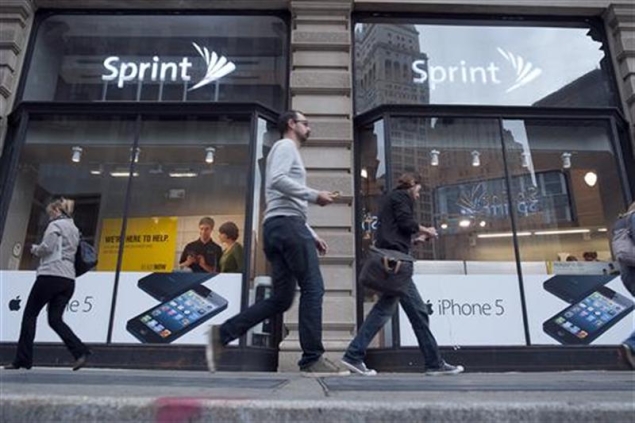
Sprint Nextel has offered to buy out the minority shareholders of Clearwire for $2.1 billion in a deal that would give it total control of the flailing company and also more space on the airwaves for data services.
Sprint said in a regulatory filing Thursday that it's offering $2.90 per share for the 49 percent of the wireless network operator that it doesn't already own.
Clearwire's board hasn't approved the sale, but said it's in discussions with Sprint. Clearwire shares jumped 15 percent to close at $3.16 Thursday, suggesting that investors believe a better offer may be coming.
It's been widely assumed that Sprint, the country's No. 3 wireless carrier, would buy out Clearwire. Both companies have been pressed financially, but Sprint is getting an infusion of cash after selling 70 percent of itself to Softbank Corp. of Japan for $20 billion. Clearwire shares nearly doubled in value when that deal was announced two months ago, and got a further boost on Tuesday, when The Wall Street Journal and CNBC reported that Sprint and Clearwire were already in talks.
Clearwire, which is based in Kirkland, Wash., was formed by cellular pioneer Craig McCaw to take advantage of an emerging wireless technology, WiMax, which promised higher speeds and lower costs than conventional cellular technology.
Sprint was working on the same technology and in 2008, rolled those operations into Clearwire, gaining a stake of more than 50 percent. Since then, it's had a hot-and-cold relationship with Clearwire. Sprint uses Clearwire's WiMax network to provide "Sprint 4G," but the technology has been orphaned as other wireless carriers have opted for another fourth-generation technology called "LTE." Sprint is now building out its own 4G LTE network, something that Clearwire would do as well if it had the funds.
Clearwire's main asset is vast swaths of wireless spectrum, or space on the airwaves, that could be used to provide high data download speeds - a crucial competitive factor in today's wireless industry. However, Clearwire's frequencies are difficult to use: They require many cell towers to cover an area, and the signals don't penetrate well into buildings. Clearwire's weak financials had threatened to drag Sprint down with it, and Sprint had reduced its stake to less than 50 percent.
Soon after the Softbank announcement, however, Sprint struck a deal to buy out McCaw's stake in Clearwire. Remaining Clearwire investors include cable companies Comcast Corp. and Bright House Networks, as well as chipmaker Intel Corp. Google Inc. sold its Clearwire stake in February for $1.60 per share, and Time Warner Cable Inc. sold in September at a similar price.
Sprint's offer for Clearwire continues a wave of deal-making in wireless this fall. Medium-sized players are trying to strengthen their hands to compete with the top two, Verizon Wireless and AT&T Inc. Sprint's deal with Softbank is part of that trend, as is No. 4 T-Mobile USA's deal to buy No. 5 MetroPCS Communications Inc.
Sprint has 48 million subscribers that it bills directly, compared to 96 million at Verizon and 77 million at AT&T.
Clearwire Corp. serves 10.5 million subscribers, but it only bills 1.4 million of them directly. Almost all of the rest are using Sprint devices.
Shares of Sprint Nextel Corp., based in Overland Park, Kan., fell 2 cents to close at $5.64.
Comments
For the latest tech news and reviews, follow Gadgets 360 on X, Facebook, WhatsApp, Threads and Google News. For the latest videos on gadgets and tech, subscribe to our YouTube channel. If you want to know everything about top influencers, follow our in-house Who'sThat360 on Instagram and YouTube.


Advertisement
Follow Us



-

00:30
Sponsored | Galaxy A55 | A35 5G: Awesome Camera | Ft. #ShanayaKapoor & #RohanGurbaxani -
01:23
Google Wallet Launched in India: All You Need to Know -
02:17
Does a Mysterious Ninth Planet Exist Beyond Neptune? -
14:05
Vivo V30 Pro Review: Focussed on Photography -
15:01
Tech With TG: MAMI Film Festival and the Rise of Mobile Filmmaking
-
Samsung Galaxy F55 5G 12GB रैम, 5000mAh बैटरी के साथ 17 मई को होगा लॉन्च
-
WhatsApp कर रहा कैमरा जूम कंट्रोल और स्टीकर क्रिएशन शॉर्टकट फीचर को टेस्ट
-
Vivo Y28 4G में होगी 6000mAh बैटरी, 44W फास्ट चार्जिंग! यहां हुआ खुलासा
-
क्रिप्टो मार्केट में तेजी, बिटकॉइन का प्राइस 66,000 डॉलर से ज्यादा
-
Moto G Stylus 5G (2024) फोन 50MP कैमरा, 5000mAh बैटरी के साथ लॉन्च, जानें कीमत
Popular on Gadgets
- AI
- iPhone 16 Leaks
- Apple Vision Pro
- Oneplus 12
- iPhone 14
- Apple iPhone 15
- OnePlus Nord CE 3 Lite 5G
- iPhone 13
- Xiaomi 14 Pro
- Oppo Find N3
- Tecno Spark Go (2023)
- Realme V30
- Best Phones Under 25000
- Samsung Galaxy S24 Series
- Cryptocurrency
- iQoo 12
- Samsung Galaxy S24 Ultra
- Giottus
- Samsung Galaxy Z Flip 5
- Apple 'Scary Fast'
- Housefull 5
- GoPro Hero 12 Black Review
- Invincible Season 2
- JioGlass
- HD Ready TV
- Laptop Under 50000
- Smartwatch Under 10000
- Latest Mobile Phones
- Compare Phones
Latest Gadgets
- Realme Realme GT Neo 6
- Nokia 3210 4G
- Vivo Y18e
- Vivo Y18
- Vivo Y38 5G
- Nokia 235 4G (2024)
- Nokia 225 4G (2024)
- Nokia 215 4G (2024)
- Dell Alienware X16 R2
- Lenovo IdeaPad Pro 5i
- Apple iPad Pro 13-inch (2024) Wi-Fi
- Apple iPad Pro 13-inch (2024) Wi-Fi + Cellular
- boAt Storm Call 3
- Lava ProWatch Zn
- Samsung Samsung Neo QLED 8K Smart TV QN800D
- Samsung Neo QLED 4K Smart TV (QN90D)
- Sony PlayStation 5 Slim Digital Edition
- Sony PlayStation 5 Slim
- LG 1.5 Ton 3 Star Inverter Window AC (TW-Q18WUXA)
- Godrej 1.1 Ton 3 Star Inverter Split AC (SIC 13DTC3 WWB)

- About Us
- Sitemaps
- Feedback
- Archives
- Contact Us
- RSS
- Advertise
- Career
- Privacy Policy
- Ethics
- Editorial Policy
- Terms & Conditions
- Complaint Redressal
Download Our Apps
Available in Hindi
© Copyright Red Pixels Ventures Limited 2024. All rights reserved.


