-
 Oppo A3 Pro Reportedly Spotted on China Telecom Website; Teased to Offer IP69 Rating10 April 2024
 -
DoT Issues Order Seeking Temporary Suspension of USSD-Based Call Forwarding Facility1 April 2024
-
How to Use Chakshu Portal to Report Fraud Spam Calls, Messages, and More6 March 2024
-
Energizer Hard Case P28K Phone With 28,000mAh Battery Showcased at MWC 202426 February 2024
-
TRAI Aims to Tackle Call Drops Issue With Regulations; Improve Connectivity Inside Buildings1 February 2024

- Home
- Telecom
- Telecom News
- SingTel sees first revenue fall in 14 years on Australia weakness
SingTel sees first revenue fall in 14 years on Australia weakness
By Reuters | Updated: 14 November 2012 13:50 IST
Advertisement
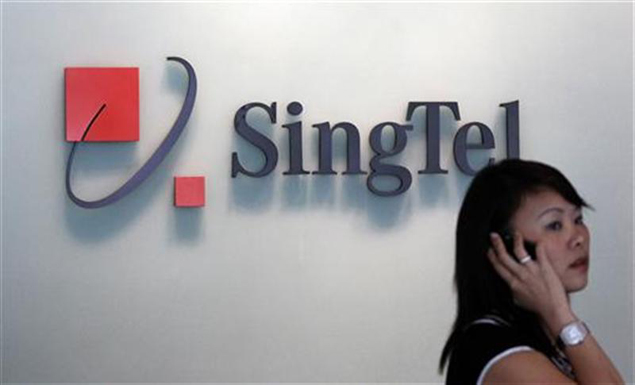
Singapore Telecommunications Ltd forecast its first drop in annual revenue in 14 years after it posted a weaker-than-expected quarterly profit, hit by tough competition in its key Australian market.
SingTel, Southeast Asia's largest telecommunications firm by market value, relies on Australian unit Optus for two-thirds of its revenue, but competition with the likes of Telstra has grown increasingly fierce amid slowing growth in that country's mobile market.
SingTel said on Wednesday that it now expects a "mid-single digit" percentage decline in Australian operating revenue for the financial year ending March 2013, a reversal from its earlier forecast for a low-single-digit increase.
"With the revised revenue outlook for Australia, the consolidated revenue of the group is expected to decline by a low-single digit level," SingTel said in a statement. SingTel last reported a fall in annual revenue in 1998/99, Thomson Reuters data shows.
SingTel, however, expects earnings before interest, tax, depreciation and amortisation (EBITDA) at the group level to be stable, in line with earlier guidance.
For its July-September quarter, SingTel, which also owns large stakes in several mobile operators including India's Bharti Airtel and Indonesia's Telkomsel , had an underlying net profit of S$886 million. That was up only slightly from S$885 million a year earlier and undershot the S$896 million average estimate of six analysts polled by Reuters.
"The main issue is with Australia. It's really in the pricing, on bundles offered on fixed line products that is impacting top-line revenue," said Michael Wu, an equities analyst with Morningstar in Sydney.
"We were expecting EBITDA to decline ... but they did match their declining revenue with declining costs, so EBITDA is stable. That's encouraging," he added.
Nomura Securities said revenue and operational trends at Optus were weak, noting Telstra had gained market share in Australia's mobile market after discounting the gains in subscriber numbers following Optus's purchase of Vivid Wireless earlier this year.
Optus, Australia's No.2 telecom after Telstra, saw revenue drop 4 percent to A$2.24 billion during the quarter from a year earlier, due to price competition in mobile phones and a mandated reduction in mobile termination rates.
SingTel shares have risen about 2 percent this year, underperforming a 13 percent gain in the broader Straits Times Index. The stock was down 0.6 percent at 0452 GMT, in line with the decline in the broader index.
Home market
SingTel fared better in its home market, where revenue rose 4 percent from a year earlier to S$1.67 billion during the quarter, helped by a strong performance from IT and engineering arm NCS. In mobile phones, SingTel's share of the local market rose by 0.2 percentage point from the previous quarter to 46.6 percent.
Even so, SingTel's postpaid average revenue per mobile phone user fell about 6 percent to S$80 during the quarter as roaming income declined amid the growing popularity of cheaper Internet data and voice services such as WhatsApp and Viber.
SingTel's results were also hurt by the strength of the Singapore dollar, which depressed contributions from India, Indonesia and Thailand.
The Singapore dollar has gained 6 percent against the U.S. dollar so far this year, the second-best performing Asian currency after the Philippine peso among 10 currencies tracked by Reuters.
Telkomsel, for instance, had a pretax profit increase of 26 percent in local currency terms, but this translated into a smaller rise of 16 percent when converted in Singapore dollars.
Excluding currency movements, SingTel's underlying net profit, which excludes one-off items, would have risen 2.9 percent year-on-year.
Overall, pretax earnings from SingTel's regional mobile associates grew 17 percent to S$549 million, with strong performances from Telkomsel and Thailand's Advanced Info Service PCL helping to offset weaker results from Bharti.
SingTel's consolidated revenue does not include contributions from Telkomsel, in which it has an effective stake of about 35 percent, and other regional mobile operators because it owns less than 50 percent of these firms.
Bharti, which is around one-third owned by SingTel, last week reported its 11th consecutive quarter of profit declines, with margins under pressure from intense competition.
© Thomson Reuters 2012
Comments
For the latest tech news and reviews, follow Gadgets 360 on X, Facebook, WhatsApp, Threads and Google News. For the latest videos on gadgets and tech, subscribe to our YouTube channel. If you want to know everything about top influencers, follow our in-house Who'sThat360 on Instagram and YouTube.
Related Stories







Advertisement
Follow Us




-
 Vivo V30e 5G भारत में 5500mAh बैटरी, 44W फास्ट चार्जिंग के साथ होगा लॉन्च
 -
Moto E14 में होगी 5000mAh बैटरी, TDRA सर्टिफिकेशन में दिखा फोन
-
OnePlus Ace 3 Pro के स्पेसिफिकेशंस, डिजाइन का हुआ खुलासा, क्या होगा खास
-
टाटा मोटर्स की तमिलनाडु की फैक्टरी में बनेंगी JLR की लग्जरी कारें!
-
Elon Musk के विजिट से पहले भारत की नई EV पॉलिसी पर मीटिंग में शामिल हुई Tesla
Advertisement
Popular on Gadgets
- Galaxy S24 Series
- MWC 2024
- Apple Vision Pro
- Oneplus 12
- iPhone 14
- Apple iPhone 15
- OnePlus Nord CE 3 Lite 5G
- iPhone 13
- Xiaomi 14 Pro
- Oppo Find N3
- Tecno Spark Go (2023)
- Realme V30
- Best Phones Under 25000
- Samsung Galaxy S24 Series
- Cryptocurrency
- iQoo 12
- Samsung Galaxy S24 Ultra
- Giottus
- Samsung Galaxy Z Flip 5
- Apple 'Scary Fast'
- Housefull 5
- GoPro Hero 12 Black Review
- Invincible Season 2
- JioGlass
- HD Ready TV
- Laptop Under 50000
- Smartwatch Under 10000
- Latest Mobile Phones
- Compare Phones
Latest Gadgets
- Huawei Pura 70 Pro
- Huawei Pura 70
- Vivo V30e
- Itel Super Guru 4G
- Huawei Pura 70 Pro+
- Huawei Pura 70 Ultra
- Tecno Camon 30 Premier 5G
- Motorola Edge 50 Fusion
- Asus ZenBook Duo 2024 (UX8406)
- Dell Inspiron 14 Plus
- Realme Pad 2 Wi-Fi
- Redmi Pad Pro
- Cult Shock X
- Fire-Boltt Oracle
- Samsung Samsung Neo QLED 8K Smart TV QN800D
- Samsung Neo QLED 4K Smart TV (QN90D)
- Sony PlayStation 5 Slim Digital Edition
- Sony PlayStation 5 Slim
- Voltas 1.5 Ton 3 Star Split AC (183 Vectra Elegant 4503545)
- Hitachi 1.5 Ton 5 Star Inverter Split AC (RAS.G518PCBISF)

- About Us
- Sitemaps
- Feedback
- Archives
- Contact Us
- RSS
- Advertise
- Career
- Privacy Policy
- Ethics
- Editorial Policy
- Terms & Conditions
- Complaint Redressal
Download Our Apps
Available in Hindi
© Copyright Red Pixels Ventures Limited 2024. All rights reserved.


