-
 Honor May Launch a Mid-Range Smartphone With an 8,000mAh Battery3 April 2025
 -
Huawei Watch Fit 3 Said to Launch in India Next Week, Price Range Tipped24 March 2025
-
Huawei FreeBuds 6 With Semi-Open Design, Up to 36 Hours Total Battery Life Launched: Price, Features21 March 2025
-
Huawei Pura X Foldable Phone With 6.3-Inch 16:10 Wide Inner Screen Launched: Price, Specifications20 March 2025
-
Huawei Pura Series Foldable Phone, FreeBuds 6 TWS Earphones Teased Ahead of March 20 Launch17 March 2025
- Home
- Telecom
- Telecom News
- Huawei denies any link to mysterious US death in Singapore
Huawei denies any link to mysterious US death in Singapore
By Reuters | Updated: 19 February 2013 11:16 IST
Advertisement
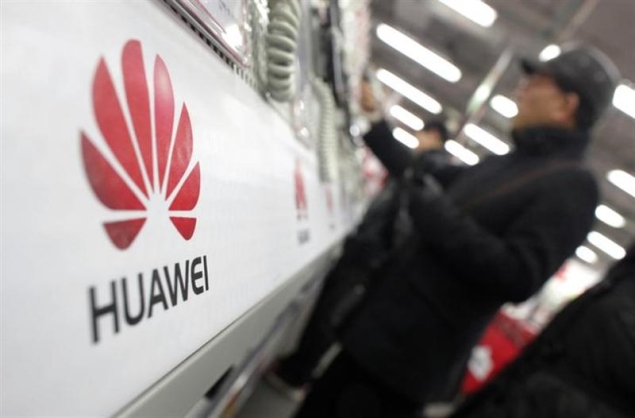
Chinese telecommunications company Huawei said on Monday it had not worked with an institute in Singapore on any projects in the specialist field of an American engineer who died mysteriously last year shortly after leaving the institute.
Britain's Financial Times said on Saturday that Shane Todd had been working on "what was apparently a joint project" between Singapore's Institute of Microelectronics, or IME, and Huawei shortly before he died last June.
His parents have said he was murdered because of his involvement in the project, which they say involved exporting sensitive military technology to China.
IME declined immediate comment.
Singapore police said they were still investigating the death of Todd, 31, and would submit their evidence to a coroner. Singaporean pathologists concluded in an autopsy last June that he died by hanging in his Singapore flat.
"IME approached Huawei on one occasion to cooperate with them in the GaN field, but we decided not to accept, and consequently do not have any cooperation with IME related to GaN," Huawei said in a statement.
Todd's area of expertise was Gallium Nitride (GaN), an advanced semiconductor material which has both commercial and military purposes. It is used in things from blue-ray disc players to military radars.
Huawei said that the development of GaN technology was commonplace across the telecommunications industry.
Reuters reviewed evidence the family presented supporting its theory a few weeks after his death, including emails, other documents and photographs.
Interviews with the family, colleagues and friends revealed conflicting views on Todd's state of mind before his death, the nature of his work and how he died.
Colleagues said that he was increasingly depressed in his last few months, but said that his concerns appeared to centre on a sense of failure about his work, and an ambivalence about returning to the United States.
Researchers in unrelated fields have also questioned how, if his work was so sensitive, he was able to take home computer files from his office. His family retrieved a hard drive which included work files in his flat.
IME is part of a network of research institutes managed by government-run Agency for Science, Technology and Research, or A*Star.
A former A*Star researcher now working in the United States pointed out that IME and other A*Star institutes were not military research organisations.
"Afraid"
At the heart of the family's theory is that Todd was concerned for his safety because of a project with a Chinese company. They believed, through information from his colleagues and from his computer files, that the company was Huawei.
Reuters can't independently corroborate their views about the role of Huawei or the circumstances of Todd's death.
Huawei is one of the world's largest telecommunication equipment companies, but has been blocked from some projects in Australia and deemed a security risk by the U.S. congress on the grounds that its equipment could be used for spying.
Huawei has routinely denied such accusations and has said it is not linked to the Chinese government.
Todd's parents said in interviews in July that Singapore police and IME had failed to properly investigate his death after his body was found hanging from a door in his Singapore apartment on the evening of June 24, two days after he quit IME.
Singapore police say they have handled the case as they have handled other cases, and their procedures follow high international standards. They said in such cases of unnatural death, "no prior assumptions" were made about the cause.
The parents did not immediately respond to emails requesting comment on the Financial Times report but Todd's mother, Mary, said in a telephone interview with Reuters last July that he had been scared.
"I had been talking to him for months for at least an hour every week and he told us he was afraid of being murdered because of his contacts with the Chinese government," she said.
"He quit his job because of it."
Huawei declined to say whether they had been working on other projects with IME. Colleagues said shortly after Todd's death that he had told them at one point he had been working on a project with Huawei but that it was not sensitive or high-level in nature.
One described it as carrying out "measurement test reports" of semiconductors.
The Financial Times said that Todd had been involved in proposing a joint project with Huawei. While it did not say whether the project was approved, it quoted his parents as saying that subsequently he complained to them of being asked to do things with a Chinese company he did not identify that made him uncomfortable.
© Thomson Reuters 2013
Comments
For the latest tech news and reviews, follow Gadgets 360 on X, Facebook, WhatsApp, Threads and Google News. For the latest videos on gadgets and tech, subscribe to our YouTube channel. If you want to know everything about top influencers, follow our in-house Who'sThat360 on Instagram and YouTube.
Related Stories




Advertisement

Follow Us

-

01:18
Gadgets 360 With Technical Guruji: Did You Know This About the Firefox Logo? -
02:23
Gadgets 360 With Technical Guruji: Hands on With the Samsung Galaxy Book5 Pro 360 -
02:23
Gadgets 360 With Technical Guruji: A Quick Look at the Google Pixel 9a -
01:31
Gadgets 360 With Technical Guruji: Scanning Documents Without Third-Party Apps -
02:40
Gadgets 360 With Technical Guruji: News of the Week [March 29, 2025]
Advertisement
Popular on Gadgets
- Samsung Galaxy Unpacked 2025
- ChatGPT
- Redmi Note 14 Pro+
- iPhone 16
- Apple Vision Pro
- Oneplus 12
- OnePlus Nord CE 3 Lite 5G
- iPhone 13
- Xiaomi 14 Pro
- Oppo Find N3
- Tecno Spark Go (2023)
- Realme V30
- Best Phones Under 25000
- Samsung Galaxy S24 Series
- Cryptocurrency
- iQoo 12
- Samsung Galaxy S24 Ultra
- Giottus
- Samsung Galaxy Z Flip 5
- Apple 'Scary Fast'
- Housefull 5
- GoPro Hero 12 Black Review
- Invincible Season 2
- JioGlass
- HD Ready TV
- Laptop Under 50000
- Smartwatch Under 10000
- Latest Mobile Phones
- Compare Phones
Latest Gadgets
- Lava Bold 5G
- Huawei Pura X
- Motorola Edge 60 Fusion
- Redmi A5
- Vivo Y300t
- Vivo Y300 Pro+
- Vivo Y300i
- Realme 14 5G
- Acer TravelLite (2025)
- Asus Zenbook 14 (2025)
- Samsung Galaxy Tab S10 FE+
- Samsung Galaxy Tab S10 FE
- Garmin Vivoactive 6
- Oppo Watch X2
- Haier M80F Mini LED 4K
- Haier M95E
- Sony PlayStation 5 Pro
- Sony PlayStation 5 Slim Digital Edition
- LG 1.5 Ton 5 Star Inverter Window AC (UW-Q18WUZA)
- LG 1.5 Ton 3 Star Inverter Split AC (US-Q18JNXE)

- About Us
- Sitemaps
- Feedback
- Archives
- Contact Us
- RSS
- Advertise
- Career
- Privacy Policy
- Ethics
- Editorial Policy
- Terms & Conditions
- Complaint Redressal
Download Our Apps
Available in Hindi
© Copyright Red Pixels Ventures Limited 2025. All rights reserved.