-
 Ray-Ban Meta Smart Glasses Review: Versatile and Practical19 April 2024
 -
Instagram to Test Features That Blur Messages Containing Nudity in Move to Boost Teen Safety11 April 2024
-
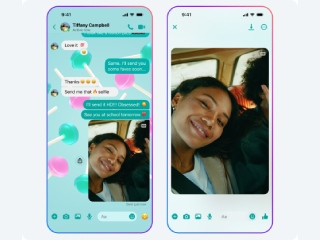
Messenger Now Lets You Send HD Photos, Create Shared Albums, Send Files Up to 100MB10 April 2024
-
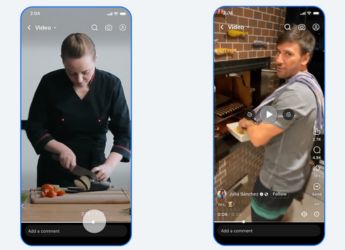
Facebook Revamps the Video Player on Its Mobile Apps, Adds Consistent Full-Screen Mode, New Controls4 April 2024
-
Meta Collaborates With PTI to Expand Its Third-Party Fact-Checking Programme in India1 April 2024

- Home
- Social networking
- Social networking News
- Twitter to let advertisers target tweeters based on interests
Twitter to let advertisers target tweeters based on interests
By Reuters | Updated: 31 August 2012 09:50 IST

Advertisement
Twitter Inc will begin allowing advertisers to directly target users based on the interests they reveal in their tweets, the social media company said Thursday.
No longer content to be a "dumb" bulletin board, with 400 million micro-messages posted daily, Twitter has moved to a strategy of actively sifting through what each user is reading and tweeting in order to discern every individual's interests.
Founded in 2006, Twitter is hoping to catch up to other consumer Internet companies that have found varying degrees of success by using technology to serve better-targeted ads.
For years, Google has reaped huge profits by displaying ads based on what a user searches for in its search engine, while Facebook encourages users to proactively input their "likes." But Twitter, by contrast, has long faced the challenge of indirectly inferring these preferences, something that marketers find less attractive for their needs.
In an effort to draw advertisers, the company on Thursday also slashed the minimum price of "promoted tweets" from 50 cents each to just a penny.
CEO Dick Costolo has said in recent months that his company's value lies in its ability to mine its flow of information to build "an interest graph" showing its users' preference profiles -- which could be used by marketers to deliver targeted and relevant ads.
As part of its new targeting feature, Twitter will now allow advertisers to send paid ads, in the form of tweets, to users who are interested in any of the roughly 350 topics on a list curated by Twitter itself.
For instance, sports apparel retailers can target soccer fanatics for promotions, or film distributors might send tweets directed at keen Bollywood fans.
The new offering will allow companies to reach a "very narrow, very specific and incredibly focused audience," Kevin Weil, a Twitter director of product management, said in an interview.
Twitter engineers believe they can build a compelling ad delivery platform, particularly if marketers craft ads that seem to blend in with the tone and format of the service's flow of tweets, which are seen by some 140 million monthly active users.
In building its interest graph, Twitter analyzes "a host of signals," Weil said, including which accounts a user follows, as well as the subjects of tweets that are most frequently recirculated or replied to by the user.
The company's algorithms closely evaluate the latter, giving "a direct measure of what you're interested in," Weil said.
Between 1 and 3 percent of users who see a "promoted tweet" - a paid ad - click on the tweet in some way. But early beta tests have shown the engagement rate to be higher when tweets are directed using its new interest-targeting tool, Weil said, while declining to discuss specific results.
Slashing the minimum bid price for ads would allow more brands to participate in its ad program but it did not reflect a lack of demand from advertisers for ads on the platform, Twitter said.
Valued at more than $8 billion but expected by analysts to make less than $300 million in revenue in 2011, Twitter has aggressively ramped up its advertising capabilities. But in streamlining its product to better show ads, the company has cracked down on how third-party services may use its content, sparking an outcry from Silicon Valley technologists who would like Twitter to remain a neutral media platform.
In protest against what they viewed as a Twitter experience increasingly corrupted by advertising, software developers in California this month launched App.net, a Twitter-like rival that is supported by a $50 membership fee rather than ads.
Copyright Thomson Reuters 2012
Comments
For the latest tech news and reviews, follow Gadgets 360 on X, Facebook, WhatsApp, Threads and Google News. For the latest videos on gadgets and tech, subscribe to our YouTube channel. If you want to know everything about top influencers, follow our in-house Who'sThat360 on Instagram and YouTube.
Related Stories





Advertisement
Follow Us




-

03:19
Gadgets 360 With Technical Guruji: Something About the Nothing Ear, Ear (a) -
19:21
Gadgets 360 With Technical Guruji: Samsung's New AI Smart TVs, Nothing Ear -
05:23
Gadgets 360 With Technical Guruji: Samsung's New AI Smart TVs -
01:17
Gadgets 360 With Technical Guruji: Tech Tip [April 20, 2024] -
02:05
Gadgets 360 With Technical Guruji: Ask TG [April 20, 2024]
Advertisement
Popular on Gadgets
- Galaxy S24 Series
- MWC 2024
- Apple Vision Pro
- Oneplus 12
- iPhone 14
- Apple iPhone 15
- OnePlus Nord CE 3 Lite 5G
- iPhone 13
- Xiaomi 14 Pro
- Oppo Find N3
- Tecno Spark Go (2023)
- Realme V30
- Best Phones Under 25000
- Samsung Galaxy S24 Series
- Cryptocurrency
- iQoo 12
- Samsung Galaxy S24 Ultra
- Giottus
- Samsung Galaxy Z Flip 5
- Apple 'Scary Fast'
- Housefull 5
- GoPro Hero 12 Black Review
- Invincible Season 2
- JioGlass
- HD Ready TV
- Laptop Under 50000
- Smartwatch Under 10000
- Latest Mobile Phones
- Compare Phones
Latest Gadgets
- Samsung Galaxy C55
- Blackview Hero 10
- Oppo K12
- Vivo Y200i
- Huawei Pura 70 Pro
- Huawei Pura 70
- Vivo V30e
- Itel Super Guru 4G
- Lenovo IdeaPad Pro 5i
- Asus ZenBook Duo 2024 (UX8406)
- Realme Pad 2 Wi-Fi
- Redmi Pad Pro
- boAt Storm Call 3
- Lava ProWatch Zn
- Samsung Samsung Neo QLED 8K Smart TV QN800D
- Samsung Neo QLED 4K Smart TV (QN90D)
- Sony PlayStation 5 Slim Digital Edition
- Sony PlayStation 5 Slim
- Voltas 1.5 Ton 3 Star Split AC (183 Vectra Elegant 4503545)
- Hitachi 1.5 Ton 5 Star Inverter Split AC (RAS.G518PCBISF)

- About Us
- Sitemaps
- Feedback
- Archives
- Contact Us
- RSS
- Advertise
- Career
- Privacy Policy
- Ethics
- Editorial Policy
- Terms & Conditions
- Complaint Redressal
Download Our Apps
Available in Hindi
© Copyright Red Pixels Ventures Limited 2024. All rights reserved.


