
- Home
- Others
- Others News
- Norman Woodland, co inventor of bar code, dies at 91
Norman Woodland, co-inventor of bar code, dies at 91
By Reuters | Updated: 15 December 2012 12:03 IST
Advertisement
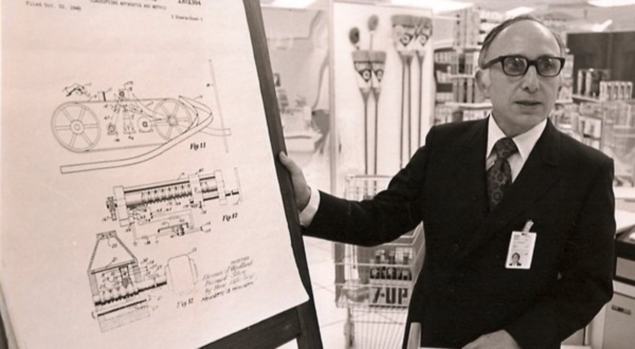
Norman Woodland, co-inventor of the bar code, the inventory tracking tool that transformed global commerce in the 1970s and saved shoppers countless hours on the supermarket checkout line, has died, his daughter said.
Woodland, 91, died Saturday from complications related to Alzheimer's disease in Edgewater, New Jersey, said Susan Woodland of New York.
Today, five billion products a day are scanned optically using the bar code, or Universal Product Code, or UPC, according to GS1 US, the American arm of the global UPC standards body.
The handheld laser scanner inventories consumer products, speeds passengers through airline gates, tracks mail, encodes medical patient information, and is in near universal use across transportation, industrial and shipping industries worldwide.
Susan Woodland said her father and co-inventor Bernard "Bob" Silver were graduate students at an engineering school in Philadelphia when they devised the idea of the bar code.
Silver overheard a supermarket executive asking the dean of the school - now Drexel University - to assign engineering students the task of creating an efficient way to inventory products at the checkout counter.
"My dad really liked to think about interesting problems," Susan Woodland said.
Woodland devised a code based on Morse code - a series of dots and dashes - that he had learned as a Boy Scout, she said.
The pair applied for the world's first bar code patent in 1949. Woodland joined International Business Machines Corp in 1951, and in 1952 he and Silver received the patent.
But it would be more than two decades before laser technology would advance to the point where it could be applied to the bar code, IBM said in a statement.
Silver died in 1963, according to the National Inventors Hall of Fame, which inducted the two men in 2011.
"In some ways it was a disappointment to my dad that it took so long for the technology to catch up," Susan Woodland said.
The first bar code scan took place on June 26, 1974, in Troy, Ohio, when a cashier scanned a 10-pack of Wrigley's Juicy Fruit gum for shopper Clyde Dawson, according to IBM. Cost: 67 cents. A revolutionary technology was born.
The late 1970s were heady times for Woodland, known to friends as 'Joe.'
"My dad was a really sweet, friendly guy and he just got the biggest thrill about having invented the bar code," Susan Woodland said.
"He loved talking to the checkers at the supermarket, seeing what they thought about the bar code scanner, what were the problems with it and what they'd like to see changed," she said, laughing. "They always got such a kick out of him."
Susan Woodland said her father was enthusiastic about perfecting the technology he had invented.
"He was involved in with the whole design of the station - from how the person stood and how high the laser stood to how to protect peoples' eyes from the lasers," she said. "He was totally a perfectionist."
Woodland also served as an historian on the Manhattan Project, the U.S. effort to build the first atomic bomb.
But his bar code invention was closest to his heart, Susan Woodland said.
Woodland is survived by his wife, Jacqueline Woodland of New Jersey, daughters Susan Woodland and Betsy Karpenkopf, brother David Woodland and granddaughter Ella Karpenkopf, 16.
© Thomson Reuters 2012
Comments
For the latest tech news and reviews, follow Gadgets 360 on X, Facebook, WhatsApp, Threads and Google News. For the latest videos on gadgets and tech, subscribe to our YouTube channel. If you want to know everything about top influencers, follow our in-house Who'sThat360 on Instagram and YouTube.
Further reading:
Norman Woodland, bar code


Advertisement
Follow Us




-
 Huawei Pura 70 Ultra, 70 Pro+ हुए Kirin 9010, 50MP कैमरा के साथ लॉन्च
 -
Sony ने लॉन्च किए नए Bravia TV, 43 से 85 इंच तक डिस्प्ले, 4.5 लाख तक कीमत
-
Realme C65 5G भारत में 6GB रैम के साथ Rs 10 हजार से कम में होगा लॉन्च!
-
Redmi 13 5G की जानकारी सामने आई, भारत में जल्द होगा लॉन्च
-
इस्राइल की राह पर ताइवान! नए एयर डिफेंस सिस्टम ‘Land Sword 2’ को किया टेस्ट, छूटेंगे चीन के ‘पसीने’
Advertisement
Popular on Gadgets
- Galaxy S24 Series
- MWC 2024
- Apple Vision Pro
- Oneplus 12
- iPhone 14
- Apple iPhone 15
- OnePlus Nord CE 3 Lite 5G
- iPhone 13
- Xiaomi 14 Pro
- Oppo Find N3
- Tecno Spark Go (2023)
- Realme V30
- Best Phones Under 25000
- Samsung Galaxy S24 Series
- Cryptocurrency
- iQoo 12
- Samsung Galaxy S24 Ultra
- Giottus
- Samsung Galaxy Z Flip 5
- Apple 'Scary Fast'
- Housefull 5
- GoPro Hero 12 Black Review
- Invincible Season 2
- JioGlass
- HD Ready TV
- Laptop Under 50000
- Smartwatch Under 10000
- Latest Mobile Phones
- Compare Phones
Latest Gadgets
- Huawei Pura 70 Pro+
- Huawei Pura 70 Ultra
- Tecno Camon 30 Premier 5G
- Motorola Edge 50 Fusion
- Oppo A1i
- Oppo A1s
- Motorola Edge 50 Ultra
- Leica Leitz Phone 3
- Asus ZenBook Duo 2024 (UX8406)
- Dell Inspiron 14 Plus
- Realme Pad 2 Wi-Fi
- Redmi Pad Pro
- Cult Shock X
- Fire-Boltt Oracle
- Samsung Samsung Neo QLED 8K Smart TV QN800D
- Samsung Neo QLED 4K Smart TV (QN90D)
- Sony PlayStation 5 Slim Digital Edition
- Sony PlayStation 5 Slim
- IFB 2 Ton 3 Star Inverter Split AC (CI2432C323G1)
- Daikin 1 Ton 3 Star Inverter Split AC (FTKL35UV16W+RKL35UV16W)

- About Us
- Sitemaps
- Feedback
- Archives
- Contact Us
- RSS
- Advertise
- Career
- Privacy Policy
- Ethics
- Editorial Policy
- Terms & Conditions
- Complaint Redressal
Download Our Apps
Available in Hindi
© Copyright Red Pixels Ventures Limited 2024. All rights reserved.


