





-
 Elon Musk Reclaims Position as World’s Richest Person After Bernard Arnault’s Louis Vuitton Shares Drop1 June 2023
 -
Bill Gates Says Pausing AI Development Will Not Solve Challenges Ahead4 April 2023
-
Bill Gates Praises India's Digital Payment System; Says This Will Be Cheapest 5G Market1 March 2023
-
Bill Gates Questions Elon Musk's Move to Buy Twitter, Says Could 'Make It Worse'5 May 2022
-
More Billionaire Jets on Radar of Teen Who Refused Elon Musk's Offer to Stop Tracking His Private Plane2 February 2022
- Home
- Others
- Others News
- Mark Zuckerberg, Bill Gates urge kids to learn coding in new video
Mark Zuckerberg, Bill Gates urge kids to learn coding in new video
By Reuters | Updated: 27 February 2013 12:10 IST
Advertisement
When Hadi and Ali Partovi immigrated to America from Iran in 1984, they slept in the same cramped bedroom as their parents, who exhausted their life savings on the teenage boys' education.
Nearly 30 years later, the twin brothers are firmly planted in the tech industry's elite circles, after selling companies to Microsoft and News Corp's MySpace, and tapping the rare connections to invest early on in Facebook, Dropbox and Zappos.
Hadi Partovi says the arc of his own successful rise in the tech world was shaped by an early interest in computers and a formal education in writing software, or coding, which enabled that spark to flourish into a career.
Along the way, the twins made influential friends.
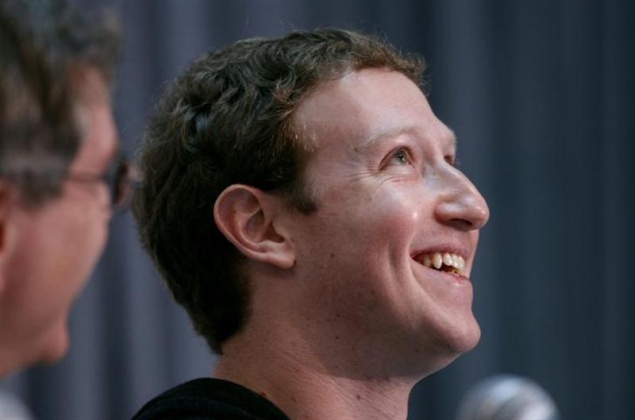
Bill Gates, Facebook CEO Mark Zuckerberg and Twitter co-founder Jack Dorsey - three people who became billionaire tech industry luminaries thanks to their computer programming abilities - appear in a new video released Tuesday by the Partovi brothers as part of their new computer science-education nonprofit, Code.org.
The goal of the online video campaign is to encourage parents to demand more schools to teach computer programming - a potentially lucrative skill that "equalizes opportunity" but is only available to a fraction of U.S. high school students, Hadi Partovi said.
"Computer programming, right now, is the best embodiment of the American Dream," Partovi said. "The American Dream is to be the next Mark Zuckerberg."
"The tragedy is the skills it takes are not hard to learn, but only 10 percent of schools offer (computer science) courses, and these are usually the privileged schools."
After graduating with computer science degrees from Harvard in 1994, the Partovi brothers founded LinkExchange and sold it to Microsoft in 1998 for $250 million. Hadi helped co-found Tellme Networks, a telephony company, while Ali went on to found iLike, a music service that became one of the first apps to integrate with Facebook.
The Partovis' campaign comes at a time tech executives warn of a new digital divide emerging between job-seekers who possess programming skills and those who do not. They also point to statistics showing that while coding jobs are among some of the most well-paid, especially in Silicon Valley, there remains a dearth of computer engineers, who are recruited aggressively by companies like Google and Facebook.
But there have also been strong signs recently that government officials are increasingly raising the issue of technical education, beginning at the secondary level.
In his state of the union speech this month, President Obama vowed to redesign U.S. high schools to meet "the demands of a high-tech economy," while New York Mayor Michael Bloomberg this week introduced a new computer programming pilot program for 20 schools.
Hadi Partovi, who financed the video with his brother, lined up endorsements from Bill Clinton, Al Gore, and American Federation of Teachers union leader Randi Weingarten, although they did not appear on camera. The 10-minute video was directed by Lesley Chilcott, the producer behind the documentaries "An Inconvenient Truth" and "Waiting for Superman."
Partovi said he hoped to eventually raise money to fund programming courses in low-income school districts and perhaps even advocate for certain policy reforms that champion computer science education. In California, he noted for example, computer science courses are not counted toward high school graduation requirements.
"We owe our success in business to having learned to code," Hadi Partovi said.
Although the video mostly contains interviews with tech entrepreneurs and has familiar startup scenes - like shots of young employees skateboarding inside startup offices - there are some unexpected appearances by pop celebrities, including Miami Heat forward Chris Bosh and Will.i.am, a part-time startup investor himself.
"Great coders are today's rock stars," the music producer, sitting in his recording studio, says into the camera.
But what is considered a truism in Silicon Valley may not be apparent elsewhere, Hadi Partovi said.
"Middle America doesn't realize it's an issue," he said. "We can't solve the problem until we realize it exists."
© Thomson Reuters 2013
Comments
For the latest tech news and reviews, follow Gadgets 360 on X, Facebook, WhatsApp, Threads and Google News. For the latest videos on gadgets and tech, subscribe to our YouTube channel. If you want to know everything about top influencers, follow our in-house Who'sThat360 on Instagram and YouTube.
Related Stories





Advertisement

Follow Us

-
01:18
Gadgets 360 With Technical Guruji: Did You Know This About the Firefox Logo? -
02:23
Gadgets 360 With Technical Guruji: Hands on With the Samsung Galaxy Book5 Pro 360 -
02:23
Gadgets 360 With Technical Guruji: A Quick Look at the Google Pixel 9a -
01:31
Gadgets 360 With Technical Guruji: Scanning Documents Without Third-Party Apps -
02:40
Gadgets 360 With Technical Guruji: News of the Week [March 29, 2025]
-
WhatsApp लाया iOS यूजर्स के लिए बड़े काम का फीचर, जानें कैसे
-
Redmi A5 स्मार्टफोन 5200mAh बैटरी, 32MP कैमरा के साथ हुआ लॉन्च, जानें
-
OnePlus 13 vs Poco F7 Ultra: जानें कौन सा फोन है बेस्ट
-
मात्र 8 लाख में आने वाली ये सस्ती इलेक्ट्रिक कार 4 साल में करेगी 9 लाख की बचत
-
भारत में 5G यूजर्स की संख्या 25 करोड़ के पार! 2 लाख से ज्यादा गांवों में पहुंचा ब्रॉडबैंड
Advertisement
Popular on Gadgets
- Samsung Galaxy Unpacked 2025
- ChatGPT
- Redmi Note 14 Pro+
- iPhone 16
- Apple Vision Pro
- Oneplus 12
- OnePlus Nord CE 3 Lite 5G
- iPhone 13
- Xiaomi 14 Pro
- Oppo Find N3
- Tecno Spark Go (2023)
- Realme V30
- Best Phones Under 25000
- Samsung Galaxy S24 Series
- Cryptocurrency
- iQoo 12
- Samsung Galaxy S24 Ultra
- Giottus
- Samsung Galaxy Z Flip 5
- Apple 'Scary Fast'
- Housefull 5
- GoPro Hero 12 Black Review
- Invincible Season 2
- JioGlass
- HD Ready TV
- Laptop Under 50000
- Smartwatch Under 10000
- Latest Mobile Phones
- Compare Phones
Latest Gadgets
- Vivo Y300i
- Realme 14 5G
- Poco F7 Ultra
- Poco F7 Pro
- Samsung Galaxy M05
- Vivo Y39 5G
- Samsung Galaxy M06 5G
- Samsung Galaxy M16 5G
- Acer TravelLite (2025)
- Asus Zenbook 14 (2025)
- Honor Pad X9a
- Lenovo Idea Tab Pro
- boAt Storm Infinity
- Itel Unicorn Max
- Haier M95E
- Sony 65 Inches Ultra HD (4K) LED Smart TV (KD-65X74L)
- Sony PlayStation 5 Pro
- Sony PlayStation 5 Slim Digital Edition
- Blue Star 1.5 Ton 3 Star Inverter Split AC (IC318DNUHC)
- Blue Star 1.5 Ton 3 Star Inverter Split AC (IA318VKU)

- About Us
- Sitemaps
- Feedback
- Archives
- Contact Us
- RSS
- Advertise
- Career
- Privacy Policy
- Ethics
- Editorial Policy
- Terms & Conditions
- Complaint Redressal
Download Our Apps
Available in Hindi
© Copyright Red Pixels Ventures Limited 2025. All rights reserved.


