



-
 Amazon Prime Video Launches Apple TV+ as an Add-on Subscription in India and Other Countries2 April 2025
 -
Apple Releases New Firmware for AirPods Pro 2, AirPods 4 With Bug Fixes; AirPods Max Gets Lossless Audio2 April 2025
-
macOS Sequoia 15.4 Update Fixes Several Vulnerabilities; Adds Redesigned Mail App, New Apple Intelligence Features2 April 2025
-
iOS 19 Will Reportedly Not Support iPhone XR and Other Models Running A12 Bionic SoC2 April 2025
-
Apple Watch Series 10 Prototype Leak Reveals Unidentified Health Sensor1 April 2025
- Home
- Others
- Others News
- Apple working on iOS running wristwatch like device with curved glass
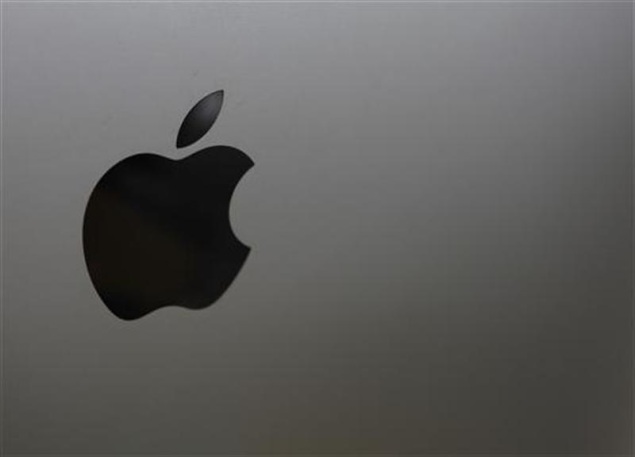
Apple working on iOS-running wristwatch-like device with curved glass
By Nick Bilton, The New York Times | Updated: 11 February 2013 10:34 IST
Advertisement
Dick Tracy had one. As did Inspector Gadget and James Bond. A watch that doubled as a computer, two-way radio, mapping device or television.
Though such a device has been lost to science fiction comics and spy movies of the era before smartphones, the smart watch might soon become a reality, in the form of a curved glass device made by Apple.
In its headquarters in Cupertino, Calif., Apple is experimenting with wristwatch-like devices made of curved glass, according to people familiar with the company's explorations, who spoke on the condition that they not be named because they are not allowed to publicly discuss unreleased products. Such a watch would operate Apple's iOS platform, two people said, and stand apart from competitors based on the company's understanding of how such glass can curve around the human body.
Apple declined to comment on its plans. But the exploration of such a watch leaves open lots of exciting questions: If the company does release such a product, what would it look like? Would it include Siri, the voice assistant? Would it have a version of Apple's map software, offering real-time directions to people walking down the street? Could it receive text messages? Could it monitor a user's health or daily activity? How much will it cost? Could Timothy D. Cook, Apple's chief executive, be wearing one right now, whispering sweet nothings to his wrist?
Such a watch could also be used to make mobile payments, with Apple's Passbook payment software.
Although it would take Dick Tracy to find the answers to those questions, and it's uncertain when Apple might unveil such a device, it's clear that Apple has the technology.
Last year, Corning, the maker of the ultra-tough Gorilla Glass that is used in the iPhone, announced that it had solved the difficult engineering challenge of creating bendable glass, called Willow Glass, that can flop as easily as a piece of paper in the wind without breaking.
Pete Bocko, the chief technology officer for Corning Glass Technologies, who worked on Willow Glass, said via telephone that the company had been developing the thin, flexible glass for more than a decade, and that the technology had finally arrived.
"You can certainly make it wrap around a cylindrical object and that could be someone's wrist," Bocko said. "Right now, if I tried to make something that looked like a watch, that could be done using this flexible glass."
But Bocko warns that it is still quite an engineering feat to create a foldable device. "The human body moves in unpredictable ways," he said. "It's one of the toughest mechanical challenges."
To add to the excitement of an Apple watch, late last year the Chinese gadget site Tech.163 reported that the company had begun development of a watch featuring Bluetooth and a 1.5-inch display.
"Apple's certainly made a lot of hiring in that area," said Sarah Rotman Epps, a Forrester analyst who specializes in wearable computing and smartphones. "Apple is already in the wearable space through its ecosystem partners that make accessories that connect to the iPhone," she said, adding: "This makes Apple potentially the biggest player of the wearables market in a sort of invisible way."
"Over the long term wearable computing is inevitable for Apple; devices are diversifying and the human body is a rich canvas for the computer," Epps said. "But I'm not sure how close we are to a new piece of Apple hardware that is worn on the body."
Investors would most likely embrace an iWatch, with some already saying that wearable computing could replace the smartphone over the next decade.
"We believe technology could progress to a point where consumers have a tablet plus wearable computers, like watches or glasses, that enable simple things like voice calls, texting, quick searches, navigation," Gene Munster, an analyst at Piper Jaffray, said in a report last month. "These devices are likely to be cheaper than an iPhone and could ultimately be Apple's best answer to addressing emerging markets."
Cook is clearly interested in wearables. In the past he has been seen sporting a Nike FuelBand, which tracks a user's daily exertion. The FuelBand data is shared wirelessly with an iPhone app.
Bob Mansfield, Apple's senior vice president for technologies, who previously ran hardware engineering, has also been particularly interested in wearables, an Apple employee said. Mansfield is engrossed by devices that connect to the iPhone, through Bluetooth, sharing information back-and-forth from the human body to the phone, including the Nike FuelBand and Jawbone Up.
If smartphones do become smart watches and smart glasses, Apple seems to have the technology to make standout wearable computers.
Last year the company filed patents for displays that sit over the eye and stream information to the retina. Given that the iPod Nano is about the size of an overfed ant, the company clearly knows how to make small devices, too.
But, maybe there are other devices coming before wearables. Apple has long been rumored to be working on a television-like experience. And, there is the possibility of an Apple car.
In a meeting in his office before he died, Steve Jobs, Apple's co-founder and former chief executive, told John Markoff of The New York Times that if he had more energy, he would have liked to take on Detroit with an Apple car.
In August, during the company's patent trial with Samsung, Philip W. Schiller, Apple's senior vice president for worldwide product marketing, said on the stand that Apple had explored making "crazy stuff" before development of the iPhone and iPad, including a camera or a car. While Apple continues its experiments with wearables, its biggest competitor, Google, is pressing ahead with plans to make wearable computers mainstream.
According to a Google executive who spoke on the condition that he not be named, the company hopes its wearable glasses, with a display that sits above the eye, will become 3 percent of revenue by 2015. Olympus is also working on wearable computers.
Google is holding private workshops in San Francisco and New York for developers to start building applications for its glasses. At the event in San Francisco last week, Hosain Rahman, chief executive of Jawbone, the maker of the Up, a wrist device that tracks people's energy and sleep, said that "a decade from now we won't be able to imagine life without the wearables that we use to access information, unlock our doors, pay for goods and most importantly track our health."
© 2013, The New York Times News Service
Comments
For the latest tech news and reviews, follow Gadgets 360 on X, Facebook, WhatsApp, Threads and Google News. For the latest videos on gadgets and tech, subscribe to our YouTube channel. If you want to know everything about top influencers, follow our in-house Who'sThat360 on Instagram and YouTube.
Related Stories


Advertisement

Follow Us

-

01:18
Gadgets 360 With Technical Guruji: Did You Know This About the Firefox Logo? -
02:23
Gadgets 360 With Technical Guruji: Hands on With the Samsung Galaxy Book5 Pro 360 -
02:23
Gadgets 360 With Technical Guruji: A Quick Look at the Google Pixel 9a -
01:31
Gadgets 360 With Technical Guruji: Scanning Documents Without Third-Party Apps -
02:40
Gadgets 360 With Technical Guruji: News of the Week [March 29, 2025]
-
iQOO Z10x होगा 11 अप्रैल को पेश, डिजाइन और फीचर्स आए सामने
-
Xiaomi 15 Ultra vs iPhone 16 Pro Max: फीचर्स और कीमत में तुलना
-
BSNL ने भारत में कई राज्यों की राजधानियों में शुरू किया 5G ट्रायल
-
भारत में एक और TV ब्रांड 10 अप्रैल को करेगा एंट्री
-
Lava Bold 5G हो रहा 8 अप्रैल को लॉन्च, 10999 रुपये कीमत में 64MP कैमरा, AMOLED डिस्प्ले
Advertisement
Popular on Gadgets
- Samsung Galaxy Unpacked 2025
- ChatGPT
- Redmi Note 14 Pro+
- iPhone 16
- Apple Vision Pro
- Oneplus 12
- OnePlus Nord CE 3 Lite 5G
- iPhone 13
- Xiaomi 14 Pro
- Oppo Find N3
- Tecno Spark Go (2023)
- Realme V30
- Best Phones Under 25000
- Samsung Galaxy S24 Series
- Cryptocurrency
- iQoo 12
- Samsung Galaxy S24 Ultra
- Giottus
- Samsung Galaxy Z Flip 5
- Apple 'Scary Fast'
- Housefull 5
- GoPro Hero 12 Black Review
- Invincible Season 2
- JioGlass
- HD Ready TV
- Laptop Under 50000
- Smartwatch Under 10000
- Latest Mobile Phones
- Compare Phones
Latest Gadgets
- Lava Bold 5G
- Huawei Pura X
- Motorola Edge 60 Fusion
- Redmi A5
- Vivo Y300t
- Vivo Y300 Pro+
- Vivo Y300i
- Realme 14 5G
- Acer TravelLite (2025)
- Asus Zenbook 14 (2025)
- Honor Pad X9a
- Lenovo Idea Tab Pro
- Garmin Vivoactive 6
- Oppo Watch X2
- Haier M80F Mini LED 4K
- Haier M95E
- Sony PlayStation 5 Pro
- Sony PlayStation 5 Slim Digital Edition
- LG 1.5 Ton 5 Star Inverter Window AC (UW-Q18WUZA)
- LG 1.5 Ton 3 Star Inverter Split AC (US-Q18JNXE)

- About Us
- Sitemaps
- Feedback
- Archives
- Contact Us
- RSS
- Advertise
- Career
- Privacy Policy
- Ethics
- Editorial Policy
- Terms & Conditions
- Complaint Redressal
Download Our Apps
Available in Hindi
© Copyright Red Pixels Ventures Limited 2025. All rights reserved.