






-
 Google Play Store Blocks 17 Unregistered Crypto Exchanges in South Korea, Apple May Follow27 March 2025
 -
Google's Android OS Will Reportedly Be Developed Privately as Company Shifts Strategy27 March 2025
-
Android 16 Developer Preview 3 Reportedly Enables Screen-Off Fingerprint Unlock on All Pixel Phones24 March 2025
-
WhatsApp Reportedly Developing AI-Powered Rewrite Feature, Two-Way Voice Chats with Meta AI21 March 2025
-
Netflix Announces Spirit Crossing, a 'Cozy MMO' Coming to Netflix Games in 202521 March 2025
- Home
- Mobiles
- Mobiles Reviews
- XOLO X900 review
XOLO X900 review
By Gaurav Shukla | Updated: 13 September 2013 15:53 IST
Advertisement
The first Intel smartphone is here. After years of work, California based Intel announced the first smartphones with its own Atom chips at the Mobile World Congress earlier this year. Not able to secure the support of popular smartphone manufacturers like HTC and Samsung, company went ahead with Chinese tech giant Lenovo and relatively unknown Indian manufacturer Lava to launch the initial smartphones.
The name Lava doesn't inspire much confidence in Indian consumers. While the company launched its first smartphone in India last year, it hasn't been able to generate much buzz. Intel needed hardware partners, and Lava needed a product that would help shed its image of a feature-phone manufactuer. In many ways, XOLO is a partnership of convience for both sides..
X900 is technically the first Intel powered smartphone to ship worldwide; it is based on Intel's Medfield reference design and has been priced at Rs. 21,999. In this review, we will be find out if the first Intel smartphone is capable making a place for Intel in the smartphone chip market.
Hardware
We have seen quite a few beautiful devices in the last few weeks. Coming from Sony's Xperia S, Lava XOLO X900 is a tad less aesthetically pleasing but that shouldn't be taken as a negative for the smartphone.
For a device that mirrors the reference design, XOLO X900 looks polished and feels nice in hand. The overall design isn't revolutionary but it is some fine work and consumers won't be disappointed.
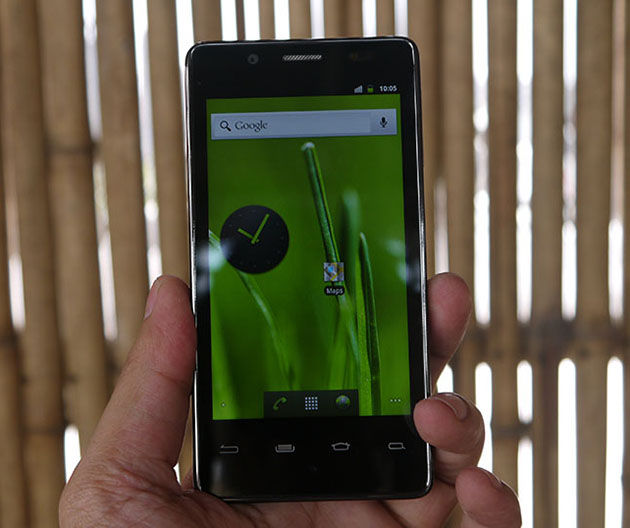
Featuring a rectangular shape, XOLO X900 reminds of iPhone 4/4S , it is similar in looks with the chrome ring, button placement and even the micro-SIM card slot, which isn't really bad.
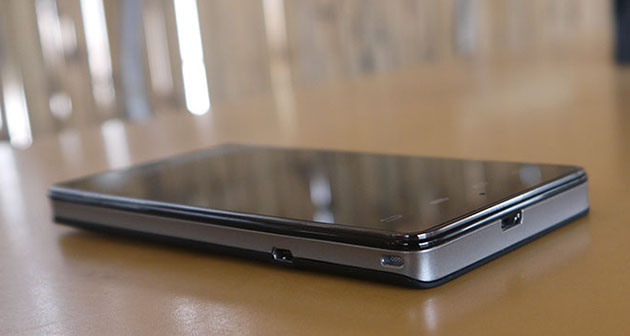
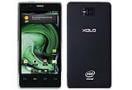
The front of the X900 houses a 4.03-inch display with 1024x600p resolution, along with capacitive Android buttons, 1.3MP front camera, earpiece, MIC and a bunch of sensors. The micro-SIM card slot is present on the right side with two-stage dedicated camera button, volume rocker and speaker.
The matching second speaker for stereo sound is present on the left with HDMI-out port. The company hasn't clubbed any HDMI cable in the box, which would certainly have been a nice addition.
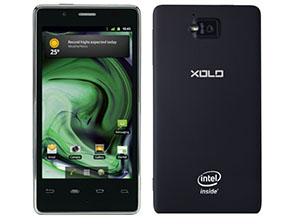
Bottom is pretty much clean apart from the Micro-USB cum charging port, while top includes power button and the 3.5mm headphone jack. On the rubberised back, consumers will find the 8MP camera, LED Flash, regulatory symbols, Intel and XOLO branding.
It might not be the thinnest or lightest phone around, but when it comes with real life usage, XOLO X900 works out pretty well.
Display
In the world of HTC One X and Apple iPhone 4S, manufacturers truly need some great work to compete with some really awesome display panels. WVGA no longer cuts and HD is the standard - anything less is simply a dissapointment for a top of the line smartpone.
Intel and Lava have opted something that falls in the middle - 1024x600p resolution; it is not very common for smartphones, but we have seen it in quite a few tablets including Kindle Fire and Samsung Galaxy Tab 620. It might not be 720p HD, but it is not a disappointment either. At its price, X900 will be competing with Motorola Atrix 2, Samsung Galaxy S Plus, which come with qHD and WVGA resolutions - thus X900 surely wins that race.
XOLO X900 features a 4.03-inch display, which is pretty decent and offers nice colour output and viewing angles. Although in comparison with the recent smartphones like HTC One X and Galaxy Nexus, we found it a tad underwhelming. But then that's a battle no one was expecting the X900 to win.
As the display has 295 pixels-per-inch, consumers would hardly notice any individual pixels on the device. Even the touch experience is great and we never had any problems with touch accuracy.
XOLO X900's display is also sufficiently bright and consumers will not have issues while operating the phone directly under the sun.
Camera
Cameras have become an integral part of smartphone experience these days, manufacturers are spending considerable amount of time and effort in bringing something unique and useful to the table. - The ImageSense enhancements in HTC One series of smartphones or Pureview technology in Nokia 808 are testament to the fact.
Intel and Lava have also tried to include their own set of improvements to the camera in X900 - let's see how they worked out.
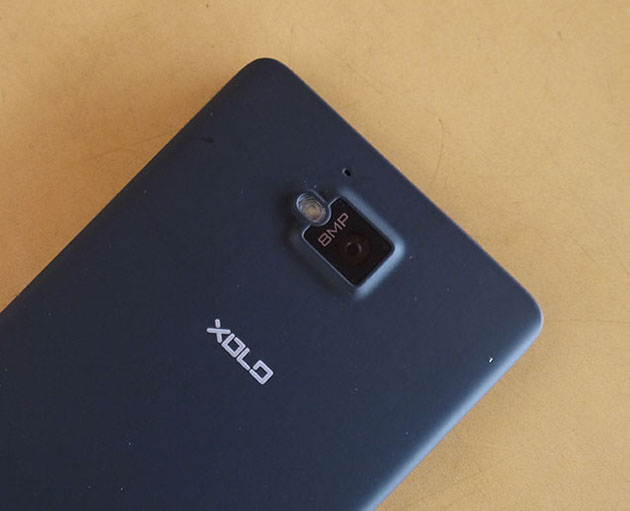
X900 houses an 8-megapixel camera sensor in the smartphone, which has been clubbed with one of the most comprehensive camera apps we have seen in recent times. It also comes with something called Burst Shot, last seen in HTC One X, that allows consumers to click upto ten pictures in less than a second.
Lava and Intel even had a dancer at the X900 launch to clearly show how effective burst shots can be while taking shots of something that is in motion. It was the first feature that we tried on X900 and it work flawlessly. Overall, even in non-burst mode, the quality of still captures was a tad disappointing. We found it sub-par and looking at the cameras in other modern smartphones, it certainly lacked a bit.
Shots taken from the 5MP camera of Galaxy Nexus were better in colour output, vibrancy and details than shots the 8MP camera of XOLO X900.
The camera app on the smartphone also offers various colour filters like Sepia, BW, Negative, which can be applied directly in the app itself.
The video recording interface on the phone is similar to the still imaging UI and it allows you to shoot up to 1080p video, which is pretty much a standard in high-end smartphones. You can even apply the colour effects while recording a video or set white balance or zoom. The recording output is decent and looks good. Camera maintains auto-focus continuously, which helps in capturing long videos with a lot of movement.
The 1.3MP front camera is decent and you can even record 720p videos with it.
Software/ Interface
Give us some Ice Cream Sandwich - consumers with old Android phones have been shouting the same since November 2011, when ICS source code was publically released. Even if we forgive manufacturers for being super-late in providing updates for old smartphones, how can they launch a new smartphone with old operating system version on-board?
Intel and Lava have done the same with XOLO X900. When manufacturers like HTC could launch their One series of devices with ICS and a comprehensive UI on-board, there is no excuse for Intel or Lava to release X900 with Gingerbread.
Having said that, as a Gingerbread smartphone, XOLO X900 is quite decent as company has kept the interface as well the whole Android experience pretty much stock. There are no extra applications loaded on the smartphone apart from the XOLO Care app and the inclusion of Swype.
Talking about the app compatibility, being the new architecture for Android, there is a lot of confusion on which apps will be compatible with the phone's Intel x86 platforms. While apps like Facebook, Twitter, Barcode Scanner, Astro, Dropbox, and Instagram work flawlessly, several games ,Shadowgun, Deer Hunter, Backstab, Temple Run, and Asphalt 6 amongst them, aren't supported as of date.
We hope Intel is working proactively with developers to get such apps ready for the platform.
Performance /Battery Life
XOLO X900 recently became the first smartphone worldwide to ship with Intel's Atom Z2460 32nm SoC with processor clocked at up to 1.6 GHz. It also comes with a PowerVR SGX 540 GPU at 400 MHz, and a dual channel LPDDR2 memory.
Despite being powered a single-core processor, XOLO X900 performs at par with other smartphones in the same price-bracket, which are powered by dual-core processors. There is no-sluggishness or lag while going through menus or working with the applications.
Even before Intel entered the smartphone arena, a lot of questions were raised around the battery life of any future phones based on Intel processors. x86 has traditionally been seen as a power hungry platform, not suitable for use in smartphones and other devices where battery juice is at a premium.
The x86 power myth also seems busted as X900's battery backup is inline with any other competing high-end Android smartphone. Medium to heavy users will be able to pass the day with the smartphone's 1460 mAh battery.
The gaming performance in pretty good and most casual games worked flawlessly; although, we did miss many popular gaming titles because of incompatibility with the architecture.
Intel has clearly taken a big step with the first smartphone and it is certainly a worthy competitor, but there are few things that it needs work on - like app compatibility.
Verdict
While the Lava XOLO X900 performs pretty well for its price, the positioning as well as the branding might well end up hurting the phone. Although Lava has pitched it under the name XOLO, Indian consumers are very brand conscious and a 'Lava-made Rs. 22,000 phone' factor will surely play a lot of role in their buying decision. But, if you can look beyond the brand, XOLO X900 is worthy of consideration.
 Check out more images of Lava XOLO X900 in our picture gallery.
Pros
- Quality display
- Overall performance
Cons
- Camera
- Dated Gingerbread on board
- Lack of compatibility with select apps
Ratings
Design: 3
Display: 3.5
Camera: 3
Performance: 3.5
Software: 3
Battery Life: 3.5
Value for Money: 3
Ecosystem: 3
Overall: 3.5
- KEY SPECS
- NEWS
Display 4.03-inch
Processor Intel Atom Z2460
Front Camera 1.3-megapixel
Rear Camera 8-megapixel
RAM 1GB
Storage 16GB
Battery Capacity 1460mAh
OS Android 2.3
Resolution 600x1024 pixels
Comments
For the latest tech news and reviews, follow Gadgets 360 on X, Facebook, WhatsApp, Threads and Google News. For the latest videos on gadgets and tech, subscribe to our YouTube channel. If you want to know everything about top influencers, follow our in-house Who'sThat360 on Instagram and YouTube.
Related Stories





Advertisement

Follow Us

-

02:23
Gadgets 360 With Technical Guruji: Hands on With the Samsung Galaxy Book5 Pro 360 -
02:23
Gadgets 360 With Technical Guruji: A Quick Look at the Google Pixel 9a -
01:31
Gadgets 360 With Technical Guruji: Scanning Documents Without Third-Party Apps -
02:40
Gadgets 360 With Technical Guruji: News of the Week [March 29, 2025] -
17:12
Gadgets 360 With Technical Guruji: WWDC 2025 Date, Google Pixel 9a and More
-
WhatsApp लाया iOS यूजर्स के लिए बड़े काम का फीचर, जानें कैसे
-
Redmi A5 स्मार्टफोन 5200mAh बैटरी, 32MP कैमरा के साथ हुआ लॉन्च, जानें
-
OnePlus 13 vs Poco F7 Ultra: जानें कौन सा फोन है बेस्ट
-
1 अप्रैल से बदल जाएंगे इनकम टैक्स, UPI के ये नियम, लागू होने से पहले जानें सबकुछ
-
IPL Match Today Live Streaming: DC vs SRH, और RR vs CSK मैच आज कब, कहां, कैसे देखें फ्री, जानें सबकुछ
Advertisement
Popular on Gadgets
- Samsung Galaxy Unpacked 2025
- ChatGPT
- Redmi Note 14 Pro+
- iPhone 16
- Apple Vision Pro
- Oneplus 12
- OnePlus Nord CE 3 Lite 5G
- iPhone 13
- Xiaomi 14 Pro
- Oppo Find N3
- Tecno Spark Go (2023)
- Realme V30
- Best Phones Under 25000
- Samsung Galaxy S24 Series
- Cryptocurrency
- iQoo 12
- Samsung Galaxy S24 Ultra
- Giottus
- Samsung Galaxy Z Flip 5
- Apple 'Scary Fast'
- Housefull 5
- GoPro Hero 12 Black Review
- Invincible Season 2
- JioGlass
- HD Ready TV
- Laptop Under 50000
- Smartwatch Under 10000
- Latest Mobile Phones
- Compare Phones
Latest Gadgets
- Vivo Y300i
- Realme 14 5G
- Poco F7 Ultra
- Poco F7 Pro
- Samsung Galaxy M05
- Vivo Y39 5G
- Samsung Galaxy M06 5G
- Samsung Galaxy M16 5G
- Acer TravelLite (2025)
- Asus Zenbook 14 (2025)
- Honor Pad X9a
- Lenovo Idea Tab Pro
- boAt Storm Infinity
- Itel Unicorn Max
- Haier M95E
- Sony 65 Inches Ultra HD (4K) LED Smart TV (KD-65X74L)
- Sony PlayStation 5 Pro
- Sony PlayStation 5 Slim Digital Edition
- Blue Star 1.5 Ton 3 Star Inverter Split AC (IC318DNUHC)
- Blue Star 1.5 Ton 3 Star Inverter Split AC (IA318VKU)

- About Us
- Sitemaps
- Feedback
- Archives
- Contact Us
- RSS
- Advertise
- Career
- Privacy Policy
- Ethics
- Editorial Policy
- Terms & Conditions
- Complaint Redressal
Download Our Apps
Available in Hindi
© Copyright Red Pixels Ventures Limited 2025. All rights reserved.


