-
 Vivo V30 4G With Snapdragon 685 Chip, 50-Megapixel Rear Camera Launched: Price, Specifications6 April 2024
 -
Nokia 3210 4G, HMD Pulse+, HMD Legend, HMD T21 Tablet, More Tipped to Launch Soon; Colourways Tipped26 March 2024
-
Infinix Note 40, Note 40 Pro 4G Price, Renders Leaked; Note 40 Pro 5G Spotted on Certification Sites12 March 2024
-
Samsung Galaxy M14 4G With 50-Megapixel Camera, 5,000mAh Battery Listed Online in India7 March 2024
-
Samsung Galaxy F15 5G, Galaxy M14 5G Price in India Leaked Ahead of Debut29 February 2024

- Home
- Mobiles
- Mobiles News
- iPhone 5 "not a game changer", say analysts
iPhone 5 "not a game-changer", say analysts
By Agence France-Presse | Updated: 13 September 2012 16:24 IST
Advertisement
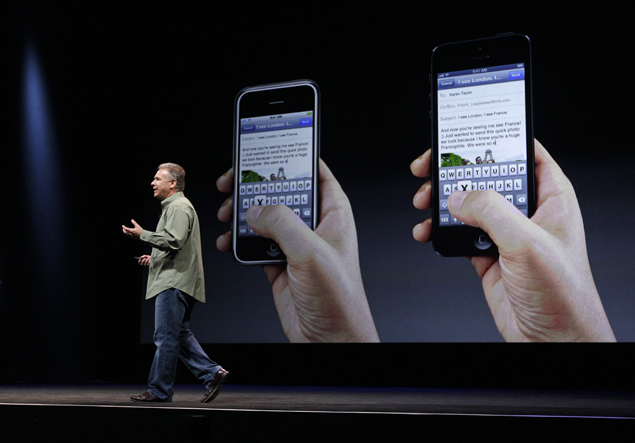
Asian mobile carriers look set to cash in on the iPhone 5 and its superfast speeds, but the model is not the game-changer that Apple needs if it to remain top of the heap, analysts said Thursday.
iPhone 5 launch in pics
The phone's use of Long-Term Evolution (LTE) wireless technology will allow carriers to increase their charges and boost profits as existing users download more content and smartphone non-converts are tempted to take the plunge.
But despite some new software, relatively minor tweaks to the hardware and an operating system that is starting to show its age risk leaving tech titan Apple trailing competitors such as South Korea's Samsung, and Google.
"The new iPhone will be Apple's most successful smartphone to date," said research firm Ovum from Melbourne.
"However, without a redesign of the iOS user experience and underlying software platform in the next two years, Apple will find itself in a position similar to Nokia and RIM with outdated smartphone platforms."
Kim Hue-jae at Daishin Securities said the main interest in the new iPhone had focused on its adoption of the fourth generation LTE network.
"The iPhone shows a significant enhancement only with the fact that it runs on LTE. It will help LTE operators to boost their subscribers," Kim said.
But in Japan, where Apple has 28.7 percent of the large and growing smartphone market, the iPhone is tied to the second and third largest carriers, KDDI and Softbank, neither of which yet runs a compatible 4G LTE network, according to Dow Jones Newswires.
Both companies say they intend to roll out an Apple-friendly LTE network sometime in the autumn, but neither has specified a date. The iPhone 5 hits stores in Japan on September 21, the same day it goes on sale in the United States, Canada, Britain, France, Germany, Singapore, Hong Kong and Australia.
Industry leader NTT DoCoMo, which has a stranglehold on about half of the Japanese mobile phone market, does offer a compatible network, but does not sell Apple products.
It is heavily pushing the phones running Google's Android operating system, such as Samsung's Galaxy S III, which has become the smartphone market leader in a number of countries in Asia and the West.
Apple and Samsung have been involved in patent row around the world and last month the US giant won more than $1 billion in a high-profile court case against its bitter rival.
This week the Wall Street Journal reported that Apple was shifting some orders for memory chips for the iPhone from Samsung Electronics to other regional manufacturers but banking giant HSBC said Samsung was unlikely to be badly hurt.
"We believe the iPhone 5 launch will have limited impact to Samsung component businesses and is potentially positive to earnings," it said, adding that Apple's supply chain "diversifications" had been expected.
Smartphones accounted for only 22.5 percent of the Japanese mobile phone market as of March, with the ratio expected to rise in coming years, according to MM Research Institute.
"Just from the promotion point of view, it's easier to sell new products with new functions than existing products," said Daiwa Securities analyst Koki Shiraishi said.
"The launch should make more people aware of the availability of smartphones and reach people who are yet to use them," he said.
But that in itself could cause problems.
The expected spike in demand might lead to production hiccups, said Michito Kimura, senior market analyst at IDC Japan.
"It is possible that supply shortage of major parts, such as semiconductors, may temporarily suppress high-end handsets," including iPhone 5, he said.
Some of Apple's suppliers got a boost from Wednesday's unveiling, with Meiko Electronics, a manufacturer of printed circuit boards, soaring over 10.73 percent on the Tokyo Stock Exchange. Murata Manufacturing was up 2.85 percent and TDK rose 3.70 percent.
But, said Kang Hyun-gie, an analyst at Solomon Investment & Securities in South Korea, market players were not that impressed.
"Overall, the iPhone 5 was disappointing hardware-wise. The software side seemed a bit promising, but is seems like it isn't good enough to excite investors," he said.
iPhone 5 launch in pics
Comments
For the latest tech news and reviews, follow Gadgets 360 on X, Facebook, WhatsApp, Threads and Google News. For the latest videos on gadgets and tech, subscribe to our YouTube channel. If you want to know everything about top influencers, follow our in-house Who'sThat360 on Instagram and YouTube.
Related Stories


Advertisement
Follow Us



-

03:30
How OPPO's LinkBoost Improves Network Connectivity -
02:59
Gadgets360 With Technical Guruji: Ask TG [April 13, 2024] -
02:24
Gadgets360 With Technical Guruji: Tech Tip [April 13, 2024] -
02:00
Gadgets360 With Technical Guruji: Did You Know [April 13, 2024] -
05:05
Gadgets360 With Technical Guruji: Samsung Launches Bespoke AI-Powered Home Appliances
-
OnePlus 11R सोलर रेड कलर मॉडल लॉन्च, 8GB रैम, 5000mAh बैटरी जैसे फीचर्स
-
Redmi Pad SE Snapdragon 680 चिपसेट के साथ 23 अप्रैल को होगा लॉन्च
-
Motorola Edge 50 Fusion, Edge 50 Ultra हुए 50MP कैमरा के साथ लॉन्च
-
Surya Tilak : अयोध्या में कैसे हुआ रामलला का सूर्य तिलक? जानें इसके पीछे का साइंस
-
Yamaha Aerox 155 S: 'Smart Key' के साथ लॉन्च हुआ यामाहा स्कूटर का नया वेरिएंट, ऑनलाइन करें बुक
Advertisement
Popular on Gadgets
- Galaxy S24 Series
- MWC 2024
- Apple Vision Pro
- Oneplus 12
- iPhone 14
- Apple iPhone 15
- OnePlus Nord CE 3 Lite 5G
- iPhone 13
- Xiaomi 14 Pro
- Oppo Find N3
- Tecno Spark Go (2023)
- Realme V30
- Best Phones Under 25000
- Samsung Galaxy S24 Series
- Cryptocurrency
- iQoo 12
- Samsung Galaxy S24 Ultra
- Giottus
- Samsung Galaxy Z Flip 5
- Apple 'Scary Fast'
- Housefull 5
- GoPro Hero 12 Black Review
- Invincible Season 2
- JioGlass
- HD Ready TV
- Laptop Under 50000
- Smartwatch Under 10000
- Latest Mobile Phones
- Compare Phones
Latest Gadgets
- Motorola Edge 50 Fusion
- Oppo A1i
- Oppo A1s
- Motorola Edge 50 Ultra
- Leica Leitz Phone 3
- Moto G64 5G
- Moto G04s
- iQOO Z9 Turbo
- Asus ZenBook Duo 2024 (UX8406)
- Dell Inspiron 14 Plus
- Realme Pad 2 Wi-Fi
- Redmi Pad Pro
- Cult Shock X
- Fire-Boltt Oracle
- Samsung Samsung Neo QLED 8K Smart TV QN800D
- Samsung Neo QLED 4K Smart TV (QN90D)
- Sony PlayStation 5 Slim Digital Edition
- Sony PlayStation 5 Slim
- Onida 1.5 Ton 3 Star Inverter Split AC (IR183TSN)
- Haier 1.5 Ton 3 Star Window AC (HWU18TF-EW3BE-FS)

- About Us
- Sitemaps
- Feedback
- Archives
- Contact Us
- RSS
- Advertise
- Career
- Privacy Policy
- Ethics
- Editorial Policy
- Terms & Conditions
- Complaint Redressal
Download Our Apps
Available in Hindi
© Copyright Red Pixels Ventures Limited 2024. All rights reserved.


