-
 Apple Is Working on a New Feature for Apple Watch That Will Send Alerts if the User Is Drowning15 April 2024
 -
Apple Could Reportedly Offer AI Features On-Device With iOS 18, But That Might Come at a Cost15 April 2024
-
Apple Loses Top Phonemaker Spot to Samsung as iPhone Shipments Drop, IDC Says15 April 2024
-
Apple Stock Value Surges By $112 Billion After Signal of AI Intent13 April 2024
-
Apple Plans to Overhaul Entire Mac Line With AI-Focused M4 Chips12 April 2024

- Home
- Mobiles
- Mobiles News
- iPhone 5 hits China as Apple shares slide further
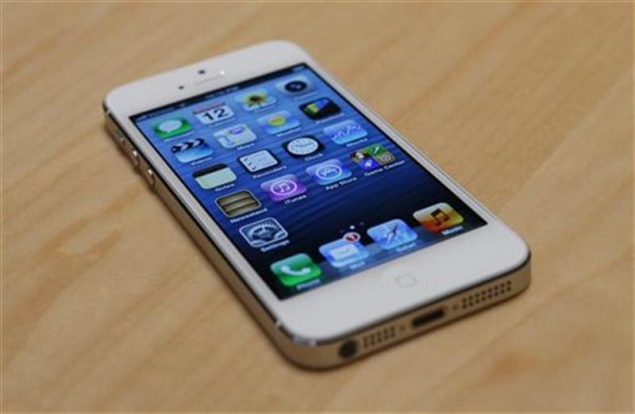
iPhone 5 hits China as Apple shares slide further
By Reuters | Updated: 16 December 2012 17:29 IST
Advertisement
The highly anticipated release of the iPhone 5 in China, Apple Inc's second-biggest market, failed to stop the recent share slide of the world's most valuable technology company on Friday, and analysts said Apple's longer-term China hopes may hinge on a partnership with the country's top telecoms carrier.
Unboxing the iPhone 5
Apple's latest iPhone, sporting a larger 4-inch screen and 4G capability, was launched in the United States and 30 other countries in September, when the company sold more than 5 million of the devices in the first three days.
Apple's shares, however once among the most desirable of portfolio holdings have headed steadily lower since September on growing uncertainty about the company's ability to fend off unprecedented competition. This year saw a surge in sales of Amazon.com Inc's cheaper Kindle Fire and Microsoft Corp's first foray into the tablet market with its Surface.
Unlike the crowds that the iPhone 5 debut drew in many cities around the world since September, just one person was waiting at the Apple store in Shanghai's financial district when its doors opened at 9 a.m. on Friday.
"Some of our Chinese sources do not expect the iPhone 5 to do as well as the iPhone 4S," UBS analyst Steven Milunovich wrote in a note to clients.
China is Apple's fastest-growing market, bringing in about 15 percent of total revenue.
"In absolute terms, this (iPhone 5) launch will certainly result in strong sales for Apple in China. However, in relative terms, I don't believe it will move the needle enough in market share," said Shiv Putcha, a Mumbai-based analyst at Ovum, a global technology consultant.
Apple shares were down 3.6 percent at $510.55 on the Nasdaq on Friday afternoon. The stock has lost a quarter of its value since hitting a high of $705.07 on September 21, as it faces increasing competition from phones using Google Inc's Android operating system.
Cutting forecasts
In addition, analysts cut their forecasts for shipments of the iPhone.
Jefferies analyst Peter Misek trimmed his iPhone shipment estimates for the January-March quarter, saying that the technology company had started cutting orders to suppliers to balance excess inventory.
Misek cut his first-quarter iPhone sales estimate to 48 million from 52 million and gross margin expectations for the company by 2 percentage points to 40 percent.
UBS Investment Research cut its price target on Apple stock to $700 from $780 on lower expected iPhone and iPad shipments for the March quarter.
The brokerage said it was modeling more conservative growth for Apple after making supply chain checks that revealed that fewer iPhones were being built.
The iPhone is currently sold through Apple's seven stores, resellers and through China Unicom and China Telecom which together have fewer than half the mobile subscribers of bigger rival China Mobile.
"Apple's market share declined because of the transition between the iPhone 4S and 5. Their market share will recover (with the iPhone 5), but if you don't have China Mobile, the significant market share gains will be very difficult," said Huang Leping, an analyst at Nomura in Hong Kong.
Apple has been in talks about a tie-up with China Mobile for four years.
A deal with China's biggest carrier is seen as crucial to improve Apple's distribution in a market of 290 million users - which is forecast to double this year. But the company's failure to strike a deal with China Mobile means it is missing out on a large number of phone users.
As the China pie grows, Apple's sales increase, but without China Mobile, it is losing ground at a faster rate compared with other brands.
China Mobile and Apple initially said they were separated only by a technical issue - as the Chinese carrier runs a different 3G network from most of the world - but that has evolved into a broader and more complex issue of revenue-sharing.
"China Mobile and Apple still have to solve many issues, such as the business model, articles of cooperation and revenue division, but I believe we will reach an agreement eventually," China Mobile CEO Li Yue was reported by Chinese media as saying in Guangzhou last week.
Apple China declined to comment. China Mobile said it had no update to the Apple discussions.
In addition to Apple's share fall, shares of some of the company's suppliers were also down on Friday afternoon. Shares of Jabil Circuit Inc were down 5.6 percent at $17.50, Qualcomm Inc shares were down 3.2 percent at $60.76, Skyworks Solutions Inc stock was down 6.7 percent at $19.65, TriQuint Semiconductor Inc was down 3.9 percent at $4.65, Avago Technologies Ltd was down 3.9 percent at $32.38 and Cirrus Logic Inc was down 6.5 percent at $25.62.
China deal seen eventually
Cutting a deal with a Chinese state-owned carrier may be less optimal than the deals Apple is used to in other markets, and analysts note that China Mobile would not necessarily open the flood gates for Apple.
Ovum's Putcha believes Apple and China Mobile will eventually strike a deal - though this would be for an iPhone running on China Mobile's next-generation network rather than its current 3G network.
Of China Mobile's 704 million subscribers, only 79 million are on its 3G network, and Apple has been reluctant to sign up to China Mobile's underutilized, homegrown TD-SCDMA technology. "Apple likely doesn't see the return-on-investment in extending themselves for TD-SCDMA," Putcha said.
China Mobile is currently conducting a trial of its next-generation network, TD-LTE, which could be of more interest to Apple, but full-scale commercial use - and an iPhone tie-up - could still be years away.
Android threat
Meanwhile, rivals are circling, eating away at Apple's smartphone market share. Samsung Electronics, Lenovo Group and little-known Chinese brand Coolpad held the top three slots in the third quarter, according to research firm DC.
All three have relationships with China Mobile and offer smartphone models at different price points. Apple competes exclusively at the high end, and even there, rivals are rolling out models with China Mobile. Last week, Nokia said it planned to release its latest Lumia smartphone with China's top carrier, which is also expected to launch Research in Motion's new Blackberry 10, analysts predict.
"The threat will still come more from the Android camp where they have many vendors already working with China Mobile and offering high-end phones," said TZ Wong, a Singapore-based IDC analyst.
While these smartphones do not generate the buzz of a new iPhone, Chinese buyers are not known for their brand loyalty, and this could siphon away users considering an Apple upgrade.
"I've used a Blackberry, Android and iOS and, personally, I want to try the Windows 8," said Andy Huang, a 37-year-old fund manager, who owns most iPad models, an iPhone 4 and a 4S. "I think the Windows 8 is very innovative."
With a China Mobile deal appearing to be still a ways off, Apple could always boost market share by offering cheaper models - the basic iPhone 5 will cost 5,288 yuan without a contract - though this appears an unlikely route for a high-end brand.
"If they want to expand market share, probably the only way to do it here dramatically would be to put out a lower-cost phone," said Michael Clendenin, managing director at RedTech Advisors. "It's really uncertain if they'd decide to go that route ... Apple's a mystery in that regard."
© Thomson Reuters 2012
Unboxing the iPhone 5
Comments
For the latest tech news and reviews, follow Gadgets 360 on X, Facebook, WhatsApp, Threads and Google News. For the latest videos on gadgets and tech, subscribe to our YouTube channel. If you want to know everything about top influencers, follow our in-house Who'sThat360 on Instagram and YouTube.
Related Stories



Advertisement
Follow Us




-

03:30
How OPPO's LinkBoost Improves Network Connectivity -
02:59
Gadgets360 With Technical Guruji: Ask TG [April 13, 2024] -
02:24
Gadgets360 With Technical Guruji: Tech Tip [April 13, 2024] -
02:00
Gadgets360 With Technical Guruji: Did You Know [April 13, 2024] -
05:05
Gadgets360 With Technical Guruji: Samsung Launches Bespoke AI-Powered Home Appliances
Advertisement
Popular on Gadgets
- Galaxy S24 Series
- MWC 2024
- Apple Vision Pro
- Oneplus 12
- iPhone 14
- Apple iPhone 15
- OnePlus Nord CE 3 Lite 5G
- iPhone 13
- Xiaomi 14 Pro
- Oppo Find N3
- Tecno Spark Go (2023)
- Realme V30
- Best Phones Under 25000
- Samsung Galaxy S24 Series
- Cryptocurrency
- iQoo 12
- Samsung Galaxy S24 Ultra
- Giottus
- Samsung Galaxy Z Flip 5
- Apple 'Scary Fast'
- Housefull 5
- GoPro Hero 12 Black Review
- Invincible Season 2
- JioGlass
- HD Ready TV
- Laptop Under 50000
- Smartwatch Under 10000
- Latest Mobile Phones
- Compare Phones
Latest Gadgets
- Motorola Edge 50 Fusion
- Oppo A1i
- Oppo A1s
- Motorola Edge 50 Ultra
- Leica Leitz Phone 3
- Moto G64 5G
- Moto G04s
- iQOO Z9 Turbo
- Asus ZenBook Duo 2024 (UX8406)
- Dell Inspiron 14 Plus
- Realme Pad 2 Wi-Fi
- Redmi Pad Pro
- Cult Shock X
- Fire-Boltt Oracle
- LG 65-inch 4K Ultra HD Smart LED TV 65UR7500PSC
- Xiaomi 32 Inch LED HD Ready Smart TV (L32M6-RA-L32M7-RA)
- Sony PlayStation 5 Slim Digital Edition
- Sony PlayStation 5 Slim
- Onida 1.5 Ton 3 Star Inverter Split AC (IR183TSN)
- Haier 1.5 Ton 3 Star Window AC (HWU18TF-EW3BE-FS)

- About Us
- Sitemaps
- Feedback
- Archives
- Contact Us
- RSS
- Advertise
- Career
- Privacy Policy
- Ethics
- Editorial Policy
- Terms & Conditions
- Complaint Redressal
Download Our Apps
Available in Hindi
© Copyright Red Pixels Ventures Limited 2024. All rights reserved.


