-
 Google Pixel 9 User Interface for Purported iPhone 15-Like Satellite Connectivity Feature Leaked: See Video16 April 2024
 -
Samsung One UI 6.1 Update With Galaxy AI Features Coming to Galaxy S22 Series, 2022 Foldables, Tab S8 Series in May16 April 2024
-
Samsung Galaxy C55 5G With Snapdragon 7 Gen 1 SoC, 8GB RAM Reportedly Surfaces on Geekbench15 April 2024
-
Apple Loses Top Phonemaker Spot to Samsung as iPhone Shipments Drop, IDC Says15 April 2024
-
Samsung’s Galaxy AI Update Hints at the Possibility of Expanding the Features to More Devices12 April 2024

- Home
- Mobiles
- Mobiles News
- Global mobile sales dip 3 percent in Q3, but smartphones sales soar 47 percent: Gartner
Global mobile sales dip 3 percent in Q3, but smartphones sales soar 47 percent: Gartner
By Press Trust of India | Updated: 14 November 2012 17:11 IST
Advertisement
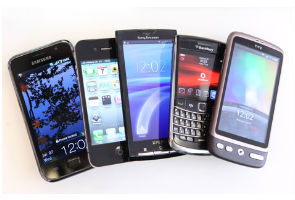
Despite a 3 percent dip in global mobile phone sales to 428 million units in the third quarter, smartphone sales jumped a full 47 percent, according data released by research firm Gartner.
It said Korean major Samsung widened the gap with Apple taking the share of such handsets to 39.6 percent of the total cellular phones sales.
Smartphones continued to fuel sales of mobile phones worldwide with sales rising to 169.2 million units in the third quarter, Gartner said, adding that the smartphone market is dominated by Samsung and Apple.
The quarter also saw Samsung becoming the largest mobile handset market with 22.9 percent of the overall market share, selling 98 million units, up from 18.7 percent a year ago, it said.
This has had the Finnish major Nokia slipping to No. 2 slot with only 19.2 percent global share, down from 23.9 percent a year ago, Gartner said. The iconic Apple is at a distant third place with 5.5 percent, up from 3.9 percent a year ago, it added.
"Both vendors together controlled 46.5 percent of smartphone market leaving a handful of vendors fighting over a distant third spot," it said.
The quarter saw Samsung further widening the gap with Apple in the smartphone market, selling 55 million units, driven by its Galaxy series across different price points. The Korean company commanding 32.5 percent of the global smartphone market during the quarter.
Overall, Samsung's mobile phones sales accelerated, totalling almost 98 million units in Q3, up 18.6 percent year-on-year.
According to the latest Garnter numbers, sales of mobile phones reached almost 428 million units in Q3, down 3.1 percent from a year ago, even as smartphone sales accounted for 39.6 percent of total mobile phone sales, as smartphone sales zoomed 46.9 percent.
"After two consecutive quarters of decline in mobile phone sales, demand has improved in both developed and emerging markets as sales increased sequentially," said Anshul Gupta, principal research analyst at Gartner.
He added that the growth was driven by the qworld's largest market China where sales growth was driven by
smartphones, but demand of feature phones remained weak, while mature markets finally saw replacement sales picking up with the launch of new devices in the quarter.
Nokia slipped from the No. 3 slot in the second quarter to a distant No. 7 in smartphones in Q3, while RIM moved to the No. 3 spot followed by HTC at No. 4.
"Both HTC and RIM have seen their sales declining in the past few quarters, and the challenges might prevent them from holding on to their current rankings in coming quarters," Gupta added.
While seasonality in the fourth quarter will help end-of-year sales, Gartner warned that there will be a lower-than-usual boost from the holiday season as "consumers are either cautious with their spending or finding new gadgets like tablets, as more attractive presents".
Nokia's sales declined 21.9 percent, but overall sales at 82.3 million were better than Gartner's early estimate, largely driven by increased sales of the Asha full-touch range.
Nokia had a particularly bad quarter with smartphone sales, and it tumbled to the No 7 worldwide position with 7.2 million smartphones sold in the third quarter.
The arrival of the new Lumia devices on Windows 8 should help to halt the decline in share in the fourth quarter, although it won't be until 2013 to see a significant improvement in Nokia's position, says the report.
Apple's sales totalled 23.6 million units, up 36.2 percent year-on-year.
"We saw inventory built up into the channel as Apple prepared for the coming holiday season, global expansions and the launch into China in the fourth quarter," Gupta said, adding with iPhone 5 launching in more territories in the current quarter, including China, and the upcoming holiday season Gartner analysts expect Apple will have its traditionally strongest quarter.
In the smartphone market, Android continued to increase its market share, up 19.9 percentage points. Although RIM lost market share, it climbed to the No 3 position as Symbian is nearing the end of its lifecycle.
Comments
For the latest tech news and reviews, follow Gadgets 360 on X, Facebook, WhatsApp, Threads and Google News. For the latest videos on gadgets and tech, subscribe to our YouTube channel. If you want to know everything about top influencers, follow our in-house Who'sThat360 on Instagram and YouTube.
Related Stories




Advertisement
Follow Us




-

03:30
How OPPO's LinkBoost Improves Network Connectivity -
02:59
Gadgets360 With Technical Guruji: Ask TG [April 13, 2024] -
02:24
Gadgets360 With Technical Guruji: Tech Tip [April 13, 2024] -
02:00
Gadgets360 With Technical Guruji: Did You Know [April 13, 2024] -
05:05
Gadgets360 With Technical Guruji: Samsung Launches Bespoke AI-Powered Home Appliances
Advertisement
Popular on Gadgets
- Galaxy S24 Series
- MWC 2024
- Apple Vision Pro
- Oneplus 12
- iPhone 14
- Apple iPhone 15
- OnePlus Nord CE 3 Lite 5G
- iPhone 13
- Xiaomi 14 Pro
- Oppo Find N3
- Tecno Spark Go (2023)
- Realme V30
- Best Phones Under 25000
- Samsung Galaxy S24 Series
- Cryptocurrency
- iQoo 12
- Samsung Galaxy S24 Ultra
- Giottus
- Samsung Galaxy Z Flip 5
- Apple 'Scary Fast'
- Housefull 5
- GoPro Hero 12 Black Review
- Invincible Season 2
- JioGlass
- HD Ready TV
- Laptop Under 50000
- Smartwatch Under 10000
- Latest Mobile Phones
- Compare Phones
Latest Gadgets
- Motorola Edge 50 Fusion
- Oppo A1i
- Oppo A1s
- Motorola Edge 50 Ultra
- Leica Leitz Phone 3
- Moto G64 5G
- Moto G04s
- iQOO Z9 Turbo
- Asus ZenBook Duo 2024 (UX8406)
- Dell Inspiron 14 Plus
- Realme Pad 2 Wi-Fi
- Redmi Pad Pro
- Cult Shock X
- Fire-Boltt Oracle
- LG 65-inch 4K Ultra HD Smart LED TV 65UR7500PSC
- Xiaomi 32 Inch LED HD Ready Smart TV (L32M6-RA-L32M7-RA)
- Sony PlayStation 5 Slim Digital Edition
- Sony PlayStation 5 Slim
- Onida 1.5 Ton 3 Star Inverter Split AC (IR183TSN)
- Haier 1.5 Ton 3 Star Window AC (HWU18TF-EW3BE-FS)

- About Us
- Sitemaps
- Feedback
- Archives
- Contact Us
- RSS
- Advertise
- Career
- Privacy Policy
- Ethics
- Editorial Policy
- Terms & Conditions
- Complaint Redressal
Download Our Apps
Available in Hindi
© Copyright Red Pixels Ventures Limited 2024. All rights reserved.


