




- Home
- Mobiles
- Mobiles News
- Everything you want to know about nano SIM being used in iPhone 5
Everything you want to know about nano-SIM being used in iPhone 5
By NDTV Correspondent | Updated: 26 October 2012 16:54 IST

Advertisement
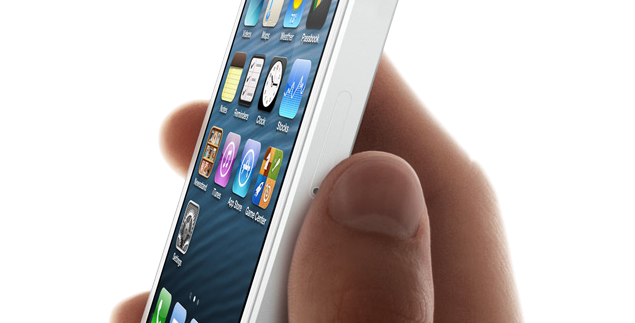
Apple announced the iPhone 5 at a press event in San Francisco on Wednesday and as expected the new phone will be using the recently approved nano-SIM standard. As there is a lot of confusion surrounding this new SIM card standard, we have compiled all the details about the nano-SIM cards.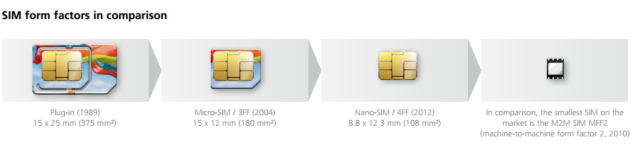
The European Telecommunications Standards Institute (ETSI) introduced the Apple designed nano-SIM format back in June. It is 40 percent smaller than the current micro-SIM format and measures just 12.3mm wide by 8.8mm high, and 0.67mm thick.
"Today's SIM card designs take up a significant amount of space inside a mobile device. This space is more and more valuable in today's handsets which deliver an ever increasing number of features," ETSI noted in press release at the time of nano-SIM announcement.
The new SIM is no way different (apart from the size) than the existing SIM cards and it offers the same functionality.
Nano-SIM challenges
While the nano-SIM might be smaller, there is a downside to it. Unlike the micro-SIM cards, which could be made by simply cutting the normal SIM cards, nano-SIM cards cannot be made this way, as nano-SIM is also 15pc thinner than micro-SIM. So, even if normal/micro-SIM can be cut to the nano-SIM size, there is no way to reduce the thickness.
Update: Cutting a SIM/ micro-SIM into a nano-SIM may be possible after all
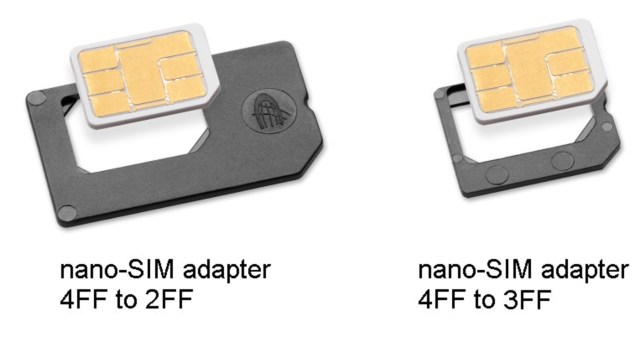
The consumers will have to get the nano-SIM cards directly from their telecom operators; however adapters can be used to convert nano-SIM cards to a micro-SIM or a normal SIM card.
Several adapters are already available in the market to allow users to get ready ahead of iPhone 5 availability.
Nano-SIM availability
According to online reports, telecom operators have already procured nano-SIM cards anticipating their high demand because of iPhone 5 launch. There are millions of nano-SIM cards already lying in warehouses, ready to be released in the market.
Unconfirmed reports suggest that Indian telecom operators have also placed the orders for nano-SIM cards though there is no confirmation on the Indian launch of iPhone 5.
Other manufacturers
Similar to micro-SIM adoption, we are expecting other mobile manufacturers to start using nano-SIM cards soon given the fact that they are smaller and give more space for other components in the phone design. Apple was also the first manufacturer the use micro-SIM cards same as it is doing with nano-SIM cards.
Image Credit:G&D
Also see: Cutting a SIM/ micro-SIM into a nano-SIM may be possible after all
Comments
For the latest tech news and reviews, follow Gadgets 360 on X, Facebook, WhatsApp, Threads and Google News. For the latest videos on gadgets and tech, subscribe to our YouTube channel. If you want to know everything about top influencers, follow our in-house Who'sThat360 on Instagram and YouTube.
Further reading:
nano SIM, Apple, SIM cards, The European Telecommunications Standards Institute, iPhone 5
Related Stories



Advertisement

Follow Us

-

01:18
Gadgets 360 With Technical Guruji: Did You Know This About the Firefox Logo? -
02:23
Gadgets 360 With Technical Guruji: Hands on With the Samsung Galaxy Book5 Pro 360 -
02:23
Gadgets 360 With Technical Guruji: A Quick Look at the Google Pixel 9a -
01:31
Gadgets 360 With Technical Guruji: Scanning Documents Without Third-Party Apps -
02:40
Gadgets 360 With Technical Guruji: News of the Week [March 29, 2025]
-
WhatsApp लाया iOS यूजर्स के लिए बड़े काम का फीचर, जानें कैसे
-
Redmi A5 स्मार्टफोन 5200mAh बैटरी, 32MP कैमरा के साथ हुआ लॉन्च, जानें
-
OnePlus 13 vs Poco F7 Ultra: जानें कौन सा फोन है बेस्ट
-
7000mAh की धांसू बैटरी जैसे फीचर्स के साथ Oppo K13, K13 Pro फोन जल्द होंगे लॉन्च!
-
भारत में 5G यूजर्स की संख्या 25 करोड़ के पार! 2 लाख से ज्यादा गांवों में पहुंचा ब्रॉडबैंड
Advertisement
Popular on Gadgets
- Samsung Galaxy Unpacked 2025
- ChatGPT
- Redmi Note 14 Pro+
- iPhone 16
- Apple Vision Pro
- Oneplus 12
- OnePlus Nord CE 3 Lite 5G
- iPhone 13
- Xiaomi 14 Pro
- Oppo Find N3
- Tecno Spark Go (2023)
- Realme V30
- Best Phones Under 25000
- Samsung Galaxy S24 Series
- Cryptocurrency
- iQoo 12
- Samsung Galaxy S24 Ultra
- Giottus
- Samsung Galaxy Z Flip 5
- Apple 'Scary Fast'
- Housefull 5
- GoPro Hero 12 Black Review
- Invincible Season 2
- JioGlass
- HD Ready TV
- Laptop Under 50000
- Smartwatch Under 10000
- Latest Mobile Phones
- Compare Phones
Latest Gadgets
- Vivo Y300i
- Realme 14 5G
- Poco F7 Ultra
- Poco F7 Pro
- Samsung Galaxy M05
- Vivo Y39 5G
- Samsung Galaxy M06 5G
- Samsung Galaxy M16 5G
- Acer TravelLite (2025)
- Asus Zenbook 14 (2025)
- Honor Pad X9a
- Lenovo Idea Tab Pro
- boAt Storm Infinity
- Itel Unicorn Max
- Haier M95E
- Sony 65 Inches Ultra HD (4K) LED Smart TV (KD-65X74L)
- Sony PlayStation 5 Pro
- Sony PlayStation 5 Slim Digital Edition
- Blue Star 1.5 Ton 3 Star Inverter Split AC (IC318DNUHC)
- Blue Star 1.5 Ton 3 Star Inverter Split AC (IA318VKU)

- About Us
- Sitemaps
- Feedback
- Archives
- Contact Us
- RSS
- Advertise
- Career
- Privacy Policy
- Ethics
- Editorial Policy
- Terms & Conditions
- Complaint Redressal
Download Our Apps
Available in Hindi
© Copyright Red Pixels Ventures Limited 2025. All rights reserved.


