-
 BlackBerry Plans to Settle Shareholder Lawsuit Over BlackBerry 10, Avoiding Trial7 April 2022
 -
BlackBerry Pulls Life Support for Once-Indispensable Business Smartphones5 January 2022
-
BlackBerry OS Phones to Stop Working Properly Starting January 41 January 2022
-
BlackBerry Must Face Revived US Lawsuit Over BlackBerry 1020 March 2018
-
WhatsApp Users on BlackBerry 10 OS Get 2-Week Reprieve Past 'End of Life': Report2 January 2018

- Home
- Mobiles
- Mobiles News
- BlackBerry CEO confirms encouraging UK sales; disappointed with US launch delay
BlackBerry CEO confirms encouraging UK sales; disappointed with US launch delay
By Associated Press | Updated: 5 February 2013 12:19 IST
Advertisement
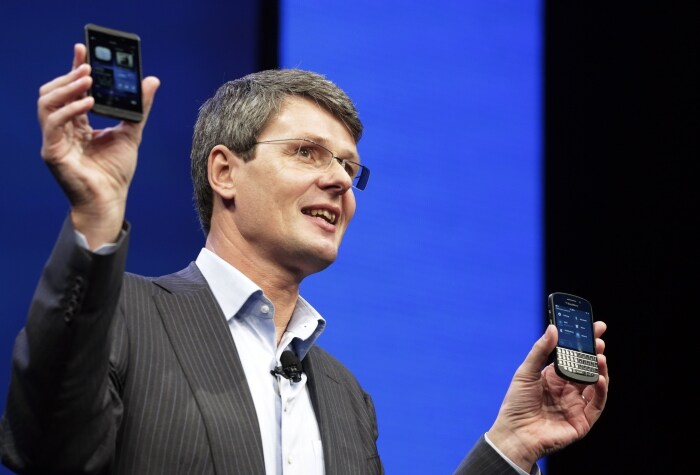
The chief executive of Research In Motion said he's disappointed the new BlackBerry won't be released in the United States until mid-March, but he said early data suggests sales in the U.K. are above expectations.

BlackBerry 10 Launch: In pictures
Thorsten Heins said in an interview Monday with The Associated Press that he was disappointed in the mid-March U.S. release date. But he said the U.S. and its phone carriers have a rigid testing system.
"We need to respect that. Am I a bit disappointed? Yeah, I would be lying saying no. But it is what it is and we're working with all our carrier partners to speed it up as much as we can," Heins said in an interview at the Ritz Carlton in Toronto.
RIM unveiled new BlackBerrys last week after excruciating delays allowed Apple, Samsung and others to build commanding leads in the industry. The stock fell 12 percent after Wednesday's kickoff, despite positive reviews about the new BlackBerry 10 operating system. There's concern the phone isn't coming out sooner after RIM announced a March U.S. release date last week.
Heins told the AP that it will be mid-March.
The first device in the new crop of the much-delayed revamped BlackBerrys will be the touchscreen Z10. Black and white versions were released in the U.K. last Thursday and will be released in Canada on Tuesday.
Heins said a substantial number of U.K. users are moving from other platforms to BlackBerry and said that's an encouraging sign because they first targeted longtime BlackBerry users.
"It's beyond expectations," Heins said. "White is sold out already. The black is hard to stock up again. It's very encouraging. I won't share the number because I need to verify it, but we are getting a substantial number of users moving from other platforms to BlackBerry. That is an interesting data point."
Shares of RIM closed up 15 percent Monday on initial reports of strong U.K. sales and after an analyst upgraded the stock.
Heins said they have to retake market share in the U.S. for BlackBerry to be successful. The U.S. has been one market in which RIM has been particularly hurting, even as the company is doing well in many places overseas. According to research firm IDC, shipments of BlackBerry phones plummeted from 46 percent of the U.S. market in 2008 to 2 percent in 2012. The iPhone and Android now dominate.
Heins, who one year ago replaced longtime executives who had presided over BlackBerry's fall, said he's confident BlackBerry can become the third ecosystem behind Apple and phones running Google's Android operating system.
"We need to win back market share to be relevant," Heins said. "We have to be aggressive in the U.S. market."
The new BlackBerrys are a make-or-break product lineup after the pioneering brand lost its cachet not long after Apple's 2007 release of the iPhone, which reset expectations for what a smartphone should do.
RIM promised a new system to catch up, using technology it got through its 2010 purchase of QNX Software Systems. But it has taken more than two years to unveil new phones that are redesigned for the new multimedia, Internet browsing and apps experience that customers are now demanding. RIM initially said the new BlackBerry with the revamped software would come by early 2012, but then the company changed that to late 2012. A few months later, that date was pushed back further, to early 2013, missing the lucrative holiday season. The holdup helped wipe out more than $70 billion in shareholder wealth and 5,000 jobs.
As RIM previously disclosed, the first phone will have only a touch-screen keyboard, like Apple Inc.'s trend-setting iPhone and most phones running Android, including Samsung Electronic Co.'s popular Galaxy line.
The Q10 will follow and will have a physical keyboard, a feature that has kept BlackBerry users loyal over the years because it makes typing easier. RIM said last week the Q10 will start going on sale on some global carriers in April, but didn't say when U.S. carriers will have it.
Heins told the AP it depends on the carriers, but said keyboard versions will likely be released eight to 10 weeks after a carrier releases the touch version.
That could mean the Q10 keyboard version might not be released in the U.S. until much later than mid-March or April.
Some analysts have questioned RIM for releasing a touch version first considering its most loyal users love the physical keyboard for typing.
Heins said the full touch screen was more complicated and they needed to focus on releasing that first. He has also acknowledged that RIM failed to quickly adapt to the emerging "bring your own device" trend, in which employees bring their personal touch-screen iPhones or Android devices to work instead of relying on BlackBerrys issued by their employers
Heins said they want to participate in that trend by releasing a touch version first.
BlackBerry 10 Launch: In pictures
Comments
For the latest tech news and reviews, follow Gadgets 360 on X, Facebook, WhatsApp, Threads and Google News. For the latest videos on gadgets and tech, subscribe to our YouTube channel. If you want to know everything about top influencers, follow our in-house Who'sThat360 on Instagram and YouTube.
Further reading:
BlackBerry 10, BlackBerry Q10, BlackBerry Z10, BlackBerry mobiles, Thorsten Heins, mobiles
Related Stories


Advertisement
Follow Us




-

03:19
Gadgets 360 With Technical Guruji: Something About the Nothing Ear, Ear (a) -
19:21
Gadgets 360 With Technical Guruji: Samsung's New AI Smart TVs, Nothing Ear -
05:23
Gadgets 360 With Technical Guruji: Samsung's New AI Smart TVs -
01:17
Gadgets 360 With Technical Guruji: Tech Tip [April 20, 2024] -
02:05
Gadgets 360 With Technical Guruji: Ask TG [April 20, 2024]
Advertisement
Popular on Gadgets
- AI
- iPhone 16 Leaks
- Apple Vision Pro
- Oneplus 12
- iPhone 14
- Apple iPhone 15
- OnePlus Nord CE 3 Lite 5G
- iPhone 13
- Xiaomi 14 Pro
- Oppo Find N3
- Tecno Spark Go (2023)
- Realme V30
- Best Phones Under 25000
- Samsung Galaxy S24 Series
- Cryptocurrency
- iQoo 12
- Samsung Galaxy S24 Ultra
- Giottus
- Samsung Galaxy Z Flip 5
- Apple 'Scary Fast'
- Housefull 5
- GoPro Hero 12 Black Review
- Invincible Season 2
- JioGlass
- HD Ready TV
- Laptop Under 50000
- Smartwatch Under 10000
- Latest Mobile Phones
- Compare Phones
Latest Gadgets
- HMD Pulse
- HMD Pulse+
- HMD Pulse Pro
- Realme Narzo 70x 5G
- Realme Narzo 70 5G
- Samsung Galaxy C55
- Blackview Hero 10
- Oppo K12
- Lenovo IdeaPad Pro 5i
- Asus ZenBook Duo 2024 (UX8406)
- Realme Pad 2 Wi-Fi
- Redmi Pad Pro
- boAt Storm Call 3
- Lava ProWatch Zn
- Samsung Samsung Neo QLED 8K Smart TV QN800D
- Samsung Neo QLED 4K Smart TV (QN90D)
- Sony PlayStation 5 Slim Digital Edition
- Sony PlayStation 5 Slim
- Lloyd 1.5 Ton 3 Star Inverter Split AC (GLS18I3FOSEW)
- Haier 1.5 Ton 3 Star Triple Inverter Split AC (HSU18K-PYSS3BN-INV)

- About Us
- Sitemaps
- Feedback
- Archives
- Contact Us
- RSS
- Advertise
- Career
- Privacy Policy
- Ethics
- Editorial Policy
- Terms & Conditions
- Complaint Redressal
Download Our Apps
Available in Hindi
© Copyright Red Pixels Ventures Limited 2024. All rights reserved.


