-
 Apple's 12.9-Inch iPad Air Tipped to Feature LCD Panel Just Like 5th Gen iPad Air Model25 April 2024
 -
Apple's Calculator App to Get a Major Upgrade, Could Be Released on the iPad: Report25 April 2024
-
Apple iPhone 15 Price in India Temporarily Cut on Flipkart: Here's How Much It Costs Now25 April 2024
-
Apple Watch X to Feature New Motherboard Design That Could Make it Thinner: Report25 April 2024
-
Apple OpenELM Open Source Small AI Models Released, Could Pave the Way for On-Device AI Features on iPhone25 April 2024

- Home
- Mobiles
- Mobiles News
- Apple's new found India love signals a rethink
Apple's new-found India love signals a rethink
By Reuters | Updated: 25 February 2013 10:23 IST
Advertisement
As BlackBerry launches the first smartphone from its make-or-break BB10 line in India, one of its most loyal markets, the company faces new competition from a formidable rival that has long had a minimal presence in the country.
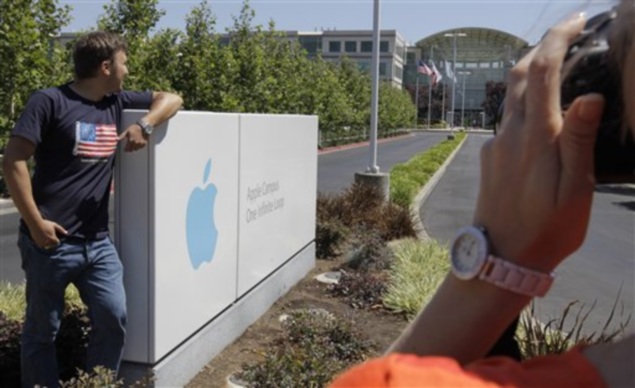
More than four years after it started selling iPhones in India, Apple Inc is now aggressively pushing the iconic device through instalment payment plans that make it more affordable, a new distribution model and heavy marketing blitz.
"Now your dream phone" at 5,056 rupees, read a recent full front-page ad for an iPhone 5 in the Times of India, referring to the initial payment on a phone priced at $840, or almost two months' wages for an entry-level software engineer.
The new-found interest in India suggests a subtle strategy shift for Apple, which has moved tentatively in emerging markets and has allowed rivals such as Samsung and Blackberry to dominate with more affordable smartphones. With the exception of China, all of its Apple stores are in advanced economies.
Apple expanded its India sales effort in the latter half of 2012 by adding two distributors. Previously it sold iPhones only through a few carriers and stores it calls premium resellers.
The result: iPhone shipments to India between October and December nearly tripled to 250,000 units from 90,000 in the previous quarter, according to an estimate by Jessica Kwee, a Singapore-based analyst at consultancy Canalys.
At The MobileStore, an Indian chain owned by the Essar conglomerate, which says it sells 15 percent of iPhones in the country, iPhone sales tripled between December and January, thanks to a monthly payment scheme launched last month.
"Most people in India can't afford a dollar-priced phone when the salaries in India are rupee salaries. But the desire is the same," said Himanshu Chakrawarti, its chief executive.
Apple, the distributors, retailers and banks share the advertising and interest cost of the marketing push, according to Chakrawarti. Carriers like Bharti Airtel Ltd, which also sell the iPhone 5, run separate ads.
India is the world's No. 2 cellphone market by users, but most Indians can't afford fancy handsets. Smartphones account for just a tenth of total phone sales. In India, 95 percent of cellphone users have prepaid accounts without a fixed contract. Unlike in the United States, carriers do not subsidise handsets.
Within the smartphone segment, Apple's Indian market share last quarter was just 5 percent, according to Canalys, meaning its overall penetration is tiny.
Still, industry research firm IDC expects the Indian smartphone market to grow more than five times from about 19 million units last year to 108 million in 2016, which presents a big opportunity.
Samsung Electronics dominates Indian smartphone sales with a 40 percent share, thanks to its wide portfolio of Android devices priced as low as $110. The market has also been flooded by cheaper Android phones from local brands such as Micromax and Lava.
Most smartphones sold in India are much cheaper than the iPhone, said Gartner analyst Anshul Gupta.
"Where the masses are - there, Apple still has a gap."
'I love India, but..'
Apple helped create the smartphone industry with the iPhone in 2007. But last year Apple lost its lead globally to Samsung whose smartphones, which run Google's free Android software, are especially attractive in Asia.
Many in Silicon Valley and Wall Street believe the surest way to penetrate lower-income Asian markets would be with a cheaper iPhone, as has been widely reported but never confirmed. The risk is that a cheap iPhone would cannibalise demand for the premium version and eat into Apple's peerless margins.
The new monthly payment plan in India goes a long way to expanding the potential market, said Chakrawarti.
"The Apple campaign is not meant for really the regular top-end customer, it is meant to upgrade the 10,000-12,000 handset guy to 45,000 rupees," he said.
Apple's main focus for expansion in Asia has been Greater China, including Taiwan and Hong Kong, where revenue grew 60 percent last quarter to $7.3 billion.
Asked last year why Apple had not been as successful in India, Chief Executive Tim Cook said its business in India was growing but the group remained more focused on other markets.
"I love India, but I believe that Apple has some higher potential in the intermediate term in some other countries," Cook said. "The multi-layer distribution there really adds to the cost of getting products to market," he said at the time.
Apple, which has partly addressed that by adding distributors, did not respond to an email seeking comment.
Ingram Micro Inc, one of its new distributors, also declined comment. Executives at Redington (India) Ltd, the other distributor, could not immediately be reached.
BlackBerry, which has seen its global market share shrivel to 3.4 percent from 20 percent over the past three years, is making what is seen as a last-ditch effort to save itself with the BB10 series.
The high-end BlackBerry Z10 to be launched in India on Monday is expected to be priced not far from the 45,500 rupees price tag for an iPhone 5 with 16 gigabytes of memory. Samsung's Galaxy S3 and Galaxy Note 2, Nokia's Lumia 920 and two HTC Corp models are the main iPhone rivals.
Until last year, Blackberry was the No. 3 smartphone brand in India with market share of more than 10 percent, thanks to a push into the consumer segment with lower-priced phones. Last quarter its share fell to about 5 percent, putting it in fifth place, according to Canalys. Apple was sixth.
© Thomson Reuters 2013
Comments
For the latest tech news and reviews, follow Gadgets 360 on X, Facebook, WhatsApp, Threads and Google News. For the latest videos on gadgets and tech, subscribe to our YouTube channel. If you want to know everything about top influencers, follow our in-house Who'sThat360 on Instagram and YouTube.
Related Stories





Advertisement
Follow Us




-

03:19
Gadgets 360 With Technical Guruji: Something About the Nothing Ear, Ear (a) -
19:21
Gadgets 360 With Technical Guruji: Samsung's New AI Smart TVs, Nothing Ear -
05:23
Gadgets 360 With Technical Guruji: Samsung's New AI Smart TVs -
01:17
Gadgets 360 With Technical Guruji: Tech Tip [April 20, 2024] -
02:05
Gadgets 360 With Technical Guruji: Ask TG [April 20, 2024]
-
Oppo A60 4G होगा 5000mAh बैटरी, 50MP कैमरा, 45W चार्जिंग वाला सस्ता फोन!
-
Oppo A3 के स्पेसिफिकेशंस और फोटो लीक, जल्द देगा दस्तक
-
लॉन्च से पहले देखें Infinix GT 20 Pro की पूरी ‘कुंडली', जल्द होगा लॉन्च
-
सबसे बड़े क्रिप्टो एक्सचेंज Binance के फाउंडर Changpeng Zhao को हो सकती है 3 वर्ष की जेल
-
Nokia स्मार्टफोन बनाने वाली कंपनी ने लॉन्च किया HMD Vibe फोन, जानें फीचर्स, कीमत
Advertisement
Popular on Gadgets
- AI
- iPhone 16 Leaks
- Apple Vision Pro
- Oneplus 12
- iPhone 14
- Apple iPhone 15
- OnePlus Nord CE 3 Lite 5G
- iPhone 13
- Xiaomi 14 Pro
- Oppo Find N3
- Tecno Spark Go (2023)
- Realme V30
- Best Phones Under 25000
- Samsung Galaxy S24 Series
- Cryptocurrency
- iQoo 12
- Samsung Galaxy S24 Ultra
- Giottus
- Samsung Galaxy Z Flip 5
- Apple 'Scary Fast'
- Housefull 5
- GoPro Hero 12 Black Review
- Invincible Season 2
- JioGlass
- HD Ready TV
- Laptop Under 50000
- Smartwatch Under 10000
- Latest Mobile Phones
- Compare Phones
Latest Gadgets
- iQOO Z9x
- iQOO Z9
- HMD Pulse
- HMD Pulse+
- HMD Pulse Pro
- Realme Narzo 70x 5G
- Realme Narzo 70 5G
- Samsung Galaxy C55
- Lenovo IdeaPad Pro 5i
- Asus ZenBook Duo 2024 (UX8406)
- Realme Pad 2 Wi-Fi
- Redmi Pad Pro
- boAt Storm Call 3
- Lava ProWatch Zn
- Samsung Samsung Neo QLED 8K Smart TV QN800D
- Samsung Neo QLED 4K Smart TV (QN90D)
- Sony PlayStation 5 Slim Digital Edition
- Sony PlayStation 5 Slim
- Lloyd 1.5 Ton 3 Star Inverter Split AC (GLS18I3FOSEW)
- Haier 1.5 Ton 3 Star Triple Inverter Split AC (HSU18K-PYSS3BN-INV)

- About Us
- Sitemaps
- Feedback
- Archives
- Contact Us
- RSS
- Advertise
- Career
- Privacy Policy
- Ethics
- Editorial Policy
- Terms & Conditions
- Complaint Redressal
Download Our Apps
Available in Hindi
© Copyright Red Pixels Ventures Limited 2024. All rights reserved.


