-
 iPad Pro (2024) Geekbench Scores Highlight Performance Boost Over Older iPad Pro, MacBook Pro Models10 May 2024
 -
Apple Said to Use In-House Server Chips to Power AI Tools Coming to iPhone, iPad, and Mac Computers This Year10 May 2024
-
Apple Apologises for iPad Pro 'Crush' Ad After Video Sparks Criticism, Ad Age Says10 May 2024
-
Apple Logic Pro for iPad 2 Gets AI-Powered Session Players and Stem Splitters in a Big Update8 May 2024
-
Google's Circle to Search-Like Image Lookup Feature Comes to iOS via Official Shortcut: How to Download8 May 2024

- Home
- Mobiles
- Mobiles News
- Apple unveils an iPhone that is lighter and more powerful
Apple unveils an iPhone that is lighter and more powerful
By Nick Wingfield, The New York Times | Updated: 13 September 2012 19:52 IST
Advertisement
The new iPhone that Apple unveiled on Wednesday does not have the biggest screen of any smartphone on the market, nor is it the first to offer Internet access over the latest, speediest wireless networks.
iPhone 5 launch in pics
Apple executives say that does not matter. They care more about building the best phone, they say, and combining technologies into the most attractive package, not being first with the latest bells and whistles.
"I feel the need to be the best," said Timothy D. Cook, Apple's chief executive, in a conversation after the event announcing the new device, the iPhone 5.
"We don't view our products as a checklist of features," he added.
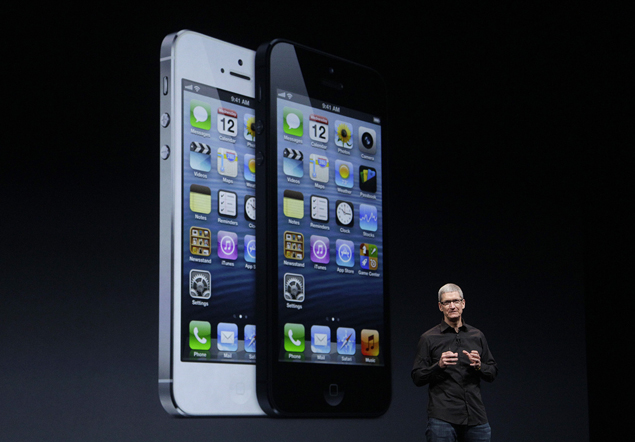
The new iPhone has a larger, four-inch screen, faster wireless Internet speeds and a more powerful chip than the previous version of the company's smartphone. It is 18 percent thinner and 20 percent lighter.
This is the first time Apple has altered the dimensions of the iPhone's display, which has measured 3.5 inches diagonally since the original iPhone was released in 2007. While the display at that time seemed gigantic compared with the tiny screens on most cellphones, Apple's competitors have been far more aggressive in pushing bigger displays on their smartphones, with some screens approaching five inches.
Apple said the new display offered a bigger canvas for activities like reading books, browsing Web sites and watching movies.
The device will also work on the latest variety of high-speed data network with wireless carriers, known as LTE, which other companies have included in their products for some time.
Even though the product is not as startling as the original iPhone - the likes of which had not been seen before in the electronics industry - analysts still expect the iPhone 5 to be a hot seller this holiday season.
Investors seemed to agree, sending Apple's shares up $9.20, or 1.4 percent, to close at $669.79 after the event.
The device, which will go on sale on Sept. 21, will start at $199 with a two-year wireless contract, a price similar to that of previous versions.
In what could be one of Apple's more vexing moves with a new product, though, the company got rid of the traditional 30-pin dock connector for attaching the iPhone to power cables, stereo docking stations and other peripherals, replacing it with a smaller connector it calls Lightning.
The change means owners of existing iPhone accessories will have to buy an adapter from Apple so they can plug the new phone into those devices. The adapters are on sale at the Apple store for $30 for one version and $40 for another.
Apple said it made the change because the new connector was more durable, freed space for other technologies inside the iPhone and enabled the iPhone 5's thinner design. The company said many of the functions of traditional iPhone cables, other than charging, were now handled by wireless connections like Bluetooth.
In a brief interview after the event, Philip W. Schiller, Apple's senior vice president of worldwide marketing, said the company was offering the adapter to try to make the shift to the new technology as painless as possible for its users.
"At some point you have to move to the next generation," he said
Michael Gartenberg, an analyst at Gartner, said the iPhone 5 showed how Apple approaches new technologies cautiously until it is sure it can deliver the best experience possible.
The first phones that supported LTE, for example, were often criticized for poor battery life, but Apple waited until it could offer a product that could hold a charge long enough, he said.
In the new product, Apple also chose not to support near-field communication wireless technology, which can be used to make wireless payments but has been slow to take off.
Mr. Cook said the four-inch display was the perfect size because it could be easily held in one hand. Apple made the screen taller, but not wider, than the previous generation of iPhone for that very reason, he said.
Copyright 2012 The New York Times News Service
iPhone 5 launch in pics
Comments
For the latest tech news and reviews, follow Gadgets 360 on X, Facebook, WhatsApp, Threads and Google News. For the latest videos on gadgets and tech, subscribe to our YouTube channel. If you want to know everything about top influencers, follow our in-house Who'sThat360 on Instagram and YouTube.
Related Stories




Advertisement
Follow Us




-

00:30
Sponsored | Galaxy A55 | A35 5G: Awesome Camera | Ft. #ShanayaKapoor & #RohanGurbaxani -
01:23
Google Wallet Launched in India: All You Need to Know -
02:17
Does a Mysterious Ninth Planet Exist Beyond Neptune? -
14:05
Vivo V30 Pro Review: Focussed on Photography -
15:01
Tech With TG: MAMI Film Festival and the Rise of Mobile Filmmaking
-
Samsung Galaxy F55 5G 12GB रैम, 5000mAh बैटरी के साथ 17 मई को होगा लॉन्च
-
WhatsApp कर रहा कैमरा जूम कंट्रोल और स्टीकर क्रिएशन शॉर्टकट फीचर को टेस्ट
-
Vivo Y28 4G में होगी 6000mAh बैटरी, 44W फास्ट चार्जिंग! यहां हुआ खुलासा
-
क्रिप्टो मार्केट में तेजी, बिटकॉइन का प्राइस 66,000 डॉलर से ज्यादा
-
Realme Buds Air 6, Buds Air 6 Pro ईयरबड्स लॉन्च, 40 घंटे की बैटरी लाइफ के साथ इन फीचर्स से लैस
Popular on Gadgets
- AI
- iPhone 16 Leaks
- Apple Vision Pro
- Oneplus 12
- iPhone 14
- Apple iPhone 15
- OnePlus Nord CE 3 Lite 5G
- iPhone 13
- Xiaomi 14 Pro
- Oppo Find N3
- Tecno Spark Go (2023)
- Realme V30
- Best Phones Under 25000
- Samsung Galaxy S24 Series
- Cryptocurrency
- iQoo 12
- Samsung Galaxy S24 Ultra
- Giottus
- Samsung Galaxy Z Flip 5
- Apple 'Scary Fast'
- Housefull 5
- GoPro Hero 12 Black Review
- Invincible Season 2
- JioGlass
- HD Ready TV
- Laptop Under 50000
- Smartwatch Under 10000
- Latest Mobile Phones
- Compare Phones
Latest Gadgets
- Realme Realme GT Neo 6
- Nokia 3210 4G
- Vivo Y18e
- Vivo Y18
- Vivo Y38 5G
- Nokia 235 4G (2024)
- Nokia 225 4G (2024)
- Nokia 215 4G (2024)
- Dell Alienware X16 R2
- Lenovo IdeaPad Pro 5i
- Apple iPad Pro 13-inch (2024) Wi-Fi
- Apple iPad Pro 13-inch (2024) Wi-Fi + Cellular
- boAt Storm Call 3
- Lava ProWatch Zn
- Samsung Samsung Neo QLED 8K Smart TV QN800D
- Samsung Neo QLED 4K Smart TV (QN90D)
- Sony PlayStation 5 Slim Digital Edition
- Sony PlayStation 5 Slim
- LG 1.5 Ton 3 Star Inverter Window AC (TW-Q18WUXA)
- Godrej 1.1 Ton 3 Star Inverter Split AC (SIC 13DTC3 WWB)

- About Us
- Sitemaps
- Feedback
- Archives
- Contact Us
- RSS
- Advertise
- Career
- Privacy Policy
- Ethics
- Editorial Policy
- Terms & Conditions
- Complaint Redressal
Download Our Apps
Available in Hindi
© Copyright Red Pixels Ventures Limited 2024. All rights reserved.


