
-
 Intel Unveils New AI Chip, Gaudi 3, in Bid to Challenge Nvidia10 April 2024
 -
Intel Announces New Initiatives for AI PC Developers and Hardware Vendors27 March 2024
-
Microsoft Wants OEMs Making AI PCs to Include a Dedicated Copilot Key in the Keyboard: Report27 March 2024
-
Intel Core 14th Gen i9-14900KS, With 24 Cores and Up to 6.2GHz Speed Launched: Details15 March 2024
-
Intel Launches New vPro Platform for Business Focused AI-Powered PCs at MWC 202429 February 2024

- Home
- Laptops
- Laptops News
- With the wave of a hand, Intel wants to do away with passwords
With the wave of a hand, Intel wants to do away with passwords
By Reuters | Updated: 14 September 2012 09:27 IST
Advertisement
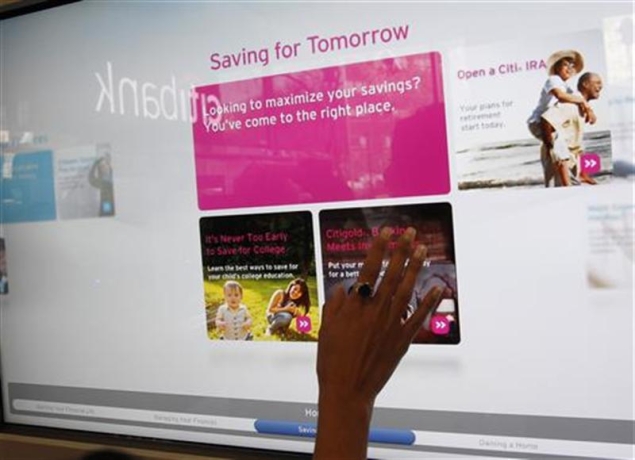
Passwords for online banking, social networks and email could be replaced with the wave of a hand if prototype technology developed by Intel makes it to tablets and laptops.
Aiming to do away with the need to remember passwords for growing numbers of online services, Intel researchers have put together a tablet with new software and a biometric sensor that recognizes the unique patterns of veins on a person's palm.
"The problem with passwords we use too many of them, their rules are complex, and they differ for different websites," Sridhar Iyengar, director of security research at Intel Labs, said at the annual Intel Developer Forum in San Francisco on Thursday. "There is a way out of it, and biometrics is an option."
Iyengar demonstrated the technology, quickly waving his hand in front of a tablet but not touching it. Once the tablet recognizes a user, it can securely communicate that person's identity to banks, social networks and other services where the person has accounts, he said.
Making laptops, tablets and smartphones responsible for identifying users would take that requirement away from individual websites and do away with the need to individually enter passwords into each of them, Iyengar said.
"We plan to work with service providers to take full advantage of this," he said.
A device using the technology would use built-in accelerometers to detect when a user puts it down, and would then log its owner off to keep unauthorized people from getting in.
The palm-identification technology was one of several demonstrations during a keynote address by Intel Chief Technology Officer Justin Rattner at the forum. Rattner runs Intel Labs, which focuses on identifying and solving future technology problems.
Rattner also showed prototype technology to improve cell-phone base stations and to efficiently and wirelessly connect devices such as printers, tablets and monitors throughout the home.
He debuted a prototype microchip with wifi technology made with digital circuitry instead of analog, a development that has the potential to lead to major improvements in performance and efficiency.
The palm-reading technology, still under development, requires new software and biometric sensors built into consumer devices, but does not require the development of any new kinds of chips, Rattner said.
The technology works much better than the finger-print scanners found on some laptops today, he said.
Copyright Thomson Reuters 2012
Comments
For the latest tech news and reviews, follow Gadgets 360 on X, Facebook, WhatsApp, Threads and Google News. For the latest videos on gadgets and tech, subscribe to our YouTube channel. If you want to know everything about top influencers, follow our in-house Who'sThat360 on Instagram and YouTube.
Related Stories






Advertisement
Follow Us




Advertisement
Popular on Gadgets
- Galaxy S24 Series
- MWC 2024
- Apple Vision Pro
- Oneplus 12
- iPhone 14
- Apple iPhone 15
- OnePlus Nord CE 3 Lite 5G
- iPhone 13
- Xiaomi 14 Pro
- Oppo Find N3
- Tecno Spark Go (2023)
- Realme V30
- Best Phones Under 25000
- Samsung Galaxy S24 Series
- Cryptocurrency
- iQoo 12
- Samsung Galaxy S24 Ultra
- Giottus
- Samsung Galaxy Z Flip 5
- Apple 'Scary Fast'
- Housefull 5
- GoPro Hero 12 Black Review
- Invincible Season 2
- JioGlass
- HD Ready TV
- Laptop Under 50000
- Smartwatch Under 10000
- Latest Mobile Phones
- Compare Phones
Latest Gadgets
- Huawei Pura 70 Pro
- Huawei Pura 70
- Vivo V30e
- Itel Super Guru 4G
- Huawei Pura 70 Pro+
- Huawei Pura 70 Ultra
- Tecno Camon 30 Premier 5G
- Motorola Edge 50 Fusion
- Asus ZenBook Duo 2024 (UX8406)
- Dell Inspiron 14 Plus
- Realme Pad 2 Wi-Fi
- Redmi Pad Pro
- Cult Shock X
- Fire-Boltt Oracle
- Samsung Samsung Neo QLED 8K Smart TV QN800D
- Samsung Neo QLED 4K Smart TV (QN90D)
- Sony PlayStation 5 Slim Digital Edition
- Sony PlayStation 5 Slim
- Voltas 1.5 Ton 3 Star Split AC (183 Vectra Elegant 4503545)
- Hitachi 1.5 Ton 5 Star Inverter Split AC (RAS.G518PCBISF)

- About Us
- Sitemaps
- Feedback
- Archives
- Contact Us
- RSS
- Advertise
- Career
- Privacy Policy
- Ethics
- Editorial Policy
- Terms & Conditions
- Complaint Redressal
Download Our Apps
Available in Hindi
© Copyright Red Pixels Ventures Limited 2024. All rights reserved.


