
-
 Microsoft Unveils VASA-1, an Image-to-Video AI Model That Generates Eerily Realistic Results18 April 2024
 -
Microsoft OneNote App for Apple Vision Pro With Hands-Free Note Taking, Virtual Keyboard Support Launched17 April 2024
-
OpenAI CEO Sam Altman Pitches ChatGPT Enterprise to Large Firms, Including Some Microsoft Customers12 April 2024
-
Microsoft Said to Be Confident That Surface Pro 10, Surface Laptop 6 Can Beat M3 MacBook Air in Performance9 April 2024
-
Microsoft 'Moving Full Speed Ahead' on Next-Generation Xbox Console: Report9 April 2024

- Home
- Laptops
- Laptops News
- Steve Ballmer to remodel Microsoft after Sinofsky's exit
Steve Ballmer to remodel Microsoft after Sinofsky's exit
By Reuters | Updated: 16 November 2012 13:25 IST
Advertisement
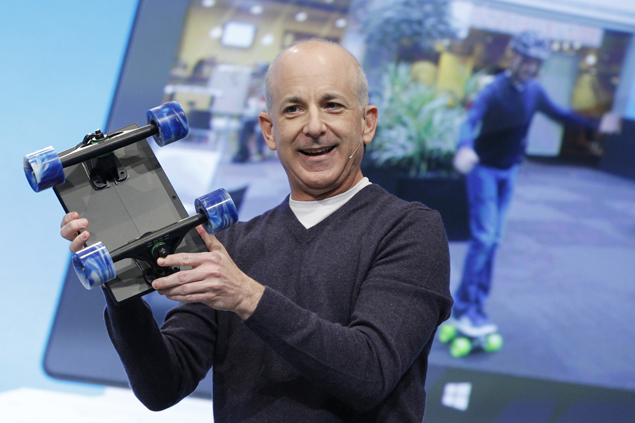
The sudden departure of powerful Windows boss Steven Sinofsky this week is the first step in a plan by CEO Steve Ballmer to remodel Microsoft Corp as a much more integrated operation in an attempt to take on Apple Inc and Google Inc at their own game.
After nearly 13 years at the helm of the world's largest software maker, which just launched its first own-brand computer, sources inside the company say Sinofsky's departure signals Ballmer's new-found focus on co-operation between its self-sufficient - and sometimes warring - units.
"What I'm hearing over and over is collaboration and horizontal integration is the new mantra," said one Microsoft insider, who asked not to be named. "They (top management) understand that, if they don't move to a model where devices and software are more integrated across the entire Microsoft system, they are in a weak position."
After floundering for most of the last decade, Microsoft is trying emulate the way Apple's software and hardware - such as iTunes and the iPhone - work perfectly together; or how Google's online suite from Web search to YouTube and Gmail are seamlessly joined.
Microsoft - which Ballmer rechristened as a "devices and services company" last month - has all the parts, analysts say, but has failed to put them together. Now Ballmer looks set to reshape the company to try to make that a reality.
"I certainly expect the org chart to look a lot different six months from now," said Brad Silverberg, who ran the Windows unit during its massive growth spurt in the 1990s. "There will be attrition from Steven's (Sinofsky's) people and Steve Ballmer will have a chance to create a more harmonious organization."
Ballmer replaced Sinofsky with two executives with a reputation for co-operation. The move marks the third time in the last few years that Ballmer has replaced a single unit head with two leaders sharing responsibilities.
"Sinofsky really centralized all the power under himself. We'll see how it shakes out from here," said one manager in the Windows unit.
More fundamental organizational shifts could be in the cards.
"A lot of things are up for grabs," said David Smith at tech research firm Gartner. "How the management is structured - there could be more changes."
No room for an empire builder
Sinofsky, a 23-year Microsoft veteran, built up a walled empire around his Windows unit.
His hard-charging but methodical style, which took on the name "Sinofskyization," alienated other groups in the company, especially the Office unit, the other financial pillar of Microsoft's success.
"Steven is a brilliant guy who made tremendous contributions to Microsoft," said Silverberg. "But he was also a polarizing guy and the antibodies ultimately caught up with him."
The decision not to share the latest internal test versions of Windows 8 and keep the Surface tablet a secret until just before its announcement especially upset the Office group, which insiders say accounts for the lack of a fully featured Office suite on the Surface RT tablet.
"All good leaders create friction, but my guess is the cost of doing business with Sinofsky ended up outweighing the benefits," said a former Microsoft staffer who saw Sinofsky operate at close quarters.
"If you work in Steven's team, you love him," said a former colleague who now works for a financial technology firm in Seattle. "If he's outside of your team? That's where his reputation of being hard to work with came from."
Ballmer has made it clear that executives have to work together better. Next year, top managers will get bonuses based on company-wide performance, not just their own unit, which Ballmer hopes will lead to "deeper cross-organization collaboration."
But there is no guarantee Ballmer can radically redirect almost four decades of culture at Microsoft - which he is partly responsible for - that gave Windows primacy and intentionally pitted teams against one another to get the best results.
Nothing will change without new leaders from outside the company, said Trip Chowdhry, managing director at Global Equities Research.
"Microsoft is clinging to the past and they keep bringing in the people from the past. This is a fundamental flaw in the logic," Chowdhry said.
CEO throne
Despite urging collaboration, Ballmer - a 32-year Microsoft veteran who took over as CEO from Bill Gates in 2000 - does not let any junior executive get too close to challenging his authority.
Sinofsky, widely touted as Ballmer's successor for the past three years, was just the latest in a line of would-be CEOs. Over the last five years alone, Ballmer has seen off a clutch of rising stars that were discussed as potential leaders.
Windows and online head Kevin Johnson went to run Juniper Networks Inc , Office chief Stephen Elop went to lead phone maker Nokia , while Ray Ozzie - the software guru Bill Gates designated as Microsoft's big-picture thinker - left to start his own project.
"They've gone through quite a bit of senior management talent in the past few years. The bench is not what it used to be," said Smith at Gartner. "The overall management structure, career path, replacements, succession planning - a lot of that is an issue for Microsoft."
Ballmer's promotion of Julie Larson-Green and Tami Reller to jointly fill Sinofsky's role may only be temporary, Microsoft-watchers say.
"The question is what comes after, like in the next three years," said Rob Helm at Directions on Microsoft, an independent firm that advises business customers on how to deal with Microsoft.
© Thomson Reuters 2012
Comments
For the latest tech news and reviews, follow Gadgets 360 on X, Facebook, WhatsApp, Threads and Google News. For the latest videos on gadgets and tech, subscribe to our YouTube channel. If you want to know everything about top influencers, follow our in-house Who'sThat360 on Instagram and YouTube.
Related Stories





Advertisement
Follow Us




Advertisement
Popular on Gadgets
- Galaxy S24 Series
- MWC 2024
- Apple Vision Pro
- Oneplus 12
- iPhone 14
- Apple iPhone 15
- OnePlus Nord CE 3 Lite 5G
- iPhone 13
- Xiaomi 14 Pro
- Oppo Find N3
- Tecno Spark Go (2023)
- Realme V30
- Best Phones Under 25000
- Samsung Galaxy S24 Series
- Cryptocurrency
- iQoo 12
- Samsung Galaxy S24 Ultra
- Giottus
- Samsung Galaxy Z Flip 5
- Apple 'Scary Fast'
- Housefull 5
- GoPro Hero 12 Black Review
- Invincible Season 2
- JioGlass
- HD Ready TV
- Laptop Under 50000
- Smartwatch Under 10000
- Latest Mobile Phones
- Compare Phones
Latest Gadgets
- Huawei Pura 70 Pro
- Huawei Pura 70
- Vivo V30e
- Itel Super Guru 4G
- Huawei Pura 70 Pro+
- Huawei Pura 70 Ultra
- Tecno Camon 30 Premier 5G
- Motorola Edge 50 Fusion
- Asus ZenBook Duo 2024 (UX8406)
- Dell Inspiron 14 Plus
- Realme Pad 2 Wi-Fi
- Redmi Pad Pro
- Cult Shock X
- Fire-Boltt Oracle
- Samsung Samsung Neo QLED 8K Smart TV QN800D
- Samsung Neo QLED 4K Smart TV (QN90D)
- Sony PlayStation 5 Slim Digital Edition
- Sony PlayStation 5 Slim
- Voltas 1 Ton 5 Star Inverter Split AC (125V Vectra Elite)
- Voltas 1.5 Ton 3 Star, Inverter Split AC (183V Vertis Emerald 4503563)

- About Us
- Sitemaps
- Feedback
- Archives
- Contact Us
- RSS
- Advertise
- Career
- Privacy Policy
- Ethics
- Editorial Policy
- Terms & Conditions
- Complaint Redressal
Download Our Apps
Available in Hindi
© Copyright Red Pixels Ventures Limited 2024. All rights reserved.


