-
 Windows 11 Start Menu Ads Rolling Out for All Users: How to Turn Them Off25 April 2024
 -
Microsoft Phi-3 Launched as Company's Smallest Open-Source AI Model to Date24 April 2024
-
PS5, PC Exclusive Helldivers 2 Under 'Very Early' Discussions Over Possible Xbox Launch: Report23 April 2024
-
Google Chat Rolls Out Cross-Platform Messaging With Microsoft Teams, Slack: How It Works22 April 2024
-
PlayStation and PC Exclusive Kena: Bridge of Spirits Receives ESRB Rating for Xbox Series S/X22 April 2024

- Home
- Laptops
- Laptops News
- Steve Ballmer not the right leader for Microsoft: Former executive
Steve Ballmer not the right leader for Microsoft: Former executive
By Reuters | Updated: 22 January 2013 11:42 IST
Advertisement
Microsoft Corp Chief Executive Steve Ballmer is not the right leader for the world's largest software company but holds his grip on it by systematically forcing out any rising manager who challenges his authority, claims a former senior executive who has written a book about his time at the company.
"For Microsoft to really get back in the game seriously, you need a big change in management," said Joachim Kempin, who worked at Microsoft between 1983 and 2002, overseeing the sales of Windows software to computer makers for part of that time. "As much as I respect Steve Ballmer, he may be part of that in the end."
As a senior vice president in charge of a crucial part of the company's business with direct access to co-founder Bill Gates, Kempin is the most senior former Microsoft executive to write a book critical of the company, which is famous for the loyalty of its ex-employees.
His criticism echoes that of investor David Einhorn of Greenlight Capital, who called for Ballmer to step down in 2011.
Kempin left Microsoft under a cloud in 2002 as some of the aggressive contracts he crafted with PC makers were seen as fodder for the U.S. government's antitrust prosecution of the company, which started in 1998 and was largely resolved by 2002.
His book, titled 'Resolve and Fortitude: Microsoft's "secret power broker" breaks his silence', is scheduled to be published on Tuesday. He talked with Reuters by phone on Monday.
Defend the throne
Kempin charges Ballmer with purposefully ousting any executives with potential to wrest him from the CEO seat, which he has occupied since 2000.
He said he saw the process first with Richard Belluzzo, a former Hewlett-Packard executive credited with launching the Xbox game console who rose to chief operating officer at Microsoft but left after only 14 months in the post, in the same year Kempin left.
"He (Belluzzo) had no room to breathe on the top. When you work that directly with Ballmer and Ballmer believes 'maybe this guy could someday take over from me', my God, you will have less air to breathe, that's what it comes down to."
Microsoft representatives declined comment. Attempts to reach Belluzzo were not successful.
Several leading executives, touted by outsiders at one time or another as potential successors to Ballmer, have left the company in the last few years, most recently Windows unit chief Steven Sinofsky, who departed in November.
Before Sinofsky, Windows and online head Kevin Johnson went to run Juniper Networks Inc, Office chief Stephen Elop went to lead phone maker Nokia Oyj, while Ray Ozzie, the software guru Gates designated as Microsoft's big-picture thinker, left to start his own project.
"Ozzie is a great software guy, he knew what he was doing. But when you see Steve (Ballmer) and him on stage where he (Ozzie) opposed Steve, it was Steve's way or the highway," said Kempin.
Kempin said he spoke to Ballmer around two years ago and expressed his concerns about his management style and direction of the company, but has seen no changes since. He said he sent Ballmer and Gates copies of his new book but has yet to get a reply.
"Steve is a very good business guy, but make him a chief operating officer, not a CEO, and your business is going to go gangbusters," said Kempin. "I respect that guy (Ballmer), but there are some limitations in what he can and can't do and maybe he hasn't realized them himself."
Missed opportunities
In his book, Kempin writes about how Microsoft foresaw the major moves in technology in the last decade, but bungled its entry into tablets, phones and social media, ceding leadership in the technology world to Apple Inc and others.
"They missed all the opportunities they were talking about when I was still in the company. Tablets, phones we had a tablet going, we had tablet software when Windows XP came out, it was never followed up properly," said Kempin.
He also claims the decline of PCs is partly due to Microsoft's mismanagement of hardware makers, an area that Kempin oversaw at Microsoft.
"Just think about the insult of Microsoft coming out with a tablet themselves, trying to mimic Apple, and now they are going to come out with a notebook on top of it," said Kempin, referring to Microsoft's Surface RT tablet and soon-to-be-released Surface running Windows Pro.
Several PC makers went public with their unease about Microsoft's decision to make its own computers last year.
Kempin reserves his most pointed criticism for Ballmer.
"Is he a great CEO? I don't think so. Microsoft's board is a lame duck board, has been forever. They hire people to help them administer the company, but not to lead the company. That's the problem," said Kempin.
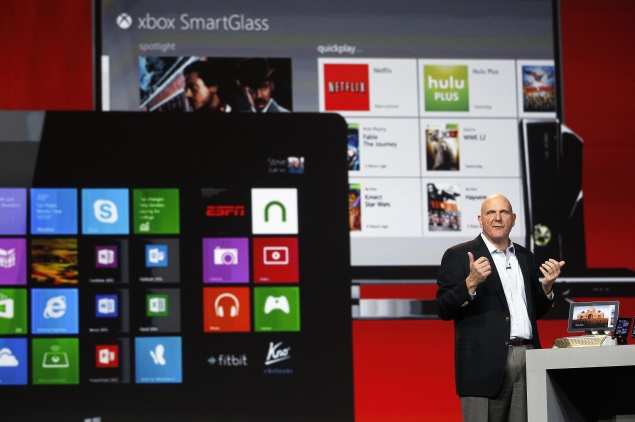
"They need somebody maybe 35-40 years old, a younger person who understands the Facebook Inc generation and this mobile community. They don't need this guy on stage with this fierce, aggressive look, announcing the next version of Windows and thinking he can score with that."
© Thomson Reuters 2012
Comments
For the latest tech news and reviews, follow Gadgets 360 on X, Facebook, WhatsApp, Threads and Google News. For the latest videos on gadgets and tech, subscribe to our YouTube channel. If you want to know everything about top influencers, follow our in-house Who'sThat360 on Instagram and YouTube.
Further reading:
Microsoft, Microsoft Surface tablet, Microsoft Windows 8, Steve Ballmer, Surface RT tablet, Surface tablet, Windows 8, Windows Pro, Windows XP
Related Stories






Advertisement
Follow Us




-

03:19
Gadgets 360 With Technical Guruji: Something About the Nothing Ear, Ear (a) -
19:21
Gadgets 360 With Technical Guruji: Samsung's New AI Smart TVs, Nothing Ear -
05:23
Gadgets 360 With Technical Guruji: Samsung's New AI Smart TVs -
01:17
Gadgets 360 With Technical Guruji: Tech Tip [April 20, 2024] -
02:05
Gadgets 360 With Technical Guruji: Ask TG [April 20, 2024]
-
Oppo A60 4G होगा 5000mAh बैटरी, 50MP कैमरा, 45W चार्जिंग वाला सस्ता फोन!
-
Oppo A3 के स्पेसिफिकेशंस और फोटो लीक, जल्द देगा दस्तक
-
लॉन्च से पहले देखें Infinix GT 20 Pro की पूरी ‘कुंडली', जल्द होगा लॉन्च
-
Xiaomi Electric Scooter 4 Lite (2nd Gen) लॉन्च हुआ 9600mAh बैटरी, 25Km रेंज के साथ, जानें कीमत
-
Apple के iPhone 15 को Flipkart पर भारी डिस्काउंट के साथ खरीदने का मौका, जानें प्राइस
Advertisement
Popular on Gadgets
- AI
- iPhone 16 Leaks
- Apple Vision Pro
- Oneplus 12
- iPhone 14
- Apple iPhone 15
- OnePlus Nord CE 3 Lite 5G
- iPhone 13
- Xiaomi 14 Pro
- Oppo Find N3
- Tecno Spark Go (2023)
- Realme V30
- Best Phones Under 25000
- Samsung Galaxy S24 Series
- Cryptocurrency
- iQoo 12
- Samsung Galaxy S24 Ultra
- Giottus
- Samsung Galaxy Z Flip 5
- Apple 'Scary Fast'
- Housefull 5
- GoPro Hero 12 Black Review
- Invincible Season 2
- JioGlass
- HD Ready TV
- Laptop Under 50000
- Smartwatch Under 10000
- Latest Mobile Phones
- Compare Phones
Latest Gadgets
- iQOO Z9x
- iQOO Z9
- HMD Pulse
- HMD Pulse+
- HMD Pulse Pro
- Realme Narzo 70x 5G
- Realme Narzo 70 5G
- Samsung Galaxy C55
- Lenovo IdeaPad Pro 5i
- Asus ZenBook Duo 2024 (UX8406)
- Realme Pad 2 Wi-Fi
- Redmi Pad Pro
- boAt Storm Call 3
- Lava ProWatch Zn
- Samsung Samsung Neo QLED 8K Smart TV QN800D
- Samsung Neo QLED 4K Smart TV (QN90D)
- Sony PlayStation 5 Slim Digital Edition
- Sony PlayStation 5 Slim
- Lloyd 1.5 Ton 3 Star Inverter Split AC (GLS18I3FOSEW)
- Haier 1.5 Ton 3 Star Triple Inverter Split AC (HSU18K-PYSS3BN-INV)

- About Us
- Sitemaps
- Feedback
- Archives
- Contact Us
- RSS
- Advertise
- Career
- Privacy Policy
- Ethics
- Editorial Policy
- Terms & Conditions
- Complaint Redressal
Download Our Apps
Available in Hindi
© Copyright Red Pixels Ventures Limited 2024. All rights reserved.


