-
 Android 8.1 Oreo Brings 'SMS Connect', Lets You Respond to Messages on Chromebooks30 October 2017
 -
Google Pixel 2, Pixel 2 XL to Be Launched On October 4, Google Teases15 September 2017
-
Google Pixel 2, Pixel 2 XL to Launch on October 4, Reveal Billboards: Report14 September 2017
-
Google Tipped to Unveil New Chromebook Pixel, Mini Home Speaker Alongside the Pixel 2 Launch22 August 2017
-
Google Chromebook Pixel Laptops Are Dead, Confirms Rick Osterloh [Updated]2 March 2017
- Home
- Laptops
- Laptops News
- Google launches Chromebook Pixel with 12.85 inch touchscreen starting $1,299
Google launches Chromebook Pixel with 12.85-inch touchscreen starting $1,299
By Associated Press | Updated: 22 February 2013 10:08 IST
Advertisement
Google is adding a new and more expensive touch to its line of Chrome laptops in an attempt to outshine personal computers running on software made by rivals Microsoft and Apple.
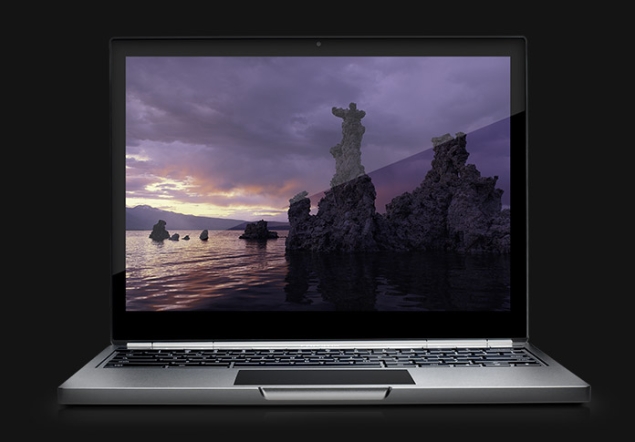
The Chromebook Pixel unveiled Thursday includes a nearly 13-inch display screen that responds to the touch or swipe of a finger. That duplicates a key feature in Microsoft Corp.'s Windows 8, a dramatic makeover of the world's leading operating system for PCs.
The Pixel's high-resolution screen displays 239 pixels per inch, slightly more than Apple Inc.'s MacBooks with high-resolution Retina displays. A MacBook Pro with a screen that measures 13.1 inches diagonally can handle 227 pixels per inch, while the 15.4-inch model is at 220 pixels per inch.
"This is the future: high-resolution screens and touch," said Sundar Pichai, a senior vice president who oversees Google's Chrome Web browser and operating system.
Google Inc. designed and built the Pixel for "power users" - a fastidious and generally more affluent segment of the PC market willing to pay more for machines equipped with compelling features and components not found in cheaper laptops.
The strategy is a departure for Google, which had positioned Chromebooks based on its Chrome operating system as affordable options for homes and offices looking for a quick and easy way to connect to the Web. Google has been partnering with PC makers to make Chromebooks over the past two years. Among them: Acer Inc. makes a bare-bones Chromebook for just $199, while Samsung Electronics Co. sells one for $249.
The Pixel, which Google is building without a partner, will cost $1,299 for a Wi-Fi only model with 32 gigabytes of flash storage. A 64-gigabyte machine that can connect on both Wi-Fi and a 4G LTE cellular network will cost $1,499. That's the same price as the cheapest MacBook Pro with a comparable screen, though the Apple laptop comes with 128 gigabytes of storage.
Apple does have a cheaper, lighter laptop, the MacBook Air. A 13-inch model with 128 gigabytes of storage starts at $1,199. It weighs less than 3 pounds and doesn't have a high-resolution screen. The Pixel has the high-resolution screen and weighs 3.35 pounds. The 13-inch high-resolution MacBook Pro weighs 3.57 pounds.
Google believes Pixel is a better value than the Air, given its higher-resolution screen with touch controls. Google is also throwing in 1 terabytes of free online storage in its data centers for three years - a benefit that Pichai estimated would cost $500 to $600.
The Pixel "will stand up very, very well to the MacBook Air," Pichai said. "The goal here is to push the boundaries to deliver the best laptop at the best possible price."
Though its popular iPad has a touch screen, Apple has shunned touch-screen laptops. Apple figures that because people use laptops with the screen in front of them, rather than in their hands or laps, it's not a pleasant experience to constantly have to reach out to touch the screen.
Microsoft, on the other hand, considers touch screens to be central to all computing environments. Windows 8 was designed to make desktop and laptop computers work more like tablet computers. Computers with touch-screen monitors can respond to touch along with old-style mouse and keyboard commands.
Google's online Play store will begin selling the Pixel in the U.S. and U.K Thursday, with BestBuy.com expected to take orders on Friday. A hands-on experience with the Pixels also will be available beginning Friday in 10 of Best Buy's retail stores in California, Minnesota, Washington state, Virginia and New York.
Pichai declined to say how many of the lower-priced Chromebooks have been sold, but said the models have ranked as the most popular laptop sold by Amazon.com Inc. for the past four months.
The free online storage is being included with the Pixel to overcome the laptop's lack of a hard drive. Like other Chromebooks, the Pixel functions like a terminal dependent on an Internet connection to get to information and applications stored in large data centers run by Google or other technology providers.
Spurred by the growing popularity of smartphones and tablet computers, Google is betting more people will prefer having data, photos and video stored in remote data centers instead of individual hard drives so the content can be accessed from any Internet-connected device.
Google's expansion into the high-end of the laptop market immerses the Internet search and advertising company more deeply into the business designing and making gadgets.
The company is already a major player in the mobile device market through its Android software. To help promote Android, Google also has designed a line of smartphones and tablets under the Nexus brand. The company also owns smartphone maker Motorola Mobility, which it bought for $12.4 billion last year.
Google's deepening involvement in hardware has ignited speculation that the company might eventually open its own chain of stores to sell its products, just as Apple and Microsoft already do. Pichai didn't address that in a response to a question on that topic at Thursday's event.
Apple and Microsoft already have been hurt by the increased competition from Google. Most smartphones and tablets running on Google's free Android software cost less than Apple's iPhone and iPad, helping to siphon sales away from those devices. Sales of PCs running on Windows also have been sagging during the past year, partly because consumers are relying more on Android devices.
Google says it expects to make a small profit on each Pixel sold, but the company figures to make more money from the online traffic delivered from the machines. Like other Chromebooks, the Pixel is set up to automatically use all of Google's services, including its search engine, Gmail and YouTube video site.
Google Chromebook Pixel technical specifications
- 12.85" display with a 3:2 aspect ratio
- 2560x1700 at 239 PPI
- Intel Core i5 processor (Dual Core 1.8GHz)
- Intel HD Graphics 4000 (Integrated)
- 4GB DDR3 RAM
- One terabyte Google Drive cloud storage for three years
- 32GB solid state drive (64GB on LTE model)
- Gorilla Glass multi-touch screen
- Backlit Chrome keyboard
- Clickable, etched-glass touchpad
- Integrated 720p HD camera
- Combo headphone/mic jack
- Built-in microphone array
- 2 x USB 2.0
- mini display port
- SD / MMC card reader
- Dual-band Wi-Fi 802.11a/b/g/n 2x2
- Bluetooth 3.0
- Built-in LTE modem (LTE model)
- Up to 5 hours of active use (59 Wh battery)
2 Comments
For the latest tech news and reviews, follow Gadgets 360 on X, Facebook, WhatsApp, Threads and Google News. For the latest videos on gadgets and tech, subscribe to our YouTube channel. If you want to know everything about top influencers, follow our in-house Who'sThat360 on Instagram and YouTube.
Further reading:
Chromebook Pixel, Google, Google Chromebook Pixel, Google Chromebook Pixel price, Google Chromebook Pixel specifications, Google laptop, Google touchscreen laptop
Related Stories
![Google Chromebook Pixel Laptops Are Dead, Confirms Rick Osterloh [Updated]](https://i.gadgets360cdn.com/large/Chromebook_Pixel_2_1472562485515.jpeg?downsize=*:180 "Google Chromebook Pixel Laptops Are Dead, Confirms Rick Osterloh [Updated]")
Advertisement

Follow Us

-

01:18
Gadgets 360 With Technical Guruji: Did You Know This About the Firefox Logo? -
02:23
Gadgets 360 With Technical Guruji: Hands on With the Samsung Galaxy Book5 Pro 360 -
02:23
Gadgets 360 With Technical Guruji: A Quick Look at the Google Pixel 9a -
01:31
Gadgets 360 With Technical Guruji: Scanning Documents Without Third-Party Apps -
02:40
Gadgets 360 With Technical Guruji: News of the Week [March 29, 2025]
-
Paytm, Google Pay UPI से पेमेंट करने में आ रही दिक्कत, ये है कारण
-
Samsung Galaxy Tab S10 FE, S10 FE+ हुए लॉन्च, 12GB रैम के साथ यह है कीमत
-
HTC Wildfire E7 सस्ता फोन 6GB रैम, 50MP कैमरा के साथ होगा लॉन्च
-
Ola Electric ने शुरू की हायपर डिलीवरी, कस्टमर्स को कुछ घंटे में मिलेगा इलेक्ट्रिक स्कूटर
-
Sony Xperia 1 VII के डिजाइन का हुआ खुलासा, 3 कैमरा के साथ स्नैपड्रैगन 8 एलीट से होगा लैस
Advertisement
Popular on Gadgets
- Samsung Galaxy Unpacked 2025
- ChatGPT
- Redmi Note 14 Pro+
- iPhone 16
- Apple Vision Pro
- Oneplus 12
- OnePlus Nord CE 3 Lite 5G
- iPhone 13
- Xiaomi 14 Pro
- Oppo Find N3
- Tecno Spark Go (2023)
- Realme V30
- Best Phones Under 25000
- Samsung Galaxy S24 Series
- Cryptocurrency
- iQoo 12
- Samsung Galaxy S24 Ultra
- Giottus
- Samsung Galaxy Z Flip 5
- Apple 'Scary Fast'
- Housefull 5
- GoPro Hero 12 Black Review
- Invincible Season 2
- JioGlass
- HD Ready TV
- Laptop Under 50000
- Smartwatch Under 10000
- Latest Mobile Phones
- Compare Phones
Latest Gadgets
- Lava Bold 5G
- Huawei Pura X
- Motorola Edge 60 Fusion
- Redmi A5
- Vivo Y300t
- Vivo Y300 Pro+
- Vivo Y300i
- Realme 14 5G
- Acer TravelLite (2025)
- Asus Zenbook 14 (2025)
- Samsung Galaxy Tab S10 FE+
- Samsung Galaxy Tab S10 FE
- Garmin Vivoactive 6
- Oppo Watch X2
- Haier M80F Mini LED 4K
- Haier M95E
- Nintendo Switch 2
- Sony PlayStation 5 Pro
- LG 1.5 Ton 5 Star Inverter Window AC (UW-Q18WUZA)
- LG 1.5 Ton 3 Star Inverter Split AC (US-Q18JNXE)

- About Us
- Sitemaps
- Feedback
- Archives
- Contact Us
- RSS
- Advertise
- Career
- Privacy Policy
- Ethics
- Editorial Policy
- Terms & Conditions
- Complaint Redressal
Download Our Apps
Available in Hindi
© Copyright Red Pixels Ventures Limited 2025. All rights reserved.