





-
 Dell Pro, Pro Plus and Pro Premium AI PCs With Intel Core Ultra and AMD Ryzen 300 CPUs Launched in India9 April 2025
 -
India PC Shipments Surged 3.8 Percent YoY in 2024, HP Led the Way, Acer Saw Highest Growth: IDC24 February 2025
-
Amazon Great Republic Day Sale: Get Up to 40 Percent Off on Laptops from Asus, Dell and More16 January 2025
-
AMD Adds Dell as Commercial PC Customer for the First Time7 January 2025
-
Dell Announces Unified Branding With a 3-Category Lineup at CES 2025; AI Pro Studio Unveiled7 January 2025
- Home
- Laptops
- Laptops News
- Dell profit falls 47 percent hurt by slow tech spending
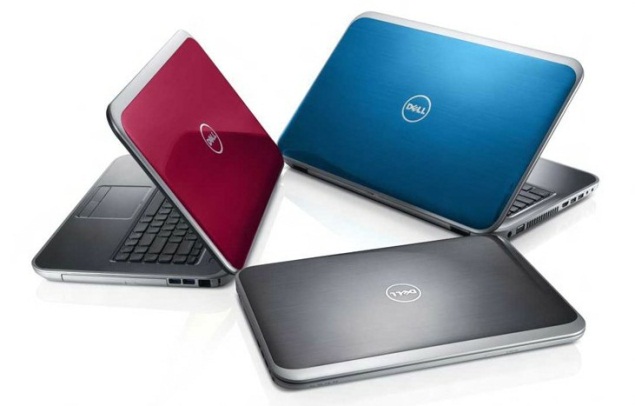
Dell profit falls 47 percent hurt by slow tech spending
By Reuters | Updated: 16 November 2012 10:20 IST
Advertisement
Dell Inc's third-quarter profit slid 47 percent, hurt by lower PC sales, weaker demand from large corporations and the shift to mobile computing.
Dell's consumer PC business is struggling as more and more consumers are using smartphones and tablets to do basic computing, and the company's corporate customers continue to defer spending due to the uncertain state of the economy.
The No. 3 personal computer maker warned that it "sees the challenging global macroeconomic environment continuing in the fourth quarter."
The company, once the world's top PC maker and a pioneer in computer supply chain management, is struggling to defend its market share against Asian rivals like Lenovo. It is trying to bolster growth by focusing on products and services to corporations.
The company said it expects revenue to grow as much as 5 percent in the current quarter.
"Our outlook for the quarter would be generally consistent with what we typically see in terms of a seasonal pickup," it said.
Dell said revenue in its fiscal third quarter fell 11 percent to $13.7 billion, slightly lower than the average analyst estimate of $13.89 billion according to Thomson Reuters I/B/E/S.
It posted net income of $475 million or 27 cents a share in the quarter, compared with $893 million or 49 cents a year earlier. Excluding certain items, it earned 39 cents a share, compared to an average forecast for 40 cents.
Chief Financial Officer Brian Gladden said in an interview that corporate customers continue to defer technology spending.
"It's not clear what's going to cause them to increase their spending in the short term, given the uncertainty in the economy," he said.
Dell's enterprise solutions revenue rose 3 percent to $4.8 billion, while server and networking revenue climbed 11 percent. In contrast, consumer revenue plummeted 23 percent to $2.5 billion, underscoring the plight of the broader PC market, and sales to large corporation declined 8 percent to $4.2 billion in the quarter.
Dell's "challenges are frankly the same as before - namely the tough macroeconomic environment and cannibalization from mobile devices using mobile operating systems from Apple and Google," Shaw Wu, analyst with Sterne Agee, said.
The consumer market is improving with the launch of the Windows 8 software from Microsoft, which has been designed with touchscreen devices and Internet-based computing in mind, Gladden said.
But sales of devices featuring the Windows 8 software have yet to ramp up while Microsoft is already in the market with its new Surface tablet computer, which may hurt PC sales.
Planning for "fiscal cliff"
Apart from the consumer, Dell's business customers have held back spending, which could be partly attributed to the looming fiscal cliff, Gladden said.
The fiscal cliff involves $600 billion in automatic tax hikes and spending cuts effective in early 2013 if U.S. lawmakers fail to agree on reducing the budget deficit.
The cuts could take a toll on consumer and government spending and cause the economy to stall.
"I would tell you that the behavior we are seeing from our customers today is actually driven by that uncertainty," Gladden said. "It's not like it's all going to happen overnight. It's affecting our business today."
Dell is ensuring that it has access to cash in case there is no congressional action.
"I would say there are several things we are doing from a planning standpoint, especially on the treasury side to ensure that we are in a position to have appropriate access to liquidity," Gladden said, adding that Dell is making sure it has access to lines of credit and commercial paper.
Dell shares fell 2.3 percent to $9.36 in after-market trade from its close of $9.56. The shares initially rose following the release of the results.
© Thomson Reuters 2012 Comments
For the latest tech news and reviews, follow Gadgets 360 on X, Facebook, WhatsApp, Threads and Google News. For the latest videos on gadgets and tech, subscribe to our YouTube channel. If you want to know everything about top influencers, follow our in-house Who'sThat360 on Instagram and YouTube.
Related Stories

Advertisement

Follow Us

-

04:49
JisuLife Hand Fans, Neck Fans & Portable Fans: First Impressions -
01:14
Gadgets 360 With Technical Guruji: Tech Tip to Save iPhone Storage -
03:21
Gadgets 360 With Technical Guruji: Realme P3 Series Debuts -
01:32
Gadgets 360 With Technical Guruji: News of the Week [April 20, 2025] -
03:13
Gadgets 360 With Technical Guruji: Ask TG [April 20, 2025]
-
Vivo Watch 5 हुई लॉन्च, AMOLED डिस्प्ले के साथ 22 दिनों तक चलेगी बैटरी
-
Honor X60 GT फोन 16GB तक रैम, 6300mAh बैटरी, 50MP कैमरा के साथ हुआ लॉन्च
-
Vivo Pad 5 Pro, Pad SE टैबलेट लॉन्च, 13 इंच डिस्प्ले और 12050mAh बैटरी
-
28 हजार से भी सस्ता हुआ Motorola का ये फ्लैगशिप फोन, जानें कैसे लें डील का लाभ
-
Samsung Galaxy M56 5G की आज से सेल शुरू, Rs 3 हजार के डिस्काउंट पर खरीदने का मौका
Advertisement
Popular on Gadgets
- Samsung Galaxy Unpacked 2025
- ChatGPT
- Redmi Note 14 Pro+
- iPhone 16
- Apple Vision Pro
- Oneplus 12
- OnePlus Nord CE 3 Lite 5G
- iPhone 13
- Xiaomi 14 Pro
- Oppo Find N3
- Tecno Spark Go (2023)
- Realme V30
- Best Phones Under 25000
- Samsung Galaxy S24 Series
- Cryptocurrency
- iQoo 12
- Samsung Galaxy S24 Ultra
- Giottus
- Samsung Galaxy Z Flip 5
- Apple 'Scary Fast'
- Housefull 5
- GoPro Hero 12 Black Review
- Invincible Season 2
- JioGlass
- HD Ready TV
- Laptop Under 50000
- Smartwatch Under 10000
- Latest Mobile Phones
- Compare Phones
Latest Gadgets
- Honor GT Pro
- Realme GT 7
- Huawei Enjoy 80
- Oppo K12s
- Honor X60 GT
- Vivo T4 5G
- Vivo X200 Ultra
- Vivo X200s
- Asus CX15 (2025)
- Asus Chromebook CX14 (2025)
- Vivo Pad SE
- Vivo Pad 5 Pro
- Vivo Watch 5
- Redmi Watch Move
- Xiaomi X Pro QLED 2025 (43-Inch)
- Xiaomi X Pro QLED 2025 (55-Inch)
- Nintendo Switch 2
- Sony PlayStation 5 Pro
- Toshiba 1.8 Ton 5 Star Inverter Split AC (RAS-24TKCV5G-INZ / RAS-24TACV5G-INZ)
- Toshiba 1.5 Ton 5 Star Inverter Split AC (RAS-18PKCV2G-IN / RAS-18PACV2G-IN)

- About Us
- Sitemaps
- Feedback
- Archives
- Contact Us
- RSS
- Advertise
- Career
- Privacy Policy
- Ethics
- Editorial Policy
- Terms & Conditions
- Complaint Redressal
Download Our Apps
Available in Hindi
© Copyright Red Pixels Ventures Limited 2025. All rights reserved.


