-
 Jio May Soon Receive Regulatory Approval for Launch of Satellite Internet Services in India: Report3 January 2024
 -
Poor Quality Results for Online Searches Made People Believe Possible Misinformation: Study25 December 2023
-
Government to Allot Satellite Internet Spectrum Without Auction in Win for Elon Musk’s Starlink19 December 2023
-
Government Planning New Regulations for Hosting Deepfakes: IT Minister23 November 2023
-
Starlink Set to Gain GMPCS Licence to Offer Satellite Communication Services in India: Report8 November 2023

- Home
- Internet
- Internet News
- Yahoo chief bans working from home
Yahoo chief bans working from home
By Claire Cain Miller and Catherine Rampell, The New York Times | Updated: 26 February 2013 09:48 IST
Advertisement
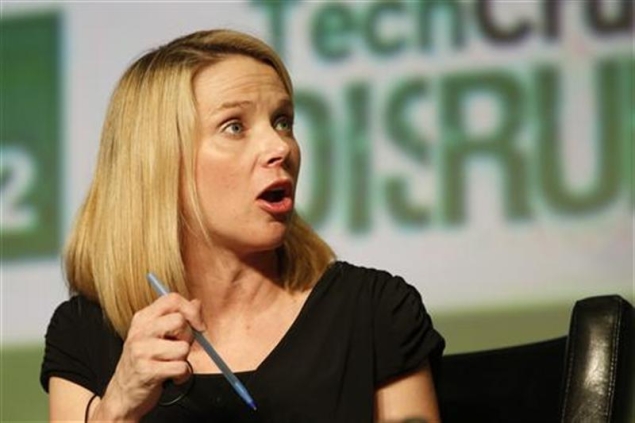
Since Marissa Mayer became chief executive of Yahoo, she has been working hard to get the Internet pioneer off its deathbed and make it an innovator once again.
She started with free food and new smartphones for every employee, borrowing from the playbook of Google, her employer until last year. Now, though, Yahoo has made a surprise move abolishing its work-at-home policy and ordering everyone to work in the office.
A memo explaining the policy change, from the company's human resources department, says face-to-face interaction among employees fosters a more collaborative culture - a hallmark of Google's approach to its business.
In trying to get back on track, Yahoo is taking on one of the country's biggest workplace issues whether the ability to work from home, and other flexible arrangements, leads to greater productivity or inhibits innovation and collaboration. Across the country, companies like Aetna, Booz Allen Hamilton and Zappos.com are confronting these trade-offs as they compete to attract and retain the best employees.
Bank of America, for example, which had a popular program for working remotely, decided late last year to require employees in certain roles to come back to the office.
Employees, especially younger ones, expect to be able to work remotely, analysts say. And over all the trend is toward greater workplace flexibility.
Still, said John Challenger, chief executive of Challenger Gray & Christmas, an outplacement and executive coaching firm, "A lot of companies are afraid to let their workers work from home some of the time or all of the time because they're afraid they'll lose control."
Studies show that people who work at home are significantly more productive but less innovative, said John Sullivan, a professor of management at San Francisco State University who runs a human resource advisory firm.
"If you want innovation, then you need interaction," he said. "If you want productivity, then you want people working from home."
Reflecting these tensions, Yahoo's policy change has unleashed a storm of criticism from advocates for workplace flexibility who say it is a retrograde approach, particularly for those who care for young children or aging parents outside of work. Their dismay is heightened by the fact that they hoped Ms. Mayer, who became chief executive at 37 while pregnant with her first child, would make the business world more hospitable for working parents.
"The irony is that she has broken the glass ceiling, but seems unwilling for other women to lead a balanced life in which they care for their families and still concentrate on developing their skills and career," said Ruth Rosen, a professor emerita of women's history at the University of California.
But not only women take advantage of workplace flexibility policies. According to the Bureau of Labor Statistics, nearly as many men telecommute.
The bureau says 24 percent of employed Americans report working from home at least some hours each week. And 63 percent of employers said last year that they allowed employees to work remotely, up from 34 percent in 2005, according to a study by the Families and Work Institute, a nonprofit group studying the changing work force.
During the recession, the institute expected employers to demand more face time, but instead found that 12 percent increased workplace flexibility, said Ellen Galinsky, its president and co-founder. She attributed this to companies' desire to reduce real estate costs, carbon footprints and commuting times.
Technologies developed in Silicon Valley, from video chat to instant messaging, have made it possible for employees across America to work remotely. Yet like Yahoo, many tech companies believe that working in the same physical space drives innovation.
A Yahoo spokeswoman, Sara Gorman, declined to comment, saying only that the company did not publicly discuss internal matters.
The company's memo, written by Jackie Reses, director of human resources at Yahoo, and published on All Things D, a blog on digital issues, said: "Some of the best decisions and insights come from hallway and cafeteria discussions, meeting new people and impromptu team meetings. Speed and quality are often sacrificed when we work from home."
In part, the memo looks like an effort to bring a Google spirit to Yahoo, said Colin Gillis, an analyst at BGC Partners who covers both companies.
"Marissa's trying to increase the energy and output and change the culture of the company," he said. "She brings all the Google lessons to the table, and Google is very focused on having your life revolve around their campus so you can spend a significantly larger chunk of time at work."
Still, Google, as well as Facebook, does allow people to work remotely on a case-by-case basis. But both companies also strongly stress in-person collaboration.
Standard Silicon Valley perks like cafeterias with free food, shuttle buses, gyms, ice cream parlors and dry cleaners not only make employees' lives easier, but keep them on campus during the day and promote contact with other employees. Nearly all tech companies have desks packed tightly together without walls and communal work areas with sofas and beanbags.
Zappos, the e-commerce company owned by Amazon.com, previously allowed some customer service agents to work from home, but now has a rule against working remotely. The company locks all office doors except one so employees are forced to run into more people on the way out, and budgets fewer than 100 square feet per employee, versus the standard 120 square feet or more.
"It's to maximize those serendipitous encounters," said Zach Ware, who oversees campus development at the company. "The success of our company is built on our culture, and our perspective is you can't really do that on e-mail."
Some companies outside the tech industry are also re-evaluating flexible work arrangements. In addition to Bank of America, certain industries that deal with sensitive client information, like health care and finance, have more restrictions on working remotely.
Yet more companies embrace flexibility. At Aetna, 47 percent of workers telecommute, up from 9 percent in 2005. The company provides secure Internet and phone connections, locked file cabinets and shredders. During that period, the policy has saved the company $78 million in real estate costs, said Susan Millerick, an Aetna spokeswoman.
At Booz Allen, employees can work at home or sign up to work at a desk in another branch, called "hoteling." The policy has been vital to employee retention, said Christopher Carlson, a senior associate in human resources at Booz Allen. He works from his home in Florida, where he moved from the Washington, D.C., region to care for his aging parents.
"It allows me to integrate my work and life and be successful at both," Mr. Carlson said. "And I spend less money on gas."
© 2013, The New York Times News Service
Comments
For the latest tech news and reviews, follow Gadgets 360 on X, Facebook, WhatsApp, Threads and Google News. For the latest videos on gadgets and tech, subscribe to our YouTube channel. If you want to know everything about top influencers, follow our in-house Who'sThat360 on Instagram and YouTube.
Related Stories





Advertisement
Follow Us




-

03:19
Gadgets 360 With Technical Guruji: Something About the Nothing Ear, Ear (a) -
19:21
Gadgets 360 With Technical Guruji: Samsung's New AI Smart TVs, Nothing Ear -
05:23
Gadgets 360 With Technical Guruji: Samsung's New AI Smart TVs -
01:17
Gadgets 360 With Technical Guruji: Tech Tip [April 20, 2024] -
02:05
Gadgets 360 With Technical Guruji: Ask TG [April 20, 2024]
-
Polestar Phone हुआ 16GB RAM, 50MP कैमरा के साथ लॉन्च, AI फीचर्स भी शामिल
-
OnePlus 13 के नए डिजाइन और डिस्प्ले साइज का हुआ खुलासा, क्या होगा खास
-
Oppo K12 स्मार्टफोन 12GB रैम, 50MP कैमरा, 100W चार्जिंग के साथ लॉन्च
-
iQoo Z9 सीरीज 6,000mAh बैटरी, 16GB तक रैम के साथ हुई लॉन्च, जानें कीमत और स्पेसिफिकेशन्स
Advertisement
Popular on Gadgets
- AI
- iPhone 16 Leaks
- Apple Vision Pro
- Oneplus 12
- iPhone 14
- Apple iPhone 15
- OnePlus Nord CE 3 Lite 5G
- iPhone 13
- Xiaomi 14 Pro
- Oppo Find N3
- Tecno Spark Go (2023)
- Realme V30
- Best Phones Under 25000
- Samsung Galaxy S24 Series
- Cryptocurrency
- iQoo 12
- Samsung Galaxy S24 Ultra
- Giottus
- Samsung Galaxy Z Flip 5
- Apple 'Scary Fast'
- Housefull 5
- GoPro Hero 12 Black Review
- Invincible Season 2
- JioGlass
- HD Ready TV
- Laptop Under 50000
- Smartwatch Under 10000
- Latest Mobile Phones
- Compare Phones
Latest Gadgets
- HMD Pulse
- HMD Pulse+
- HMD Pulse Pro
- Realme Narzo 70x 5G
- Realme Narzo 70 5G
- Samsung Galaxy C55
- Blackview Hero 10
- Oppo K12
- Lenovo IdeaPad Pro 5i
- Asus ZenBook Duo 2024 (UX8406)
- Realme Pad 2 Wi-Fi
- Redmi Pad Pro
- boAt Storm Call 3
- Lava ProWatch Zn
- Samsung Samsung Neo QLED 8K Smart TV QN800D
- Samsung Neo QLED 4K Smart TV (QN90D)
- Sony PlayStation 5 Slim Digital Edition
- Sony PlayStation 5 Slim
- Lloyd 1.5 Ton 3 Star Inverter Split AC (GLS18I3FOSEW)
- Haier 1.5 Ton 3 Star Triple Inverter Split AC (HSU18K-PYSS3BN-INV)

- About Us
- Sitemaps
- Feedback
- Archives
- Contact Us
- RSS
- Advertise
- Career
- Privacy Policy
- Ethics
- Editorial Policy
- Terms & Conditions
- Complaint Redressal
Download Our Apps
Available in Hindi
© Copyright Red Pixels Ventures Limited 2024. All rights reserved.


