




-
 Intel, TSMC Tentatively Agree to Form Chipmaking Joint Venture: Report4 April 2025
 -
Microsoft Is Expanding Snapdragon-Exclusive AI Features to Intel, AMD-Powered Copilot+ PCs1 April 2025
-
Intel CEO Lip-Bu Tan Says Company Will Spin Off Non-Core Units1 April 2025
-
Intel Appoints Chip Industry Veteran Lip-Bu Tan as CEO13 March 2025
-
TSMC Said to Have Pitched Intel Foundry JV to Nvidia, AMD and Broadcom12 March 2025
- Home
- Internet
- Internet News
- Women in India lag in Internet use: Report
Women in India lag in Internet use: Report
By Reuters | Updated: 10 January 2013 19:29 IST
Advertisement
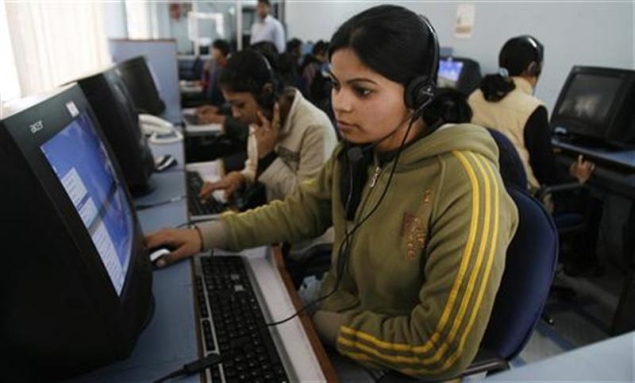
More needs to be done to boost women's and girl's lagging online access, tech giant Intel Corp said in a report to be released later on Thursday that calls for doubling the number of female Internet users in developing nations over the next three years.
The report, funded by the global chipmaker with input from the United Nations and U.S. State Department, among others, points to stubborn gaps in women's access to the Internet in Africa, the Middle East and other developing parts of the world.
It found women are nearly 25 percent less likely than men to be online in those regions, and called on policymakers and technology companies to take steps such as making it easier to access the Internet on mobile phones, allowing free mobile content and boosting digital literacy to shrink the gap.
Surveys and interviews with more than 2,200 women and girls focused on four developing countries - Egypt, India, Mexico and Uganda - found that Internet access was critical for women to earn more money or search and apply for jobs.
"With the powerful capabilities the Internet enables - to connect, to learn, to engage, to increase productivity, and to find opportunities - women's lack of access is giving rise to a second digital divide, one where women and girls risk being left further and further behind," said Melanne Verveer, ambassador for global women's issues at the State Department.
Although the United States and other developed nations see fairly high levels of overall Internet access and usage among women, some gaps remain, mostly in rural areas or among the poor.
In the developing world, however, the gap is far wider.
Just 11 percent of men and women in India have Internet access compared to 79 percent in the United States, said Shelly Esque, a vice president for the chipmaker and president of its educational foundation.
Thursday's report shows 600 million women in developing nations, or 21 percent, are online now, and another 450 million are expected to gain Internet access by 2016. But taking extra steps could help bring an additional 150 million women and girls online over the next three years, the report said.
Good for global economy
Esque pointed to the role technology played in the Arab Spring revolts, particularly in Egypt.
"Information was such a powerful tool," she told Reuters. "What would be the potential for a country like that if they were able to have more equal access? We need to work on that."
A U.N. Human Rights Council resolution last year recognized the power of the Internet to spur progress and encouraged countries to promote and facilitate access to it.
Still, many women surveyed by Intel cited barriers ranging from the belief that Internet use was not "appropriate" for them to the cost of getting connected. Illiteracy and lack of awareness about potential uses also were factors.
Increased access would not only improve women's lives but also boost the global economy, according to Intel's report.
It would add between $50 billion and $70 billion in potential new market opportunities, the report said. It could also bring another $13 billion to $18 billion each year globally to the market value of goods and services - a measure known as gross domestic product or GDP.
The findings by the Santa Clara, California-based company aim to encourage other technology companies, policymakers and nongovernmental groups to take steps to get more women and girls online, it said.
"Without access to the Internet, women lack access to its tools, resources and opportunities," the report said. "This gap disadvantages not just women, but their families, communities and countries."
© Thomson Reuters 2012
Comments
For the latest tech news and reviews, follow Gadgets 360 on X, Facebook, WhatsApp, Threads and Google News. For the latest videos on gadgets and tech, subscribe to our YouTube channel. If you want to know everything about top influencers, follow our in-house Who'sThat360 on Instagram and YouTube.
Related Stories



Advertisement

Follow Us

-

01:48
Motorola's First Laptop in India: Moto Book 60 | Specs, Launch Date & More -
00:55
Gadgets 360 With Technical Guruji: Enhance Your Phone's Charging Speed -
02:21
Gadgets 360 With Technical Guruji: Samsung Galaxy A26 5G -
02:34
Gadgets 360 With Technical Guruji: iQOO Z10 -
00:54
Gadgets 360 With Technical Guruji: News of the Week [April 12, 2024]
-
4000 हजार रुपये डिस्काउंट पर खरीदें Samsung Galaxy A36 5G, देखें पूरा ऑफर
-
Xiaomi 16 में 7000mAh की बड़ी बैटरी मिलने की संभावना, जानें सबकुछ
-
Xiaomi 16 में 7000mAh की बड़ी बैटरी मिलने की संभावना, जानें सबकुछ
-
Lyrid Meteor Shower 2025: अप्रैल में इस दिन बरसेंगीं उल्काएं! 2700 साल पुरानी उल्का बारिश LIVE देखने का मौका ...
Advertisement
Popular on Gadgets
- Samsung Galaxy Unpacked 2025
- ChatGPT
- Redmi Note 14 Pro+
- iPhone 16
- Apple Vision Pro
- Oneplus 12
- OnePlus Nord CE 3 Lite 5G
- iPhone 13
- Xiaomi 14 Pro
- Oppo Find N3
- Tecno Spark Go (2023)
- Realme V30
- Best Phones Under 25000
- Samsung Galaxy S24 Series
- Cryptocurrency
- iQoo 12
- Samsung Galaxy S24 Ultra
- Giottus
- Samsung Galaxy Z Flip 5
- Apple 'Scary Fast'
- Housefull 5
- GoPro Hero 12 Black Review
- Invincible Season 2
- JioGlass
- HD Ready TV
- Laptop Under 50000
- Smartwatch Under 10000
- Latest Mobile Phones
- Compare Phones
Latest Gadgets
- Moto G Stylus (2025)
- Oppo Find X8s+
- Oppo Find X8s
- iQOO Z10x
- iQOO Z10
- Oppo Find X8 Ultra
- Vivo V50e
- Realme Narzo 80x 5G
- Asus Vivobook 16 (AMD, 2025)
- Asus Zenbook S16 (AMD, 2025)
- Oppo Pad 4 Pro
- Samsung Galaxy Tab S10 FE+
- Oppo Watch X2 Mini
- Garmin Instinct 3 Solar
- Xiaomi X Pro QLED 2025 (43-Inch)
- Xiaomi X Pro QLED 2025 (55-Inch)
- Nintendo Switch 2
- Sony PlayStation 5 Pro
- Whirlpool 1.5 Ton 3 Star Inverter Split AC (SAI18K38DC0)
- Whirlpool 1.5 Ton 5 Star Inverter Split AC (SAI17B54SED0)

- About Us
- Sitemaps
- Feedback
- Archives
- Contact Us
- RSS
- Advertise
- Career
- Privacy Policy
- Ethics
- Editorial Policy
- Terms & Conditions
- Complaint Redressal
Download Our Apps
Available in Hindi
© Copyright Red Pixels Ventures Limited 2025. All rights reserved.