-
 Jio May Soon Receive Regulatory Approval for Launch of Satellite Internet Services in India: Report3 January 2024
 -
Poor Quality Results for Online Searches Made People Believe Possible Misinformation: Study25 December 2023
-
Government to Allot Satellite Internet Spectrum Without Auction in Win for Elon Musk’s Starlink19 December 2023
-
Government Planning New Regulations for Hosting Deepfakes: IT Minister23 November 2023
-
Starlink Set to Gain GMPCS Licence to Offer Satellite Communication Services in India: Report8 November 2023

- Home
- Internet
- Internet News
- US seeks to tackle trade secret theft by China, others
US seeks to tackle trade-secret theft by China, others
By Reuters | Updated: 21 February 2013 17:20 IST
Advertisement
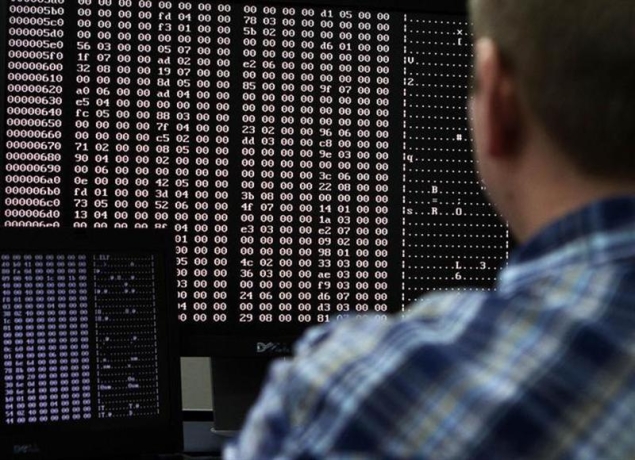
Faced with the growing theft of U.S. trade secrets, the White House said on Wednesday it was stepping up diplomatic pressure and mulling tougher laws to stem the threat to American businesses and security from China and other nations.
The plan includes working with like-minded governments to put pressure on bad actors, using trade policy tools, increasing criminal prosecutions and launching a 120-day review to see whether new U.S. legislation is needed.
"A hacker in China can acquire source code from a software company in Virginia without leaving his or her desk," U.S. Attorney General Eric Holder said at a White House event to unveil the strategy.
Although the White House report did not cite China by name, many see the Asian giant as the main threat. A study released this week by a private security firm accused the Chinese military of orchestrating numerous cyber attacks against U.S. businesses, a charge Beijing has denied.
The Obama administration said its strategy aims to counter what Holder called "a significant and steadily increasing threat to America's economy and national security interests."
"As new technology has torn down traditional barriers to international business and global commerce, they also make it easier for criminals to steal secrets and to do so from anywhere, anywhere in the world," Holder said.
Last week, Representative Dutch Ruppersberger, the top Democrat on the House of Representatives Intelligence Committee, said U.S. companies suffered estimated losses in 2012 of more than $300 billion due to theft of trade secrets, a large share due to Chinese cyber espionage.
The White House report listed 17 cases of trade-secret theft by Chinese companies or individuals since 2010, far more than any other country mentioned in the report.
U.S. corporate victims of trade-secret theft have included General Motors, Ford, DuPont, Dow Chemical, Motorola, Boeing and Cargill. A target company can see the payoff from research investment evaporate as a result of corporate espionage and lose market position, competitive advantage and efficiencies.
"We have repeatedly raised our concerns about trade-secret theft by any means at the highest levels with senior Chinese officials and we will continue to do so," said Robert Hormats, an undersecretary of state.
Those cases cited mostly involved employees stealing trade secrets on the job rather than cyber attacks.
Victoria Espinel, the White House intellectual property rights enforcement coordinator, said the effort aims to protect the innovation that drives the U.S. economy and job creation.
Mixed response
Cyber-security and intelligence experts welcomed the White House plan as a first step, but some said much more needed to be done.
"You've got a nation-state taking on private corporations," said former CIA Director Michael Hayden. "That's kind of unprecedented. We have not approached resolution with this at all."
The U.S. Chamber of Commerce, the nation's largest business lobby, offered a lukewarm statement of support, while other industry groups expressed more enthusiasm for the effort.
"We strongly endorse and applaud the administration's focus on curbing theft of trade secrets, which poses a serious and growing threat to the software industry around the world," said Business Software Alliance President and CEO Robert Holleyman.
The report that laid out the strategy repeated a 2011 White House recommendation that the maximum sentence for economic espionage be increased to at least 20 years, from 15 currently.
Another part of the solution is promoting a set of "best practices" that companies can use to protect themselves against cyber attacks and other espionage, Espinel said.
The report also said the U.S. Federal Bureau of Investigation was "expanding its efforts to fight computer intrusions that involve the theft of trade secrets by individual, corporate and nation-state cyber hackers."
In an interview, U.S. Trade Representative Ron Kirk said the problem of trade-secret theft in China was a factor in the decisions of some U.S. companies to move operations back to the United States.
The companies have "had very frank conversations with the Chinese, (saying) 'You know it's one thing to accept a certain level of copyright knock-offs, but if you're going to take our core technology, then we're better off being in our home country,'" Kirk told Reuters.
© Thomson Reuters 2013
Comments
For the latest tech news and reviews, follow Gadgets 360 on X, Facebook, WhatsApp, Threads and Google News. For the latest videos on gadgets and tech, subscribe to our YouTube channel. If you want to know everything about top influencers, follow our in-house Who'sThat360 on Instagram and YouTube.
Related Stories






Advertisement
Follow Us




-
 Huawei Pura 70 Ultra, 70 Pro+ हुए Kirin 9010, 50MP कैमरा के साथ लॉन्च
 -
Sony ने लॉन्च किए नए Bravia TV, 43 से 85 इंच तक डिस्प्ले, 4.5 लाख तक कीमत
-
Realme C65 5G भारत में 6GB रैम के साथ Rs 10 हजार से कम में होगा लॉन्च!
-
Youtuber ने बोला झूठ! कहा- एक दिन एयरपोर्ट में बिताया, पुलिस ने किया अरेस्ट
-
इस्राइल की राह पर ताइवान! नए एयर डिफेंस सिस्टम ‘Land Sword 2’ को किया टेस्ट, छूटेंगे चीन के ‘पसीने’
Advertisement
Popular on Gadgets
- Galaxy S24 Series
- MWC 2024
- Apple Vision Pro
- Oneplus 12
- iPhone 14
- Apple iPhone 15
- OnePlus Nord CE 3 Lite 5G
- iPhone 13
- Xiaomi 14 Pro
- Oppo Find N3
- Tecno Spark Go (2023)
- Realme V30
- Best Phones Under 25000
- Samsung Galaxy S24 Series
- Cryptocurrency
- iQoo 12
- Samsung Galaxy S24 Ultra
- Giottus
- Samsung Galaxy Z Flip 5
- Apple 'Scary Fast'
- Housefull 5
- GoPro Hero 12 Black Review
- Invincible Season 2
- JioGlass
- HD Ready TV
- Laptop Under 50000
- Smartwatch Under 10000
- Latest Mobile Phones
- Compare Phones
Latest Gadgets
- Huawei Pura 70 Pro+
- Huawei Pura 70 Ultra
- Tecno Camon 30 Premier 5G
- Motorola Edge 50 Fusion
- Oppo A1i
- Oppo A1s
- Motorola Edge 50 Ultra
- Leica Leitz Phone 3
- Asus ZenBook Duo 2024 (UX8406)
- Dell Inspiron 14 Plus
- Realme Pad 2 Wi-Fi
- Redmi Pad Pro
- Cult Shock X
- Fire-Boltt Oracle
- Samsung Samsung Neo QLED 8K Smart TV QN800D
- Samsung Neo QLED 4K Smart TV (QN90D)
- Sony PlayStation 5 Slim Digital Edition
- Sony PlayStation 5 Slim
- IFB 2 Ton 3 Star Inverter Split AC (CI2432C323G1)
- Daikin 1 Ton 3 Star Inverter Split AC (FTKL35UV16W+RKL35UV16W)

- About Us
- Sitemaps
- Feedback
- Archives
- Contact Us
- RSS
- Advertise
- Career
- Privacy Policy
- Ethics
- Editorial Policy
- Terms & Conditions
- Complaint Redressal
Download Our Apps
Available in Hindi
© Copyright Red Pixels Ventures Limited 2024. All rights reserved.


