





-
 SpaceX Falcon 9 Launches 23 Starlink Satellites, Sets Booster Record28 January 2025
 -
SpaceX Launches 24 Starlink Satellites to Expand Global Internet Coverage7 January 2025
-
SpaceX Launches 23 Starlink Satellites to Strengthen Global Internet Services9 December 2024
-
SpaceX Completes Starlink Direct-to-Cell Constellation with New Satellite Launch6 December 2024
-
SpaceX Falcon 9 Launches 24 Starlink Satellites to Expand Internet Network30 November 2024
- Home
- Internet
- Internet News
- India significantly hit by cyber espionage, says Russian firm
India significantly hit by cyber-espionage, says Russian firm
By Press Trust of India | Updated: 15 January 2013 13:04 IST
Advertisement
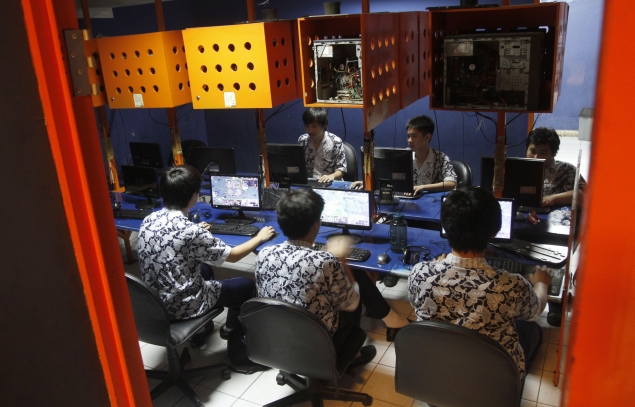
India is among the nations hit by a cyber espionage that has been targeting diplomatic, governmental as well as scientific research organisation at least for five years, according to a Russian cyber security firm.
Termed as 'Red October', the campaign (named after the famous novel 'The Hunt For The Red October' by Tom Clancy) has significantly hit Russia, Kazakhstan, India, Azerbaijan and Belgium, among others, Kaspersky Lab said in a report Monday.
The cyber espionage campaign 'Rocra' (short for Red October) has infected hundreds of victims worldwide across eight categories 'Government, Diplomatic/embassies, Research institutions, Trade and commerce, Nuclear/energy research, Oil and gas companies, Aerospace and Military'.
"The earliest evidence indicates that the cyber-espionage campaign was active since 2007 and is still active at the time of writing (January 2013)," the firm said.
Based on Kaspersky Security Network (KSN), the list of countries that have seen most number of infections is topped by Russia at 35. It is followed by Kazakhstan (21) while India, Azerbaijan and Belgium witnessed 15 infections each.
Other nations impacted include Afghanistan (10), Armenia (10), Iran and Turkmenistan (7 each), Ukraine, Vietnam and the US (6 each), Pakistan (5) and Brazil (4).
Only countries that have seen more than five infections have been included in the list.
"It is quite possible there are other targeted sectors which haven't been discovered yet or have been attacked in the past," Kaspersky cautioned in the report.
It noted that at present there is no evidence of the campaign having links "with a nation-state sponsored attack".
According to the report, the targets were mainly countries in Eastern Europe, former USSR Republics, and Central Asia.
"The main objective of the attackers was to gather sensitive documents from the compromised organisations, which included geopolitical intelligence, credentials to access classified computer systems, and data from personal mobile devices and network equipment," Kaspersky said.
Regarding the perpetrators, the report said that currently there is no evidence of links "with a nation-state sponsored attack".
It noted that the information stolen by the attackers is obviously of the highest level and includes geopolitical data which can be used by nation states.
"Such information could be traded in the underground and sold to the highest bidder, which can be of course, anywhere," it added.
While the "exploits appear to have been created by Chinese hackers", the Rocra malware modules have been created by Russian-speaking operatives, the report said.
Comments
For the latest tech news and reviews, follow Gadgets 360 on X, Facebook, WhatsApp, Threads and Google News. For the latest videos on gadgets and tech, subscribe to our YouTube channel. If you want to know everything about top influencers, follow our in-house Who'sThat360 on Instagram and YouTube.
Related Stories



Advertisement

Follow Us

-

01:29
Gadgets 360 With Technical Guruji: Samsung Galaxy S25 Edge -
01:31
Gadgets 360 With Technical Guruji: Why You Should Probably Move Your Wi-Fi Router -
04:00
Gadgets 360 With Technical Guruji: Ask TG [February 1, 2025] -
17:18
Tech With TG: The History and Evolution of Gaming Consoles -
01:20
Gadgets 360 With Technical Guruji: Do You Know? [February 1, 2025]
-
50MP कैमरा, 5000mAh बैटरी वाला Motorola G45 5G खरीदें 2500 रुपये सस्ता
-
iQOO Neo 10R इस दिन होगा लॉन्च, जानें किन फीचर्स से होगा लैस
-
Apple की तरह Nothing Phone (3a) में मिलेगा अलग कैमरा बटन!, जानें
-
पृथ्वी 24 घंटे में कैसे घूमती है? लद्दाख में भारतीय वैज्ञानिक ने शूट किया Video, देखें
-
2025 में चीन में 1.5 करोड़ कारें अपने आप चलेंगी, BYD बजट कारों में भी देगी L2 सेल्फ-ड्राइविंग टेक्नोलॉजी!
Popular on Gadgets
- Samsung Galaxy Unpacked 2025
- ChatGPT
- Redmi Note 14 Pro+
- iPhone 16
- Apple Vision Pro
- Oneplus 12
- OnePlus Nord CE 3 Lite 5G
- iPhone 13
- Xiaomi 14 Pro
- Oppo Find N3
- Tecno Spark Go (2023)
- Realme V30
- Best Phones Under 25000
- Samsung Galaxy S24 Series
- Cryptocurrency
- iQoo 12
- Samsung Galaxy S24 Ultra
- Giottus
- Samsung Galaxy Z Flip 5
- Apple 'Scary Fast'
- Housefull 5
- GoPro Hero 12 Black Review
- Invincible Season 2
- JioGlass
- HD Ready TV
- Laptop Under 50000
- Smartwatch Under 10000
- Latest Mobile Phones
- Compare Phones
Latest Gadgets
- Infinix Smart 9 HD
- Lava Yuva Smart
- Samsung Galaxy S25 Ultra
- Samsung Galaxy S25+
- Samsung Galaxy S25
- Realme 14 Pro 5G
- Realme 14 Pro+ 5G
- Itel Zeno 10
- Asus Chromebook CR11
- Lenovo Yoga Slim 9i (2025)
- Asus ROG Flow Z13 (2025)
- Xiaomi Pad 7
- Titan Evolution
- Noise ColorFit Pro 6
- Sony 65 Inches Ultra HD (4K) LED Smart TV (KD-65X74L)
- TCL 55 Inches Ultra HD (4K) LED Smart TV (55C61B)
- Sony PlayStation 5 Pro
- Sony PlayStation 5 Slim Digital Edition
- Blue Star 1.5 Ton 3 Star Inverter Split AC (IC318DNUHC)
- Blue Star 1.5 Ton 3 Star Inverter Split AC (IA318VKU)

- About Us
- Sitemaps
- Feedback
- Archives
- Contact Us
- RSS
- Advertise
- Career
- Privacy Policy
- Ethics
- Editorial Policy
- Terms & Conditions
- Complaint Redressal
Download Our Apps
Available in Hindi
© Copyright Red Pixels Ventures Limited 2025. All rights reserved.


