
-
 Amazon Drops Planned 2 Percent Merchant Fee as FTC Lawsuit Looms: Details21 September 2023
 -
US FTC to Probe Qualcomm's Israeli Chipmaker Autotalks Aquisition Deal: Report23 August 2023
-
Amazon Said to Meet US FTC Next Week Ahead of Potential Antitrust Lawsuit: Details8 August 2023
-
US FTC Readies Antitrust Lawsuit Against Amazon That Could Break Up E-Commerce Giant: Report26 July 2023
-
US FTC Official Withdraws Case That Sought to Block Microsoft-Activision $69 Billion Deal21 July 2023

- Home
- Internet
- Internet News
- Google FTC agreement could impact other patent disputes
Google-FTC agreement could impact other patent disputes
By Reuters | Updated: 7 January 2013 10:11 IST
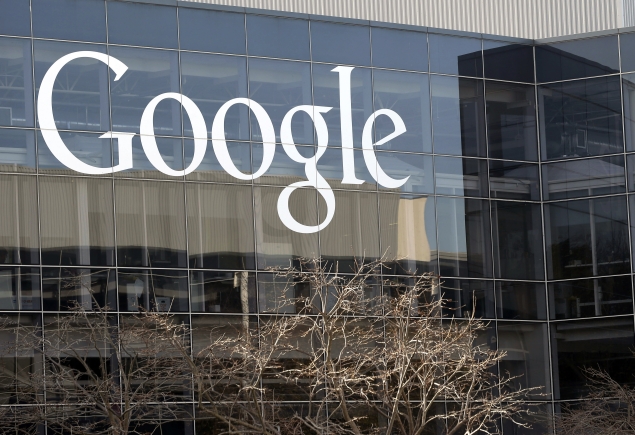
Advertisement
While the focus of last week's agreement between the Federal Trade Commission and Google Inc was search, the deal's restrictions on how Google uses its patents could have a broader impact on the technology industry.
Under the deal, which ended an antitrust investigation by the FTC and disappointed many critics, Google will make only minor changes to its search business.
But Google is also now limited in when it can seek injunctions against products from rival companies that use certain of its patents.
Throughout recent smartphone wars and other major patent litigation, holders of so-called standard essential patents have been accused of using them to bully competitors into paying high licensing rates or as leverage in patent disputes.
The FTC's deal with Google clarifies the uncertainty over how standard essential patents can be used, said Colleen Chien, a professor specializing in patent law at Santa Clara University School of Law in California.
The deal set out a process by which technology makers can avoid injunctions and patent holders know they are going to get compensated, Chien said. "The FTC has deflated the power of the injunction and also the incentives to not pay that have existed."
In its case against Google, the FTC claimed that Google and its subsidiary Motorola Mobility Inc had breached commitments to standard-setting bodies to license its patents on terms that are fair, reasonable and non-discriminatory. As part of the deal, Google agreed to drop claims for injunctive relief against competitors in certain patent disputes around the world. It also agreed to submit to the jurisdiction of a court or arbitrator when disputes over payment rates arise.
Throughout the FTC's investigation, Google was represented by Susan Creighton of Wilson Sonsini Goodrich & Rosati and John Harkrider of Axinn, Veltrop & Harkrider. The FTC retained Beth Wilkinson of Paul, Weiss, Rifkind, Wharton & Garrison.
'Template'
The FTC said Thursday that the threat of injunction by a holder of an essential patent hurts competition. The agreement with Google could be used as a "template" for other patent disputes, it said.
Unlike a court decision, the FTC's agreement with Google is not binding on other companies. But it could give leverage to defendants in disputes with essential patent holders that could be used in court.
"We know in today's world, defendants are getting more aggressive," said Matthew Woods, an antitrust and patent attorney at Robins, Kaplan, Miller & Ciresi. "Defendants will seize on this and tell courts that injunctions are something the court should not even countenance."
But the agreement with Google may not be all good news for patent users, according to Jay Jurata, an antitrust partner at Orrick, Herrington & Sutcliffe, who said that it could have unintended consequences.
The elaborate agreement allows Google to seek injunctions against companies that are unwilling to pay for a license on fair, reasonable and non-discriminatory terms. But the question of when a company is considered an unwilling licensee is one that the FTC may have unwittingly allowed holders of essential patents to manipulate, said Jurata.
"They provided a road map for other standard essential patent holders to engage in opportunistic behavior to paint otherwise willing licensees as unwilling licensees," he said.
Miller of Robins Kaplan also cautioned that the FTC's deal with Google may be unique because of the company's giant size and dominance, which can attract the attention of regulators.
"There are a lot litigants who aren't going to see this agreement as restraining them, because they don't have the same portfolio as Google," Miller said.
© Thomson Reuters 2012
Comments
For the latest tech news and reviews, follow Gadgets 360 on X, Facebook, WhatsApp, Threads and Google News. For the latest videos on gadgets and tech, subscribe to our YouTube channel. If you want to know everything about top influencers, follow our in-house Who'sThat360 on Instagram and YouTube.
Related Stories





Advertisement
Follow Us




Advertisement
Popular on Gadgets
- Galaxy S24 Series
- MWC 2024
- Apple Vision Pro
- Oneplus 12
- iPhone 14
- Apple iPhone 15
- OnePlus Nord CE 3 Lite 5G
- iPhone 13
- Xiaomi 14 Pro
- Oppo Find N3
- Tecno Spark Go (2023)
- Realme V30
- Best Phones Under 25000
- Samsung Galaxy S24 Series
- Cryptocurrency
- iQoo 12
- Samsung Galaxy S24 Ultra
- Giottus
- Samsung Galaxy Z Flip 5
- Apple 'Scary Fast'
- Housefull 5
- GoPro Hero 12 Black Review
- Invincible Season 2
- JioGlass
- HD Ready TV
- Laptop Under 50000
- Smartwatch Under 10000
- Latest Mobile Phones
- Compare Phones
Latest Gadgets
- Huawei Pura 70 Pro+
- Huawei Pura 70 Ultra
- Tecno Camon 30 Premier 5G
- Motorola Edge 50 Fusion
- Oppo A1i
- Oppo A1s
- Motorola Edge 50 Ultra
- Leica Leitz Phone 3
- Asus ZenBook Duo 2024 (UX8406)
- Dell Inspiron 14 Plus
- Realme Pad 2 Wi-Fi
- Redmi Pad Pro
- Cult Shock X
- Fire-Boltt Oracle
- Samsung Samsung Neo QLED 8K Smart TV QN800D
- Samsung Neo QLED 4K Smart TV (QN90D)
- Sony PlayStation 5 Slim Digital Edition
- Sony PlayStation 5 Slim
- IFB 2 Ton 3 Star Inverter Split AC (CI2432C323G1)
- Daikin 1 Ton 3 Star Inverter Split AC (FTKL35UV16W+RKL35UV16W)

- About Us
- Sitemaps
- Feedback
- Archives
- Contact Us
- RSS
- Advertise
- Career
- Privacy Policy
- Ethics
- Editorial Policy
- Terms & Conditions
- Complaint Redressal
Download Our Apps
Available in Hindi
© Copyright Red Pixels Ventures Limited 2024. All rights reserved.


