
- Home
- Internet
- Internet News
- German government urges public to stop using Internet Explorer
German government urges public to stop using Internet Explorer
By Reuters | Updated: 19 September 2012 10:18 IST
Advertisement
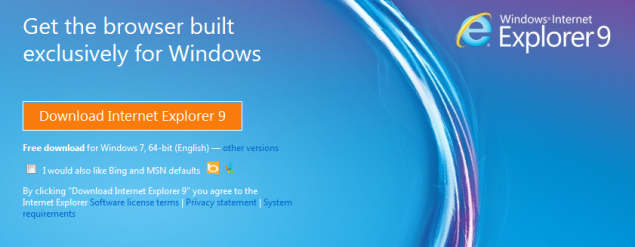
The German government urged the public on Tuesday to temporarily stop using Microsoft Corp's Internet Explorer following discovery of yet-to-be repaired bug in the web browser that the software maker said makes PCs vulnerable to attack by hackers.
The security flaw, which affects hundreds of millions of Internet Explorer browser users around the globe, publicly surfaced over the weekend.
Microsoft had said on Monday that attackers can exploit the bug to infect the PC of somebody who visits a malicious website and then take control of the victim's computer.
The German government's Federal Office for Information Security, or BSI, said that it was aware was aware of targeted attacks and that all that was needed was to lure web surfers to a website where hackers had planted malicious software that exploited the bug in Internet Explorer to infect their PCs.
"A fast spreading of the code has to be feared," the German government said in its statement.
BSI advised all users of Internet Explorer to use an alternative browser until the manufacturer has released a security update.
Officials with Microsoft did not respond to a request for comment on the move by the German government.
The company late on Monday urged customers to install a piece of security software as an interim measure, buying it time to fix the bug and release a new, more secure version of Internet Explorer.
Microsoft did not say how long that will take, but several security researchers said they expect the update within a week.
The free security tool, which is known as the Enhanced Mitigation Experience Toolkit, or EMET, is available through an advisory on Microsoft's website: http://blogs.technet.com/b/msrc/
The EMET software must be downloaded, installed and then manually configured to protect computers from the newly discovered threat, according to the posting from Microsoft. The company also advised customers to adjust several Windows security settings to thwart potential attackers, but cautioned that doing so might impact the PC's usability.
Some security experts had said it would be too cumbersome for many PC users to implement the measures suggested by Microsoft. Instead they advised Windows users to temporarily switch from Internet Explorer to rival browsers such as Google Inc's Chrome, Mozilla's Firefox or Opera Software ASA's Opera.
Internet Explorer was the world's second-most widely used browser last month, with about 33 percent market share, according to StatCounter. It was close behind Chrome, which had 34 percent of the market.
Copyright Thomson Reuters 2012
Comments
For the latest tech news and reviews, follow Gadgets 360 on X, Facebook, WhatsApp, Threads and Google News. For the latest videos on gadgets and tech, subscribe to our YouTube channel. If you want to know everything about top influencers, follow our in-house Who'sThat360 on Instagram and YouTube.
Further reading:
EMET, Enhanced Mitigation Experience Toolkit, Internet Explorer browsers, Microsoft


Advertisement
Follow Us




-

03:19
Gadgets 360 With Technical Guruji: Something About the Nothing Ear, Ear (a) -
19:21
Gadgets 360 With Technical Guruji: Samsung's New AI Smart TVs, Nothing Ear -
05:23
Gadgets 360 With Technical Guruji: Samsung's New AI Smart TVs -
01:17
Gadgets 360 With Technical Guruji: Tech Tip [April 20, 2024] -
02:05
Gadgets 360 With Technical Guruji: Ask TG [April 20, 2024]
-
Oppo A60 4G होगा 5000mAh बैटरी, 50MP कैमरा, 45W चार्जिंग वाला सस्ता फोन!
-
Oppo A3 के स्पेसिफिकेशंस और फोटो लीक, जल्द देगा दस्तक
-
लॉन्च से पहले देखें Infinix GT 20 Pro की पूरी ‘कुंडली', जल्द होगा लॉन्च
-
KBC 2024 Registration : ‘कौन बनेगा करोड़पति 16’ सीजन का ऑनलाइन रजिस्ट्रेशन कल से, ऐसे करें रजिस्टर
Advertisement
Popular on Gadgets
- AI
- iPhone 16 Leaks
- Apple Vision Pro
- Oneplus 12
- iPhone 14
- Apple iPhone 15
- OnePlus Nord CE 3 Lite 5G
- iPhone 13
- Xiaomi 14 Pro
- Oppo Find N3
- Tecno Spark Go (2023)
- Realme V30
- Best Phones Under 25000
- Samsung Galaxy S24 Series
- Cryptocurrency
- iQoo 12
- Samsung Galaxy S24 Ultra
- Giottus
- Samsung Galaxy Z Flip 5
- Apple 'Scary Fast'
- Housefull 5
- GoPro Hero 12 Black Review
- Invincible Season 2
- JioGlass
- HD Ready TV
- Laptop Under 50000
- Smartwatch Under 10000
- Latest Mobile Phones
- Compare Phones
Latest Gadgets
- iQOO Z9x
- iQOO Z9
- HMD Pulse
- HMD Pulse+
- HMD Pulse Pro
- Realme Narzo 70x 5G
- Realme Narzo 70 5G
- Samsung Galaxy C55
- Lenovo IdeaPad Pro 5i
- Asus ZenBook Duo 2024 (UX8406)
- Realme Pad 2 Wi-Fi
- Redmi Pad Pro
- boAt Storm Call 3
- Lava ProWatch Zn
- Samsung Samsung Neo QLED 8K Smart TV QN800D
- Samsung Neo QLED 4K Smart TV (QN90D)
- Sony PlayStation 5 Slim Digital Edition
- Sony PlayStation 5 Slim
- Lloyd 1.5 Ton 3 Star Inverter Split AC (GLS18I3FOSEW)
- Haier 1.5 Ton 3 Star Triple Inverter Split AC (HSU18K-PYSS3BN-INV)

- About Us
- Sitemaps
- Feedback
- Archives
- Contact Us
- RSS
- Advertise
- Career
- Privacy Policy
- Ethics
- Editorial Policy
- Terms & Conditions
- Complaint Redressal
Download Our Apps
Available in Hindi
© Copyright Red Pixels Ventures Limited 2024. All rights reserved.


