-
 Amazon's Top Communications Executive Jay Carney to Join Airbnb as Head of Policy23 July 2022
 -
US Senators Said to Be Working on Bill to Restore Net Neutrality Rules18 July 2022
-
US Supercomputer Breaks Record of Being Fastest in the World With Two Quintillion Calculations per Second8 June 2022
-
Barack Obama Urges Big Tech to Stop Dividing Society, Undermining Democracy22 April 2022
-
Barack, Michelle Obama End Spotify Podcast Deal After Being Frustrated by Exclusive Terms: Report22 April 2022

- Home
- Internet
- Internet News
- Cyber security battle looms after Obama directive
Cyber-security battle looms after Obama directive
By Agence France-Presse | Updated: 14 February 2013 18:50 IST
Advertisement
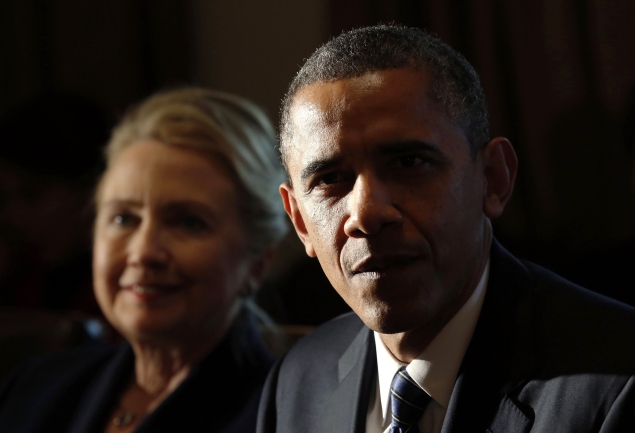
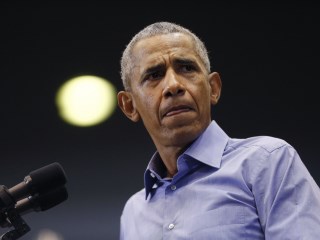
President Barack Obama's order aimed at ramping up protection from cyber-attacks will address only a small portion of threats and sets up a fresh battle in Congress over legislation.
Obama acted this week after two failed attempts in Congress to pass measures to protect critical infrastructure from computer attacks.
US administration officials and lawmakers acknowledge that the order creates no new authority and that legislation is needed to better safeguard networks for key systems such as power grids, banks and air traffic control.
"The executive order is not a substitute for legislation," said General Keith Alexander, head of the National Security Agency and the military's Cyber Command.
"We need legislation and we need it now," Alexander told a gathering Wednesday to discuss the president's order. "From my perspective, the threats are real and growing."
Because most of the networks in question are in private hands, officials say they must rely on voluntary reporting by industry of any cyber threats or attacks. Legislation would be needed to shield businesses from liability when they do report potential malware threats.
Obama, in his annual State of the Union address to a joint session of Congress, said the United States was facing a "rapidly growing threat from cyber-attacks."
The president also urged Congress to pass legislation "to give our government a greater capacity to secure our networks and deter attacks."
Senator Jay Rockefeller, co-author of a pending cyber-security bill, welcomed the executive order and said it "will improve the partnership between the government and the private sector needed to defend our country."
But other lawmakers were miffed that the president acted alone.
Without protections and incentives from legislation, the order "will be ineffective and carry consequences for entities that choose to participate," said House Homeland Security Committee Chairman Michael McCaul said.
Republican Representative Mike Rogers, who heads the House Intelligence Committee, and ranking Democrat Dutch Ruppersberger re-introduced the Cyber Intelligence and Sharing Protection Act (CISPA), a bill that passed the House last year but died in the Senate.
"We are in a cyber war now, and most Americans don't know it," Rogers told a forum.
"And at this point, we're losing. Nation states like China are stealing our intellectual property at a breathtaking pace."
Ruppersberger said he was optimistic about the bill's chances despite the failure in the last Congress, when the White House threatened a veto and the Senate opted for a different course.
"We had our issues with the president last time," Ruppersberger told an audience at the Center for Strategic and International Studies. "We don't agree on everything but we do agree we have to work together."
Cyber-security legislative efforts failed amid opposition from civil libertarians who claim it could allow too much government snooping and conservatives who say it would create a new bureaucracy.
Ruppersberger argued that in drafting the bill, "we bent over backwards so we don't invade anyone's privacy... the bill does not authorize the government to monitor your computer or read your tweets."
But critics say CISPA still raises civil liberty concerns.
Leslie Harris at the Center for Democracy and Technology said CISPA "remains fundamentally flawed" because "it allows private Internet communications and information of American citizens to go directly to the NSA, a military intelligence agency that operates secretly with little public accountability."
Analysts say it remains unclear whether lawmakers and the White House can break the deadlock and pass legislation offering real protection.
"The US is clearly at a stalemate, with the government floundering in a hotly politicized deadlock with trade lobbies and civil liberties advocates," said Michela Menting, cyber security analyst at ABI Research.
Daniel Castro of the Information Technology & Innovation Foundation said the cyber-security order may in fact reduce pressure on lawmakers to pass a bill.
"Some people will say this takes care of the problem," he told AFP. "So this lessens the urgency."
But if Congress decides to act, it may be pressed to do so ahead of deadlines to implement the executive order.
"Some form of CISPA has the best chance of passage this year in Congress," said Thomas Billington, who head the cyber-security media firm Billington Cyber-Security.
Comments
For the latest tech news and reviews, follow Gadgets 360 on X, Facebook, WhatsApp, Threads and Google News. For the latest videos on gadgets and tech, subscribe to our YouTube channel. If you want to know everything about top influencers, follow our in-house Who'sThat360 on Instagram and YouTube.
Related Stories



Advertisement
Follow Us




-

03:19
Gadgets 360 With Technical Guruji: Something About the Nothing Ear, Ear (a) -
19:21
Gadgets 360 With Technical Guruji: Samsung's New AI Smart TVs, Nothing Ear -
05:23
Gadgets 360 With Technical Guruji: Samsung's New AI Smart TVs -
01:17
Gadgets 360 With Technical Guruji: Tech Tip [April 20, 2024] -
02:05
Gadgets 360 With Technical Guruji: Ask TG [April 20, 2024]
-
Honor 200 Lite 5G 108MP कैमरा, 4500mAh बैटरी, 35W चार्जिंग के साथ लॉन्च
-
Oppo A60 फोन लॉन्च हुआ 8GB रैम, 5000mAh बैटरी, 45W चार्जिंग के साथ, जानें
-
Samsung लॉन्च करेगा पहला फोल्डेबल अल्ट्रा फोन Galaxy Z Fold 6 Ultra!
-
New OTT Release : लापता लेडीज.. क्रैक.. रणनीति… किस ओटीटी पर क्या नया? जानें
-
Philips ने लॉन्च किया 2K रिकॉर्डिंग वाला सिक्योरिटी कैमरा Philips 5000 Series Indoor 360 Degree, जानें कीमत
Advertisement
Popular on Gadgets
- AI
- iPhone 16 Leaks
- Apple Vision Pro
- Oneplus 12
- iPhone 14
- Apple iPhone 15
- OnePlus Nord CE 3 Lite 5G
- iPhone 13
- Xiaomi 14 Pro
- Oppo Find N3
- Tecno Spark Go (2023)
- Realme V30
- Best Phones Under 25000
- Samsung Galaxy S24 Series
- Cryptocurrency
- iQoo 12
- Samsung Galaxy S24 Ultra
- Giottus
- Samsung Galaxy Z Flip 5
- Apple 'Scary Fast'
- Housefull 5
- GoPro Hero 12 Black Review
- Invincible Season 2
- JioGlass
- HD Ready TV
- Laptop Under 50000
- Smartwatch Under 10000
- Latest Mobile Phones
- Compare Phones
Latest Gadgets
- iQOO Z9x
- iQOO Z9
- HMD Pulse
- HMD Pulse+
- HMD Pulse Pro
- Realme Narzo 70x 5G
- Realme Narzo 70 5G
- Samsung Galaxy C55
- Dell Alienware X16 R2
- Lenovo IdeaPad Pro 5i
- Realme Pad 2 Wi-Fi
- Redmi Pad Pro
- boAt Storm Call 3
- Lava ProWatch Zn
- Samsung Samsung Neo QLED 8K Smart TV QN800D
- Samsung Neo QLED 4K Smart TV (QN90D)
- Sony PlayStation 5 Slim Digital Edition
- Sony PlayStation 5 Slim
- Lloyd 1.5 Ton 3 Star Inverter Split AC (GLS18I3FOSEW)
- Haier 1.5 Ton 3 Star Triple Inverter Split AC (HSU18K-PYSS3BN-INV)

- About Us
- Sitemaps
- Feedback
- Archives
- Contact Us
- RSS
- Advertise
- Career
- Privacy Policy
- Ethics
- Editorial Policy
- Terms & Conditions
- Complaint Redressal
Download Our Apps
Available in Hindi
© Copyright Red Pixels Ventures Limited 2024. All rights reserved.


