-
 Razer PC Remote Play for Streaming Games to Mobile Devices and Windows-Based Handhelds Launched11 April 2025
 -
Microsoft Confirms Xbox Games Showcase, The Outer Worlds 2 Deep Dive for June 810 April 2025
-
PS Plus Game Catalog April Lineup Revealed: Hogwarts Legacy, Blue Prince, Lost Records: Bloom & Rage – Tape 210 April 2025
-
Hades 2 to Be Timed Console Exclusive on Nintendo Switch and Switch 2, Supergiant Games Confirms9 April 2025
-
Astro Bot Sweeps BAFTA Games Awards 2025 With 5 Wins, Including Best Game: See Full List of Winners9 April 2025
- Home
- Games
- Games News
- Video games help children become smarter
Video games help children become smarter
By Indo-Asian News Service | Updated: 21 January 2013 15:15 IST
Advertisement
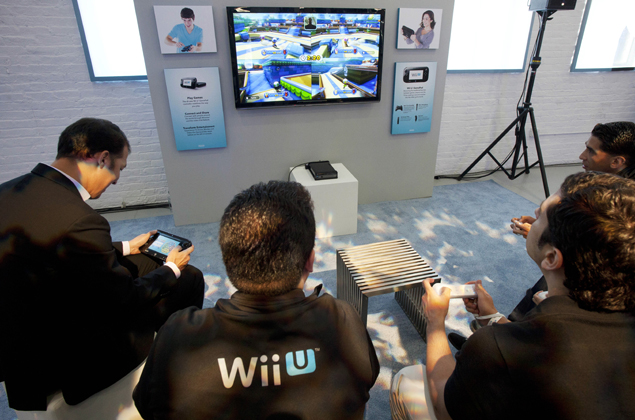
Active video games help children become smarter by boosting their self-esteem and problem-solving skills besides motivating them to exercise, says a new study.
Penny Sweetser, Daniel Johnson and Peta Wyeth from Australia's Games Research and Interaction Design (GRID) Lab in Queensland investigated the amount of time children spent watching TV and DVDs, compared to playing video games.
Watching TV was a "passive" experience, while video and computer games were interactive, boosting children's self-esteem, problem-solving skills and in some cases, physical activity levels, said Johnson, the Australian Journal for Early Childhood reports.
"Emerging research has shown that active video games such as Nintendo Wii, Sony PlayStation Move, and the XBOX Kinect can be used to motivate young children to exercise and be more active outside of the game setting," adds Johnson, according to a Queensland statement.
"There is a lot of negative press about gaming and that's not well-supported. Where there is a negative effect, research shows it's on the minority of people. Video games are a mainstream pastime," Johnson says.
Their analysis of data from the Longitudinal Study of Australian Children found children in a particular age group spent, on an average, some two to three hours watching TV compared to less than a half hour playing video games or using computers.
Working on computer and playing video games should not be classed as the same type of activity as watching TV. Screen-time recommendations, which are based on the sum of all screen-related activities, should be divided into two categories, active and passive screen time, says Sweetser.
"Clearly, certain forms of media such as violent video games are not appropriate for children, and games should be played in moderation," adds Sweetser.
Comments
For the latest tech news and reviews, follow Gadgets 360 on X, Facebook, WhatsApp, Threads and Google News. For the latest videos on gadgets and tech, subscribe to our YouTube channel. If you want to know everything about top influencers, follow our in-house Who'sThat360 on Instagram and YouTube.
Further reading:
Gaming, Nintendo Wii, PlayStation Move, Sony PlayStation Move, XBOX Kinect, video games, Games Research and Interaction Design, Longitudinal Study, Penny Sweetser
Related Stories



Advertisement

Follow Us

-

01:48
Motorola's First Laptop in India: Moto Book 60 | Specs, Launch Date & More -
00:55
Gadgets 360 With Technical Guruji: Enhance Your Phone's Charging Speed -
02:21
Gadgets 360 With Technical Guruji: Samsung Galaxy A26 5G -
02:34
Gadgets 360 With Technical Guruji: iQOO Z10 -
00:54
Gadgets 360 With Technical Guruji: News of the Week [April 12, 2024]
-
4000 हजार रुपये डिस्काउंट पर खरीदें Samsung Galaxy A36 5G, देखें पूरा ऑफर
-
Xiaomi 16 में 7000mAh की बड़ी बैटरी मिलने की संभावना, जानें सबकुछ
-
Xiaomi 16 में 7000mAh की बड़ी बैटरी मिलने की संभावना, जानें सबकुछ
-
Lyrid Meteor Shower 2025: अप्रैल में इस दिन बरसेंगीं उल्काएं! 2700 साल पुरानी उल्का बारिश LIVE देखने का मौका ...
Advertisement
Popular on Gadgets
- Samsung Galaxy Unpacked 2025
- ChatGPT
- Redmi Note 14 Pro+
- iPhone 16
- Apple Vision Pro
- Oneplus 12
- OnePlus Nord CE 3 Lite 5G
- iPhone 13
- Xiaomi 14 Pro
- Oppo Find N3
- Tecno Spark Go (2023)
- Realme V30
- Best Phones Under 25000
- Samsung Galaxy S24 Series
- Cryptocurrency
- iQoo 12
- Samsung Galaxy S24 Ultra
- Giottus
- Samsung Galaxy Z Flip 5
- Apple 'Scary Fast'
- Housefull 5
- GoPro Hero 12 Black Review
- Invincible Season 2
- JioGlass
- HD Ready TV
- Laptop Under 50000
- Smartwatch Under 10000
- Latest Mobile Phones
- Compare Phones
Latest Gadgets
- Moto G Stylus (2025)
- Oppo Find X8s+
- Oppo Find X8s
- iQOO Z10x
- iQOO Z10
- Oppo Find X8 Ultra
- Vivo V50e
- Realme Narzo 80x 5G
- Asus Vivobook 16 (AMD, 2025)
- Asus Zenbook S16 (AMD, 2025)
- Oppo Pad 4 Pro
- Samsung Galaxy Tab S10 FE+
- Oppo Watch X2 Mini
- Garmin Instinct 3 Solar
- Xiaomi X Pro QLED 2025 (43-Inch)
- Xiaomi X Pro QLED 2025 (55-Inch)
- Nintendo Switch 2
- Sony PlayStation 5 Pro
- Whirlpool 1.5 Ton 3 Star Inverter Split AC (SAI18K38DC0)
- Whirlpool 1.5 Ton 5 Star Inverter Split AC (SAI17B54SED0)

- About Us
- Sitemaps
- Feedback
- Archives
- Contact Us
- RSS
- Advertise
- Career
- Privacy Policy
- Ethics
- Editorial Policy
- Terms & Conditions
- Complaint Redressal
Download Our Apps
Available in Hindi
© Copyright Red Pixels Ventures Limited 2025. All rights reserved.