





-
 CES 2020: Razer Launches Tomahawk Gaming Desktop, Kishi Mobile Gamepad, Sila 5G Router, and More8 January 2020
 -
Redmi K20, Redmi K20 Pro Gamepad With Bluetooth Launched2 August 2019
-
Three New Moto Mods Launched in India, Can Be Bought or Rented15 December 2017
-
Sony's Mini Wired Gamepad for PS4 Is Made for Children20 October 2017
-
Amkette Evo Gamepad Pro Wired Gaming Controller Launched for Android Devices21 January 2017
- Home
- Games
- Games News
- Nintendo chief rules out price cuts for Wii U
Nintendo chief rules out price cuts for Wii U
By Associated Press | Updated: 31 January 2013 11:10 IST
Advertisement
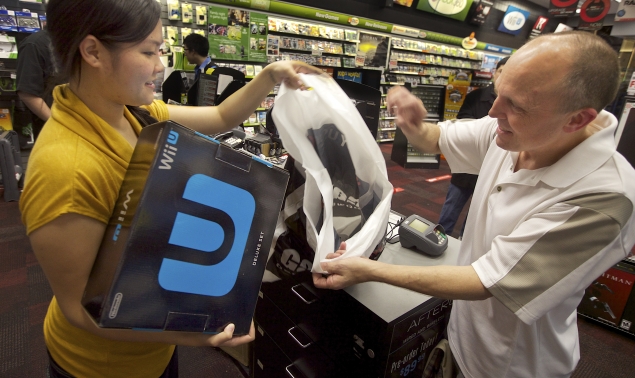
Nintendo's president Thursday ruled out price cuts for its new Wii U home console as a way to boost sales, vowing to become profitable again in its core businesses as smartphones and tablets increasingly threaten specialized game machines.
Satoru Iwata, speaking at a Tokyo hotel to investors and reporters a day after earnings were released, acknowledged the sales momentum for the Wii U, as well as the 3DS hand-held game machine, had run out of steam during the key year-end shopping season, especially in the U.S.
But he said no price cuts were in the works. Price cuts are common in the gaming industry to woo buyers, but the move can backfire by trimming revenue. The Wii U now sells for about $300 in the U.S. and 25,000 yen in Japan.
"We are already offering it at a good price," he said.
Iwata said he expects operating profit of more than 100 billion yen in the 12 months ending March 2014, promising that as "a commitment."
But he acknowledged more work was needed to have consumers understand the Wii U, which went on sale globally late last year, as well as producing more game software to draw buyers.
All game machines have suffered in recent years from the advent of smartphones and other mobile devices that have become more sophisticated and offer games and other forms of entertainment.
Nintendo returned to net profit for the April-December period of 2012 from deep losses the previous year, but that was due to a perk from a weaker yen, which helps Japanese exporters such as Nintendo.
Its operating result, which removes currency fluctuations, was a loss of 5.86 billion yen ($64 million), and Nintendo expects that to swell to a 20 billion yen ($220 million) loss for the full business year ending March 2013 as sales of its game consoles fall short of expectations.
Iwata said Nintendo is preparing more game software, including those developed in-house, for the end of this year.
Kyoto-based Nintendo, which makes Super Mario and Pokemon games, lowered its full year sales forecast Wednesday to 670 billion yen ($7.4 billion) from 810 billion yen ($8.9 billion). It also said it was going to sell fewer Wii U consoles for the fiscal year through March than its previous projection. The Wii U has a touch-screen tablet controller called GamePad and a TV-watching feature called TVii.
The company forecasts it will sell 4 million Wii U consoles for the current fiscal year, ending March 31, down from its earlier estimate of 5.5 million units. The Wii U, which went on sale late last year, was the first major new game console to arrive in stores in years.
Nintendo, also behind the Donkey Kong and Zelda games, lowered its full year sales forecast for Wii U game software units to 16 million from 24 million.
Iwata said last year holiday sales quickly dissipated in the U.S. and some European nations, including Great Britain, the key market. He said the U.S. home console sales were the worst for Nintendo in nearly a decade.
He said Nintendo needs hit games to push console sales, and the company remains confident Wii U will prove more popular with time.
"The chicken-and-game problem has not been solved," he said of the need for both game software and machine hardware.
"I feel a deep sense of responsibility for not being able to produce results for our year-end business," said Iwata.
He declined to say what he would do if the company failed to attain the promised operating profits.
Nintendo sank into a loss the previous fiscal year largely because of price cuts for its hand-held 3DS game machine, which shows three-dimensional imagery without special glasses. That machine is also struggling in most global markets.
Shigeru Miyamoto, Nintendo's famed game designer, said what was missing were games for the Wii U that made its appeal clear. The progress in smartphones has also posed a challenge for Nintendo, he said.
"People have to try it to see it is fun," Miyamoto said of Wii U.
Comments
For the latest tech news and reviews, follow Gadgets 360 on X, Facebook, WhatsApp, Threads and Google News. For the latest videos on gadgets and tech, subscribe to our YouTube channel. If you want to know everything about top influencers, follow our in-house Who'sThat360 on Instagram and YouTube.
Related Stories

Advertisement

Follow Us

-
![[Sponsored] A Day in the Life of a Galaxy AI-Powered Professional](https://www.gadgets360.com/static/desktop/images/spacer.png)
03:18
[Sponsored] A Day in the Life of a Galaxy AI-Powered Professional -
02:43
Best Camera Phones Under 30,000 Rupees -
03:08
Top 5 TWS Earbuds Under Rs. 5000 in 2025!: Best Budget Wireless Earbuds -
21:40
Talking AI, Startups, Fake NEWS & More With Kirthiga Reddy -
02:56
Apple Launched New MacBook Air, iPad Air & Mac Studio - What's New?
-
OnePlus 13T के डिजाइन का खुलासा, होगा सबसे सस्ता Snapdragon 8 Elite फोन!
-
OnePlus Pad 2 Pro टैबलेट में मिलेगी 16GB रैम! लॉन्च से पहले खुलासा
-
Oppo A5 Pro 4G फोन आया 8GB रैम, 5800mAh बैटरी, 45W चार्जिंग के साथ, जानें
-
Motorola का Edge 60 Fusion जल्द हो सकता है भारत में लॉन्च, ट्रिपल रियर कैमरा की संभावना
-
Poco F7 सीरीज की लॉन्च तारीख हुई लीक, जानें क्या कुछ होगा खास
Advertisement
Popular on Gadgets
- Samsung Galaxy Unpacked 2025
- ChatGPT
- Redmi Note 14 Pro+
- iPhone 16
- Apple Vision Pro
- Oneplus 12
- OnePlus Nord CE 3 Lite 5G
- iPhone 13
- Xiaomi 14 Pro
- Oppo Find N3
- Tecno Spark Go (2023)
- Realme V30
- Best Phones Under 25000
- Samsung Galaxy S24 Series
- Cryptocurrency
- iQoo 12
- Samsung Galaxy S24 Ultra
- Giottus
- Samsung Galaxy Z Flip 5
- Apple 'Scary Fast'
- Housefull 5
- GoPro Hero 12 Black Review
- Invincible Season 2
- JioGlass
- HD Ready TV
- Laptop Under 50000
- Smartwatch Under 10000
- Latest Mobile Phones
- Compare Phones
Latest Gadgets
- Samsung Galaxy F16 5G
- iQOO Neo 10R
- Tecno Camon 40 Premier 5G
- Infinix Note 50 Pro+
- Infinix Note 50 Pro
- Infinix Note 50
- Vivo T4x 5G
- Nubia Neo 3 GT 5G
- Asus Zenbook A14 (UX3407RA)
- Tecno Megabook S14
- Lenovo Tab K9
- Apple iPad (2025) Wi-Fi + Cellular
- boAt Ultima Prime
- boAt Ultima Ember
- Haier M95E
- Sony 65 Inches Ultra HD (4K) LED Smart TV (KD-65X74L)
- Sony PlayStation 5 Pro
- Sony PlayStation 5 Slim Digital Edition
- Blue Star 1.5 Ton 3 Star Inverter Split AC (IC318DNUHC)
- Blue Star 1.5 Ton 3 Star Inverter Split AC (IA318VKU)

- About Us
- Sitemaps
- Feedback
- Archives
- Contact Us
- RSS
- Advertise
- Career
- Privacy Policy
- Ethics
- Editorial Policy
- Terms & Conditions
- Complaint Redressal
Download Our Apps
Available in Hindi
© Copyright Red Pixels Ventures Limited 2025. All rights reserved.


