-
 Best Chrome Extensions to Block Ads24 April 2017
 -
Encryption, Always Important, Is Now Easy15 October 2015
-
In Report on Data Collection Practices, WhatsApp and AT&T Fail the Test19 June 2015
-
UK Spy Chief Demands More Access to Twitter, Facebook to Thwart Attacks4 November 2014
-
Social Networks 'In Denial' on Extremist Use: GCHQ Chief4 November 2014

Instagram reversal doesn't appease everyone
By David Streitfeld and Nicole Perlroth, The New York Times | Updated: 22 December 2012 15:06 IST
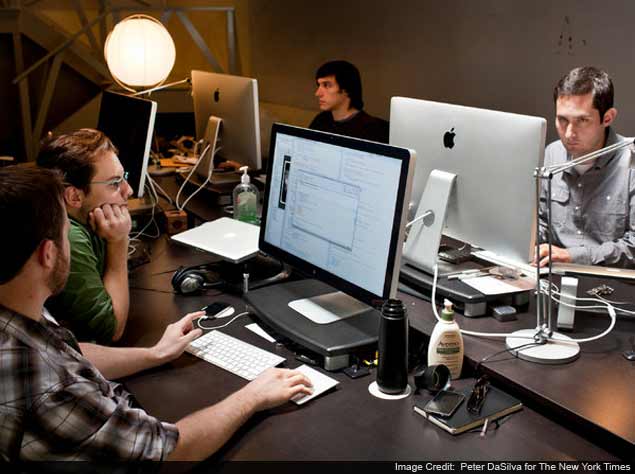
Advertisement
Facebook may have quelled a full-scale rebellion by quickly dumping the contentious new terms of use for Instagram, its photo-sharing service. But even as the social network furiously backpedaled, some users said Friday they were carrying through on plans to leave.
Ryan Cox, a 29-year-old management consultant at ExactTarget, an Indianapolis-based interactive marketing software company, said he had already moved his photos to Flickr, Yahoo's photo-sharing app, where he could have better control.
Mr. Cox said the uproar this week over whether Instagram owned its users' photos was "a wake-up call."
"It's my fault," he continued. "I'm smart enough to know what Instagram had and what they could do especially the minute Facebook acquired them but I was a victim of naive optimism."
"Naive optimism" is as good a term as any for the emotion that people feel as they put their private lives onto social networks.
Companies like Google, Twitter, Yelp and Facebook offer themselves as free services for users to store and share their most intimate pictures, secrets, messages and memories. But to flourish over the long term, they need to seek new ways to market the personal data they accumulate. They must constantly push the envelope, hoping users either do not notice or do not care.
So they sell ads against the content of an e-mail, as Google does, or transform a user's likes into commercial endorsements, as Facebook does, or sell photographs of your adorable 3-year-old, which is what Instagram was accused of planning this week.
"The reality is that companies have always had to make money," said Miriam H. Wugmeister, chair of Morrison Foerster's privacy and data security group.
Even as Instagram was pulling back on its changed terms of service on Thursday night, it made clear it was only regrouping. After all, Facebook, as a publicly held corporation, must answer to Wall Street's quarterly expectations.
"We are going to take the time to complete our plans, and then come back to our users and explain how we would like for our advertising business to work," Kevin Systrom, Instagram's youthful co-founder, wrote on the company's blog.
Instagram's actions angered many users who were already incensed over the company's decision earlier this month to cut off its integration with Twitter, a Facebook rival, making it harder for its users to share their Instagram photos on Twitter.
Users were apprehensive that the new terms of service meant that data on their favorite things would be shared with Facebook and its advertisers. Users also worried that their photos would become advertising.
Instagram is barely two years old but has 100 million users. Last spring, Facebook announced plans to buy it in a deal that was initially valued at $1 billion. The deal was closed in September for a somewhat smaller amount.
For some users, Mr. Systrom's apology and declaration that "Instagram has no intention of selling your photos, and we never did" was sufficient.
National Geographic, which suspended its account in the middle of the uproar, held a conference call with members of Facebook's legal and policy teams. Afterward, the magazine, which has 658,000 Instagram followers, said it would resurrect its account.
Also mollified was Noah Kalina, who took wedding photographs earlier this year for Mark Zuckerberg, the founder of Facebook. In a widely circulated post on Twitter, Mr. Kalina said the new terms of service were "a contract no professional or nonprofessional should ever sign." His advice: "Walk away."
On Friday, the photographer said he had walked back. "It's nice to know they listened."
Kim Kardashian, the most followed person on Instagram, said on Tuesday that she "really loved" the service - note the past tense - and that the new rules were not "fair." She had yet to update her 17 million Twitter followers on Friday, but since she is pushing her True Reflection fragrance it is a safe bet that she has forgiven and forgotten.
Andy Benson, a creative director at a Philadelphia advertising service, was less conciliatory. He said it was not the fact that Instagram needed to monetize the service that bothered him, but the way it had done so.
"Instagram was a social, creative tool," he said. "But now that Facebook is involved, it felt reckless to suggest that they could sell user-created content for their own financial gain."
Mr. Benson added "The best advertising in the social media realm is a conversation - it's not a monologue to the consumer. And that is what this felt like. 'Oh, we're going to let you use this tool, then take everything and sell it.' "
Mr. Cox had similar feelings. As the guardian for his 4- and 8-year-old nephews, he said he used the service to upload pictures of the boys and enjoyed the feedback of the "likes" he got through the service.
"But the idea that a year from now a Disney ad could pop up on my friend's Facebook page featuring a picture of my nephew feels like a bad TNT daytime movie," he said. "I want to be able to control what is out there."
The Electronic Frontier Foundation said on Friday that Instagram's newest privacy policy still came up short. The service no longer "directly promises that private photos will remain private," it noted on its site. "Instead, your privacy on Instagram is subject to future changes in the privacy settings options."
The privacy brouhahas that Facebook has been involved in, the foundation noted, have involved attempts to adjust settings "in ways that meant your ability to keep some information private was no longer available." Facebook is operating under a consent decree with regulators.
Facebook and Instagram declined to say Friday how many people were quitting the service despite the policy reversal. They took a common approach of Internet companies after a scrap with their users: pretend nothing happened and move on. Instagram's blog featured a post about how it now was available in 25 languages. Mr. Zuckerberg has not posted on his Facebook page since Tuesday.
© 2012, The New York Times News Service
Comments
For the latest tech news and reviews, follow Gadgets 360 on X, Facebook, WhatsApp, Threads and Google News. For the latest videos on gadgets and tech, subscribe to our YouTube channel. If you want to know everything about top influencers, follow our in-house Who'sThat360 on Instagram and YouTube.
Further reading:
Electronic Frontier Foundation, Facebook, Flickr, Instagram, Mark Zuckerberg, photo sharing app, social media, social networking
Related Stories




Advertisement
Follow Us




-

03:19
Gadgets 360 With Technical Guruji: Something About the Nothing Ear, Ear (a) -
19:21
Gadgets 360 With Technical Guruji: Samsung's New AI Smart TVs, Nothing Ear -
05:23
Gadgets 360 With Technical Guruji: Samsung's New AI Smart TVs -
01:17
Gadgets 360 With Technical Guruji: Tech Tip [April 20, 2024] -
02:05
Gadgets 360 With Technical Guruji: Ask TG [April 20, 2024]
-
Polestar Phone हुआ 16GB RAM, 50MP कैमरा के साथ लॉन्च, AI फीचर्स भी शामिल
-
OnePlus 13 के नए डिजाइन और डिस्प्ले साइज का हुआ खुलासा, क्या होगा खास
-
Oppo K12 स्मार्टफोन 12GB रैम, 50MP कैमरा, 100W चार्जिंग के साथ लॉन्च
-
iQoo Z9 सीरीज 6,000mAh बैटरी, 16GB तक रैम के साथ हुई लॉन्च, जानें कीमत और स्पेसिफिकेशन्स
Advertisement
Popular on Gadgets
- AI
- iPhone 16 Leaks
- Apple Vision Pro
- Oneplus 12
- iPhone 14
- Apple iPhone 15
- OnePlus Nord CE 3 Lite 5G
- iPhone 13
- Xiaomi 14 Pro
- Oppo Find N3
- Tecno Spark Go (2023)
- Realme V30
- Best Phones Under 25000
- Samsung Galaxy S24 Series
- Cryptocurrency
- iQoo 12
- Samsung Galaxy S24 Ultra
- Giottus
- Samsung Galaxy Z Flip 5
- Apple 'Scary Fast'
- Housefull 5
- GoPro Hero 12 Black Review
- Invincible Season 2
- JioGlass
- HD Ready TV
- Laptop Under 50000
- Smartwatch Under 10000
- Latest Mobile Phones
- Compare Phones
Latest Gadgets
- HMD Pulse
- HMD Pulse+
- HMD Pulse Pro
- Realme Narzo 70x 5G
- Realme Narzo 70 5G
- Samsung Galaxy C55
- Blackview Hero 10
- Oppo K12
- Lenovo IdeaPad Pro 5i
- Asus ZenBook Duo 2024 (UX8406)
- Realme Pad 2 Wi-Fi
- Redmi Pad Pro
- boAt Storm Call 3
- Lava ProWatch Zn
- Samsung Samsung Neo QLED 8K Smart TV QN800D
- Samsung Neo QLED 4K Smart TV (QN90D)
- Sony PlayStation 5 Slim Digital Edition
- Sony PlayStation 5 Slim
- Lloyd 1.5 Ton 3 Star Inverter Split AC (GLS18I3FOSEW)
- Haier 1.5 Ton 3 Star Triple Inverter Split AC (HSU18K-PYSS3BN-INV)

- About Us
- Sitemaps
- Feedback
- Archives
- Contact Us
- RSS
- Advertise
- Career
- Privacy Policy
- Ethics
- Editorial Policy
- Terms & Conditions
- Complaint Redressal
Download Our Apps
Available in Hindi
© Copyright Red Pixels Ventures Limited 2024. All rights reserved.


