-
 Apple Reportedly Acquires French AI Firm Working With On-Device AI and Computer Vision23 April 2024
 -
Apple to Skip M3-Powered Mac Mini, Will Launch M4 Model as Soon as Late 2024: Report22 April 2024
-
iPhone AI Features Could Be Faster, but Less Powerful Than ChatGPT and Gemini: Report22 April 2024
-
Apple Offer to Open Up NFC-Based Tap-and-Go Technology Said to Be on Track for EU Approval by May20 April 2024
-
Apple HomePod LCD Display Component Image Leak Hints at Arrival of Upgraded Model19 April 2024

Apps like Wavii, Summly redefine consuming news on the go
By Reuters | Updated: 1 December 2012 13:45 IST
Advertisement
Silicon Valley may believe that mobile devices represent the future of information technology, but they've yet to come up with a slick and comprehensive way to read and process news.
A growing group of technology entrepreneurs hopes to change that.
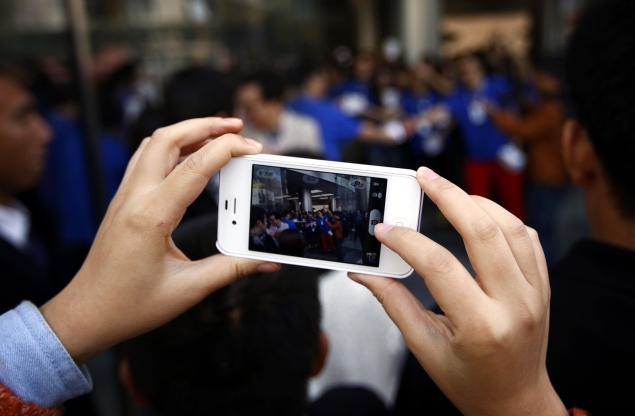
This week, Wavii, a start-up founded by a former Microsoft Corp employee, Adrian Aoun, unveiled a free iPhone app that filters news stories from around the world, crunches them through a natural language processing algorithm and presents them in five- or six-word summaries.
Over the past two years in Seattle, Aoun's team of two dozen machine-learning experts secretly developed code that boils down a news story into a basic subject-verb-object format, and draws connections between disparate news stories.
"Our edge has always been the technology," Aoun said.
Wavii has been online for several months, and Aoun has noticed that readers spend nine times longer browsing news headlines in his rudimentary prototype smartphone app than on his desktop website.
Wavii's app lets a user slice and dice a search into something as specific as "employment change in the technology sector," Aoun said.
Aoun's app pits his company against the likes of Summly, a mobile news reader headed by Nick D'Aloisio, a 17-year-old who is being backed by Li Ka-Shing, the Hong Kong billionaire; Yoko Ono, the widow of Beatle John Lennon; and a host of more traditional Silicon Valley investors.
"I use a lot of news aggregators, I use Facebook, I use Twitter" to find news articles, D'Aloisio told Reuters last month, when he launched Summly. Still, the actual article "is hard to consume. It took effort to read."
Summly, also free, features a gauzy, design-rich interface in the iPhone version of the app that summarizes stories with several-paragraph-long blurbs that fit on one iPhone screen.
Hailed in the UK as a "boy genius," D'Aloisio has been featured in Forbes Magazine and on the BBC and moves almost as quickly as he speaks, trotting around the world with a pair of orange headphones around his neck. He came up with the idea for the app when he felt he didn't have time to consume long-form news articles while on the move.
"The way it's shown on the phone, it's daunting," he said. "It's 10 pages I have to flip through. Who's actually sitting there on their iPhone really wanting to read an in-depth 1,500-word article?"
Other app-makers have left alone news copy but have tinkered with how stories are laid out. One example is Flipboard, a tablet app that spreads stories like a magazine across a tablet screen.
Aoun said the market for mobile news reader apps has grown more competitive in recent years, but few of them have truly caught on with consumers.
"We're getting close to figuring out the formula," he said.
© Thomson Reuters 2012
Comments
For the latest tech news and reviews, follow Gadgets 360 on X, Facebook, WhatsApp, Threads and Google News. For the latest videos on gadgets and tech, subscribe to our YouTube channel. If you want to know everything about top influencers, follow our in-house Who'sThat360 on Instagram and YouTube.
Related Stories






Advertisement
Follow Us




-

03:19
Gadgets 360 With Technical Guruji: Something About the Nothing Ear, Ear (a) -
19:21
Gadgets 360 With Technical Guruji: Samsung's New AI Smart TVs, Nothing Ear -
05:23
Gadgets 360 With Technical Guruji: Samsung's New AI Smart TVs -
01:17
Gadgets 360 With Technical Guruji: Tech Tip [April 20, 2024] -
02:05
Gadgets 360 With Technical Guruji: Ask TG [April 20, 2024]
-
Redmi Max 100 inch 2025 टीवी लॉन्च, जानें कीमत और स्पेसिफिकेशंस
-
200MP कैमरा, 23800mAh बैटरी के साथ 1 किलो का स्मार्टफोन लॉन्च, जानें
-
Boat Storm Call 3 वॉच 700 स्पोर्ट्स मोड के साथ लॉन्च, कीमत 1,099 रुपये
-
Tinder 'Share My Date': अब डेट की डिटेल्स दोस्तों और परिवार के साथ करें शेयर, ऐसे काम करता है नया फीचर
Advertisement
Popular on Gadgets
- Galaxy S24 Series
- MWC 2024
- Apple Vision Pro
- Oneplus 12
- iPhone 14
- Apple iPhone 15
- OnePlus Nord CE 3 Lite 5G
- iPhone 13
- Xiaomi 14 Pro
- Oppo Find N3
- Tecno Spark Go (2023)
- Realme V30
- Best Phones Under 25000
- Samsung Galaxy S24 Series
- Cryptocurrency
- iQoo 12
- Samsung Galaxy S24 Ultra
- Giottus
- Samsung Galaxy Z Flip 5
- Apple 'Scary Fast'
- Housefull 5
- GoPro Hero 12 Black Review
- Invincible Season 2
- JioGlass
- HD Ready TV
- Laptop Under 50000
- Smartwatch Under 10000
- Latest Mobile Phones
- Compare Phones
Latest Gadgets
- Samsung Galaxy C55
- Blackview Hero 10
- Oppo K12
- Vivo Y200i
- Huawei Pura 70 Pro
- Huawei Pura 70
- Vivo V30e
- Itel Super Guru 4G
- Asus ZenBook Duo 2024 (UX8406)
- Dell Inspiron 14 Plus
- Realme Pad 2 Wi-Fi
- Redmi Pad Pro
- boAt Storm Call 3
- Cult Shock X
- Samsung Samsung Neo QLED 8K Smart TV QN800D
- Samsung Neo QLED 4K Smart TV (QN90D)
- Sony PlayStation 5 Slim Digital Edition
- Sony PlayStation 5 Slim
- Voltas 1.5 Ton 3 Star Split AC (183 Vectra Elegant 4503545)
- Hitachi 1.5 Ton 5 Star Inverter Split AC (RAS.G518PCBISF)

- About Us
- Sitemaps
- Feedback
- Archives
- Contact Us
- RSS
- Advertise
- Career
- Privacy Policy
- Ethics
- Editorial Policy
- Terms & Conditions
- Complaint Redressal
Download Our Apps
Available in Hindi
© Copyright Red Pixels Ventures Limited 2024. All rights reserved.


